IBOV 170,656.00 ▲ 1.63% IPSA 11,339.66 ▲ 0.91% IPC MEX 64,349.80 ▲ 0.55% MERVAL 2,931,172 ▲ 1.92% COLCAP 2,454.74 ▲ 0.43% BVL PERÚ 58,698.13 ▲ 1.62% USD/BRL5.16▼ 0.79% USD/MXN16.90▼ 0.32% USD/CLP917.55▼ 0.49% USD/COP3,044▼ 0.23% USD/PEN3.34▼ 0.33% USD/ARS1,497▼ 0.05% USD/UYU40.20▲ 1.58% USD/PYG5,996▲ 1.55% USD/BOB11.43▲ 0.41% USD/DOP58.50▼ 0.34% USD/CRC450.05▲ 3.34% USD/GTQ7.62▲ 2.21% USD/HNL26.81▲ 0.31% USD/NIO36.62▲ 0.29% USD/VES778.00▼ 0.13% USD/PAB1.00— 0.00% USD/BZD2.00— 0.00% USD/JMD 157.28 — 0.00% USD/TTD6.71▲ 0.79% EUR/BRL6.02▼ 0.29% BRENT 88.88 ▼ 0.03% WTI 83.11 ▼ 0.11% IRON ORE 161.91 — — COPPER 6.61 ▲ 0.03% GOLD 4,461 ▲ 1.78% SILVER 65.59 ▲ 1.26% SOY 1,184 ▲ 3.20% CORN 480.50 ▲ 10.02% WHEAT 655.00 ▲ 3.93% COFFEE 317.25 ▼ 5.51% SUGAR 16.43 ▼ 1.79% ORANGE JUICE 138.55 ▼ 0.47% COTTON 85.03 ▲ 2.33% COCOA 5,719 ▲ 3.18% BEEF 223.60 ▼ 3.93% CATTLE 339.10 ▼ 3.16% LITHIUM 75.20 ▲ 1.47% PETR4 41.64 ▼ 0.05% VALE3 72.97 ▲ 0.83% ITUB4 38.60 ▼ 1.03% BBDC4 16.85 ▲ 0.36% ABEV3 14.89 ▼ 0.80% BBAS3 19.37 ▲ 0.47% B3SA3 14.26 ▼ 0.21% WEGE3 47.59 ▲ 0.49% PRIO3 59.14 ▼ 0.19% SUZB3 41.33 ▲ 2.35% RENT3 34.68 ▼ 0.09% AZZA3 15.89 ▼ 2.63% CSAN3 3.22 ▼ 1.83% RAIZ4 0.25 — 0.00% PCAR3 2.75 ▼ 0.36% GMAT3 3.65 ▼ 1.08% PSSA3 48.13 ▼ 0.54% CVCB3 1.33 ▼ 2.92% POSI3 3.36 ▲ 2.44% SLCE3 13.34 ▲ 0.30% NATU3 8.14 ▼ 0.73% IBOV 170,656.00 ▲ 1.63% IPSA 11,339.66 ▲ 0.91% IPC MEX 64,349.80 ▲ 0.55% MERVAL 2,931,172 ▲ 1.92% COLCAP 2,454.74 ▲ 0.43% BVL PERÚ 58,698.13 ▲ 1.62% USD/BRL 5.16 ▲ 0.01% USD/MXN 17.06 ▼ 0.24% USD/CLP 913.98 ▲ 0.04% USD/COP 3,140 ▲ 0.03% USD/PEN 3.36 ▼ 0.66% USD/ARS 1,493 ▲ 0.10% USD/UYU 40.27 ▲ 1.24% USD/PYG 5,939 ▲ 1.68% USD/BOB 11.64 ▼ 0.76% USD/DOP 58.34 ▲ 1.25% USD/CRC 445.92 ▲ 0.89% USD/GTQ 7.62 ▲ 2.21% USD/HNL 26.79 ▲ 1.57% USD/NIO 36.62 ▲ 0.69% USD/VES 762.44 ▼ 0.13% USD/PAB 1.00 — 0.00% USD/BZD 2.00 — 0.00% USD/JMD 157.28 — 0.00% USD/TTD 6.70 ▲ 0.61% EUR/BRL 5.95 ▲ 1.01% BRENT 88.88 ▼ 0.03% WTI 83.11 ▼ 0.11% IRON ORE 161.91 — — COPPER 6.61 ▲ 0.03% GOLD 4,461 ▲ 1.78% SILVER 65.59 ▲ 1.26% SOY 1,184 ▲ 3.20% CORN 480.50 ▲ 10.02% WHEAT 655.00 ▲ 3.93% COFFEE 317.25 ▼ 5.51% SUGAR 16.43 ▼ 1.79% ORANGE JUICE 138.55 ▼ 0.47% COTTON 85.03 ▲ 2.33% COCOA 5,719 ▲ 3.18% BEEF 223.60 ▼ 3.93% CATTLE 339.10 ▼ 3.16% LITHIUM 75.20 ▲ 1.47% PETR4 41.64 ▼ 0.05% VALE3 72.97 ▲ 0.83% ITUB4 38.60 ▼ 1.03% BBDC4 16.85 ▲ 0.36% ABEV3 14.89 ▼ 0.80% BBAS3 19.37 ▲ 0.47% B3SA3 14.26 ▼ 0.21% WEGE3 47.59 ▲ 0.49% PRIO3 59.14 ▼ 0.19% SUZB3 41.33 ▲ 2.35% RENT3 34.68 ▼ 0.09% AZZA3 15.89 ▼ 2.63% CSAN3 3.22 ▼ 1.83% RAIZ4 0.25 — 0.00% PCAR3 2.75 ▼ 0.36% GMAT3 3.65 ▼ 1.08% PSSA3 48.13 ▼ 0.54% CVCB3 1.33 ▼ 2.92% POSI3 3.36 ▲ 2.44% SLCE3 13.34 ▲ 0.30% NATU3 8.14 ▼ 0.73%
since 2009
Friday, August 21, 2026

Brazil to more than double offshore natural gas supply by 2028

By · May 9, 2023 · 3 min read

Daily Brief

The morning intel from across Latin America. Free.

By subscribing you agree to our privacy policy. We never share your email.

Brazil should more than double the supply of offshore natural gas for the domestic market in the next five years.

If such an expansion materializes, it will ensure that growing demand can be met, a representative of the local distributors’ association Abegás told BNamericas.

Domestic offshore production is around 120 million cubic feet daily (Mm3/d).

Three major gas projects due to start operations by 2028 are expected to pump 50 Mm3/d into the national natural gas grid (Photo internet reproduction)
One-stop reference
Company Intelligence
Every listed company in Latin America — financials, ownership and structure for 1,450+ companies across 26 exchanges, in one place.
Browse the directory →
RT
Ask Rio Times
17 years of Latin America reporting, on demand.
Open the full Ask Rio Times →

Still, only 32% of that total, or 38 Mm3/d, reaches the industrial, commercial, residential, vehicle, and thermoelectric sectors after reinjection (53% of the total), consumption on production platforms (11.6%) and flaring (2.7%).
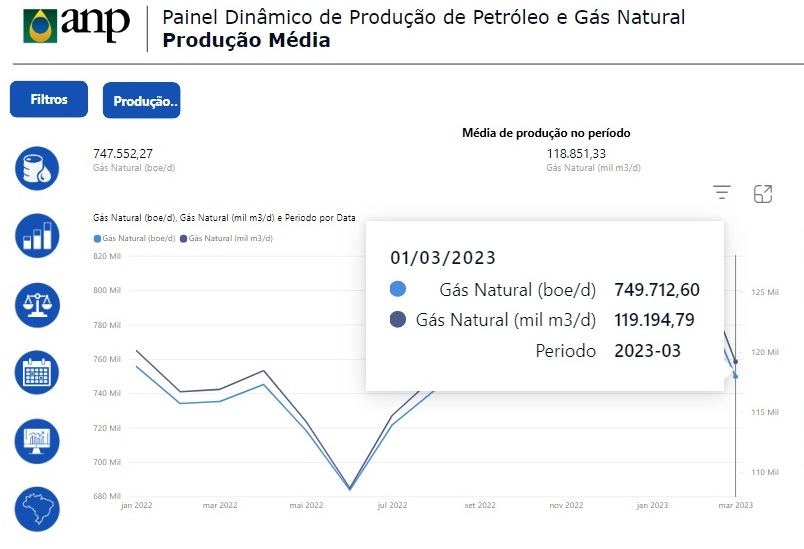
Domestic offshore gas production in March 2023. Source: ANP (Photo internet reproduction)

However, three major gas projects due to start operations by 2028 are expected to pump another 50 Mm3/d into the national natural gas grid.

Petrobras’ Rota 3 pipeline will start operating in 2024, bringing an additional 18 Mm3/d of gas onshore from pre-salt fields.
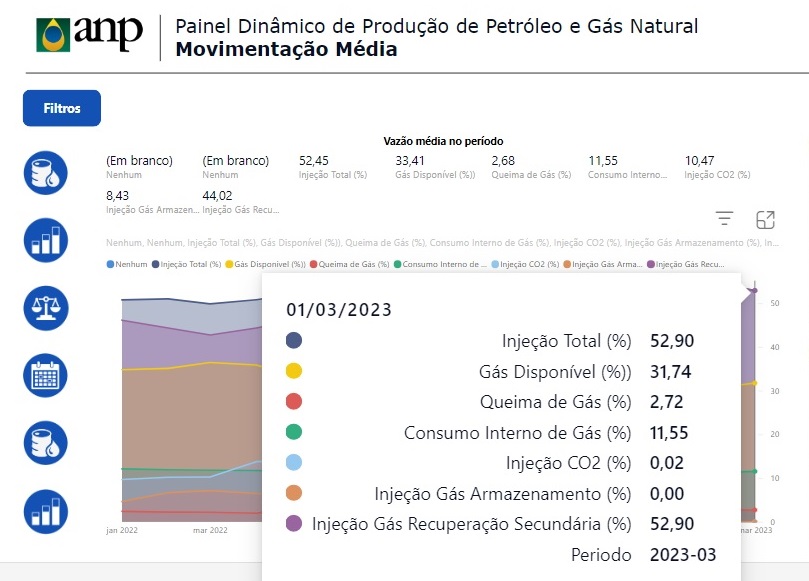
Destination of offshore natural gas. Source: ANP (Photo internet reproduction)

Three years later, the state-owned company plans to install two FPSOs in the Sergipe-Alagoas basin to produce 9 Mm3/d of natural gas each.

And starting in 2028, Equinor will begin pumping 14 Mm3/d of gas into the Brazilian grid through the BM-C-33 project, a development involving total investments of US$9 billion.

The Norwegian company announced the final approval of the investment decision on Monday in partnership with Petrobras and Repsol Sinopec Brasil.

Located in the Campos pre-salt basin in the state of Rio de Janeiro, the block is about 200km offshore at water depths of up to 2,900 m.

Three gas and oil/condensate accumulations were discovered in BM-C-33: Pão de Açúcar, SEAT, and Gávea, and more than 1 billion barrels of oil equivalent are expected to be recovered.

The project is based on production by wells connected to an FPSO with the capacity to process oil/condensate and gas and separate them for sale.

The natural gas will be exported to the coast through a subsea pipeline connected to the Cabiúnas Terminal (Tecab) reception infrastructure and then connected to the gas transportation network.

“BM-C-33 is one of the country’s main projects to supply new gas volumes. The gas delivered could represent 15% of Brazil’s total demand at the start of production,” said Equinor’s executive president in Brazil, Veronica Coelho, in a statement.

Marcelo Mendonça, strategy and market director of Abegás, said that the increase in the volume of gas offered to the market would be very welcome, as demand is currently somewhat limited.

He highlighted the heavy-duty vehicle segment, which has great potential to replace diesel with gas, helping Brazil reach its greenhouse gas emission reduction targets and, at the same time, reduce fuel imports.

“If we consider only what Brazil imports in terms of diesel, it is 30 Mm3/d of gas. That is not counting light vehicles, which currently consume around 7 Mm3/d, which could also grow,” he told BNamericas.

Other examples of sectors that will demand gas are the chemical industry, especially for fertilizer production, and thermoelectric generation, whose expansion is considered important to serve as a backup for wind and solar energy sources, which are intermittent.

Mendonça emphasized that the increase in supply coincides with Federal Government programs, such as ‘Gás Para Empregar’ (Gas To Employ), which raises the competitiveness of Brazilian industry and creates new jobs.

“In the first years, new jobs will be generated due to the labor needed for infrastructure works,” said Mendonça.

With information from BNamericas

Read More from The Rio Times

The Rio Times · Power Map
See who really holds power in Latin America
Click to open the Power Map

Rotate for Best Experience

This report is optimized for landscape viewing. Rotate your phone for the full experience.