Brazil’s Softer June Inflation Tilts Bets Toward an August Rate Cut
Economy
Key Facts
Brazil inflation cooled in June, and the milder preview has done something a week of central-bank caution could not: it has nudged the market toward betting on another rate cut in August, even as a costly electricity bill keeps the headline from looking truly benign.
A soft print that beat the forecast
Brazil’s official statistics agency reported on Thursday that the IPCA-15, the closely watched preview of the country’s main consumer-price index, rose by zero point four one percent in June. That was below the market’s expected zero point four four percent, and it was the highest June reading since 2022 even as it undershot the consensus.
The figure matters less for its level than for its composition, which struck economists as reassuring. Strip out the volatile energy line and the rest of the basket looked tame, with the kind of broad easing that monetary policymakers want to see before they trust a downward trend.
Why Brazil inflation still carries an energy sting
The one clear pressure point was the power bill. Residential electricity climbed two point zero four percent in the month and was the largest single contributor to the index, reflecting both a yellow tariff flag that adds a surcharge to bills and fresh rate adjustments in Belo Horizonte, Recife, Fortaleza and Salvador.
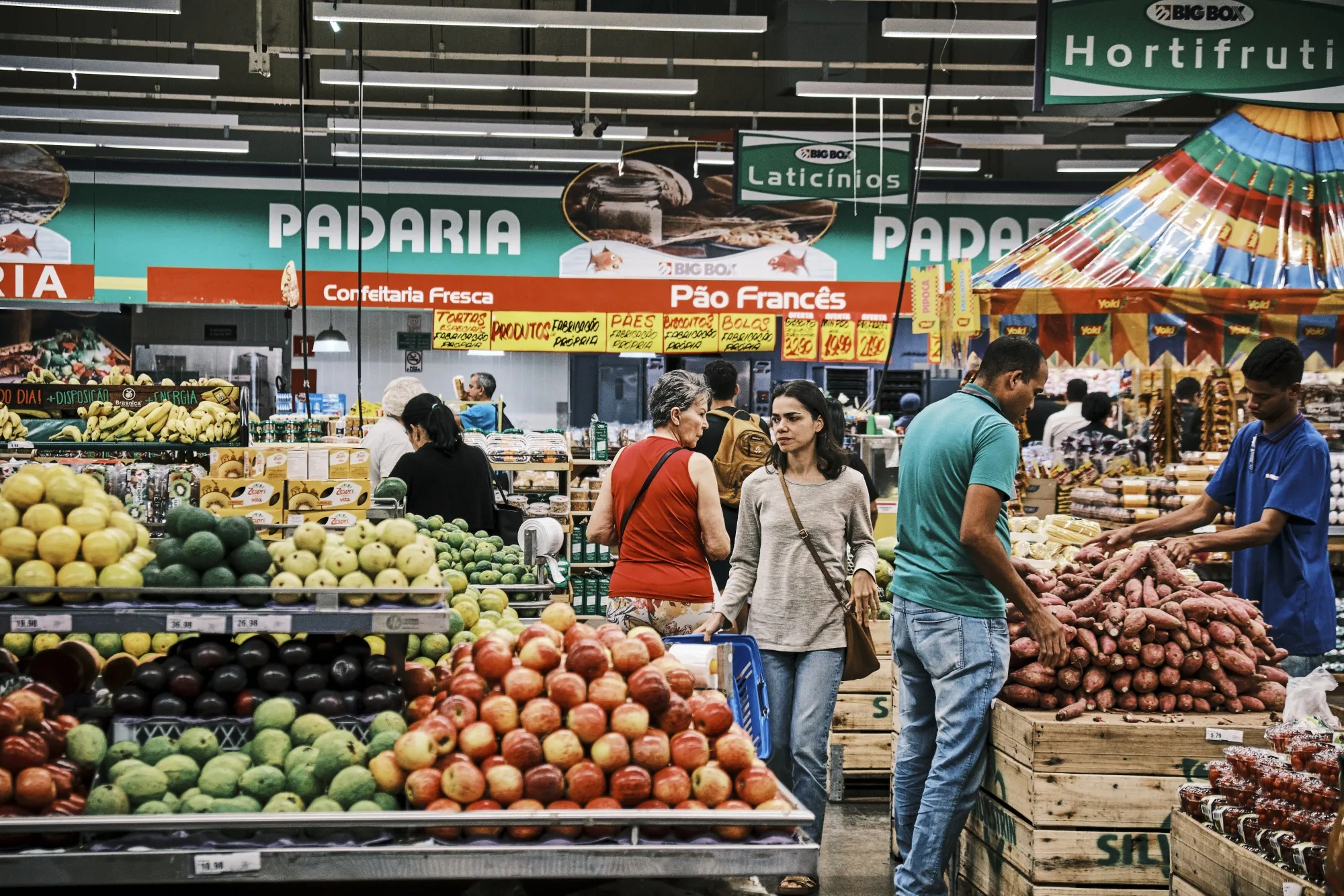
Food offered the offsetting relief that shaped the soft headline. Grocery and restaurant prices together rose less than one percent after two months above that mark, a slowdown that eases the squeeze on household budgets and helped pull the overall preview below what forecasters had penciled in.
For a foreign investor, the read-through is that Brazil’s price problem is now concentrated in regulated, administered items rather than in broad demand. That is a more comfortable picture for a central bank weighing whether it has room to keep loosening into a year crowded with fiscal stimulus and an October election.
Live Market IntelligenceBrazil — Live Market Board
Rio Times · Live Market Intelligence
Brazil — Live Market Board
-0.02%
185,147.15
-0.02%
64,639.55
-0.35%
11,315.26
-1.14%
3,041,993
-0.23%
2,556.17
+0.46%
59,789.81
-0.24%
| Instrument | Last | Change | YoY | Prev. | High | Low | Volume |
|---|---|---|---|---|---|---|---|
| IBOV | 185,147.15 | -0.02% | +21.85% | 185,188.13 | 168,310 | 167,142 | — |
| USD/BRL | 5.16 | +0.01% | -5.13% | 5.16 | 5.18 | 5.14 | — |
| SELIC | 14.00% | — | — | — | — | — | |
| PETR4 | 41.64 | -0.05% | +35.19% | 41.66 | 41.97 | 41.15 | 41,499,400 |
| VALE3 | 72.97 | +0.83% | +30.75% | 72.37 | 73.54 | 72.66 | 17,658,000 |
| ITUB4 | 38.60 | -1.03% | +4.57% | 39.00 | 39.34 | 38.39 | 29,487,800 |
| BBDC4 | 16.85 | +0.36% | +3.50% | 16.79 | 16.90 | 16.67 | 19,416,900 |
| BBAS3 | 19.37 | +0.47% | +0.73% | 19.28 | 19.44 | 19.16 | 11,069,200 |
| B3SA3 | 14.26 | -0.21% | +12.73% | 14.29 | 14.47 | 14.11 | 33,037,800 |
| ABEV3 | 14.89 | -0.80% | +21.91% | 15.01 | 15.07 | 14.81 | 16,453,100 |
| WEGE3 | 47.59 | +0.49% | +29.99% | 47.36 | 48.08 | 47.36 | 3,364,600 |
| PRIO3 | 59.14 | -0.19% | +50.67% | 59.25 | 59.81 | 58.74 | 3,325,600 |
| SUZB3 | 41.33 | +2.35% | -23.55% | 40.38 | 41.48 | 40.35 | 3,914,900 |
| RENT3 | 34.68 | -0.09% | +0.84% | 34.71 | 34.96 | 34.35 | 7,979,100 |
| AZZA3 | 15.89 | -2.63% | -53.76% | 16.32 | 16.42 | 15.82 | 1,330,300 |
| CSNA3 | 4.30 | +0.47% | -42.65% | 4.28 | 4.41 | 4.26 | 10,076,100 |
| GGBR4 | 24.69 | +2.19% | +51.38% | 24.16 | 24.85 | 24.18 | 7,047,600 |
| ENEV3 | 24.21 | -1.38% | +70.49% | 24.55 | 24.64 | 23.99 | 9,297,000 |
How a single data point moved the Selic call
A week ago the central bank cut its benchmark Selic rate to fourteen and a quarter percent and toughened its language, dropping any promise of further cuts and saying the next move would depend on incoming data. Thursday’s preview was the first major data point since, and traders treated it as a green light.
Interest-rate futures swung after the release, with the market now assigning a greater chance to a cut than to a hold at the August meeting. Short-dated yields fell sharply, the currency firmed and the local stock index rose more than one percent as investors repriced the path of policy.
The caveat is that the win is on momentum rather than on the absolute number. Twelve-month inflation remains near four point six percent, above the four and a half percent ceiling of the official target, and the bank’s own projections still show it overshooting this year before converging only toward 2028.
For the foreign holder of Brazilian assets, the stakes sit in the carry trade. The country still offers some of the highest inflation-adjusted yields of any large economy, and a slow, well-signalled easing keeps that return attractive while gradually lifting equity valuations rather than triggering a sudden unwind of the positions that have supported the currency.
The wider context is a central bank that began cutting from fifteen percent in March and has moved in careful quarter-point steps ever since. Each soft reading buys a little more room, but policymakers have made clear that fiscal credibility and the path of public debt, not any single month of prices, will decide how far the cycle can run.
What does the June IPCA-15 tell us about Brazil inflation?
It shows price pressure easing where it matters for policy. The preview rose less than forecast, food slowed sharply and the only big upward push came from regulated electricity, suggesting underlying demand-driven inflation is cooling.
Why did electricity push prices higher?
A yellow tariff flag adds a surcharge to power bills when generation costs rise, and several cities also saw scheduled rate adjustments. Together those lifted residential electricity by just over two percent and made it the month’s single biggest contributor.
Will Brazil cut interest rates in August?
The market now leans that way. After the soft preview, traders price a higher chance of a cut than a hold, though twelve-month inflation above the target ceiling means the central bank could still pause if the next readings disappoint.
Background: Brazil Election Polls 2026: All Surveys, All Candidates.
Background: Brazil Overhauls Tax System: A New Era for Business and Economy.
Connected Coverage
For the policy backdrop, see how Brazil cut the Selic to 14.25% but toughened its inflation message, why the world’s most aggressive monetary policy still cannot finish the job, and the running detail in our Brazil inflation 2026 guide.
Figures from the IBGE IPCA-15 release.
Frequently Asked Questions
What drove Brazil's June IPCA-15 inflation reading, and how did it compare to expectations?
The IPCA-15 rose 0.41% in June, coming in below the market's expected 0.44% and marking the softest reading relative to forecast in months. Residential electricity was the single biggest contributor, jumping 2.04% and adding 0.08 percentage point to the index, driven by a yellow tariff flag plus rate resets in four cities.
How did food and beverage inflation change in June compared to prior months?
Food and beverage inflation slowed to 0.74% in June, down from above 1% in each of the two prior months. This eased the part of the household basket that consumers feel most directly.
What is the current state of Brazil's benchmark Selic rate, and why does the case for cutting it remain complicated?
The Selic sits at 14.25% after three consecutive quarter-point cuts, placing it among the highest real yields of any large economy. However, twelve-month inflation near 4.6% still exceeds the 4.5% ceiling, meaning the easing case rests on slowing momentum rather than prices already being under control.
This article was produced by The Rio Times’ automated newsroom system. How we use AI · Report an error
LatAm Markets: Live Signals → — real-time movers, turnover leaders and FX across Latin America.
Read More from The Rio Times