Brazil Bets on Carbon Credits to Revive Amazon While Balancing Economic Growth
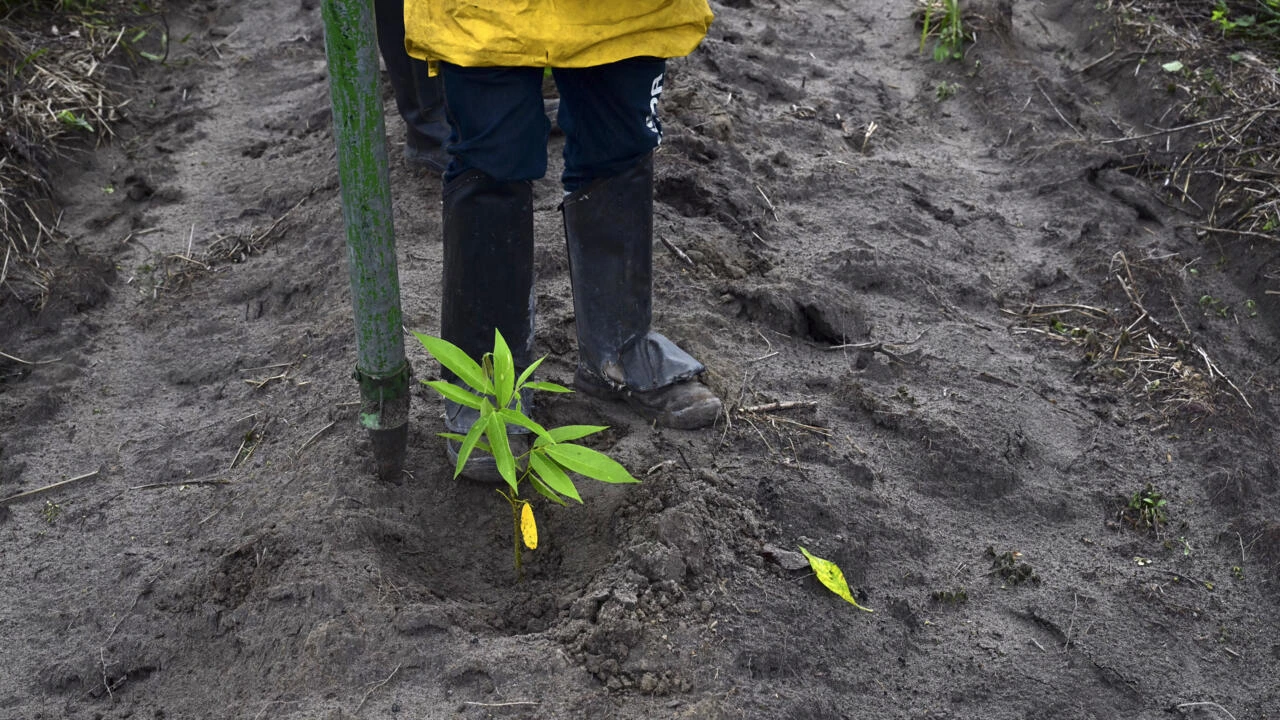
Brazil’s National Development Bank (BNDES) and state oil giant Petrobras unveiled a landmark partnership Monday to restore 50,000 hectares of degraded Amazon rainforest—an area matching 50,000 soccer fields—through a carbon credit initiative designed to merge environmental recovery with corporate climate goals.
The ProFloresta+ program, backed by $78.3 million in initial investments, aims to capture 15 million tons of CO2 by replanting native trees, equivalent to offsetting annual emissions from 8.94 million gasoline-powered cars.
Under the scheme, Petrobras will commit to long-term carbon credit purchases from verified reforestation projects, while BNDES provides low-interest loans through its Climate Fund to developers.
The first phase targets 15,000 hectares, creating 4,500 jobs and channeling 450 million reais into local economies. A public consultation launched this week will finalize contract terms for auctioning 5 million carbon credits, with prices set competitively to attract investors.
The Amazon has lost over 60 million hectares since 2015, slashing its capacity to absorb global emissions. ProFloresta+ directly addresses this by linking corporate decarbonization demands to measurable forest recovery.
Carbon credits—tradable permits representing one ton of CO2—have faced scrutiny for inflated claims, but BNDES president Aloizio Mercadante stressed the program’s “high technical and socio-environmental standards” to ensure credibility.
Brazil’s Initiative to Bridge Energy Growth
Technical advisors like the Nature Investment Lab helped draft contracts requiring developers to use native species and meet strict ecological safeguards.
Petrobras CEO Magda Chambriard framed the initiative as a bridge between Brazil’s energy sector and climate obligations, noting it allows the firm to “meet targets without compromising growth.”
For BNDES, the project expands its portfolio of Amazon restoration tools, which includes satellite monitoring and community-led conservation. The bank’s socio-environmental director, Tereza Campello, called the rainforest’s degradation a “dual climate and social crisis” requiring urgent economic alternatives for local populations.
Analysts view the program as a test case for scaling carbon markets in developing nations. By standardizing contracts and pricing, Brazil hopes to attract global buyers seeking transparent offsets.
Challenges linger, including ensuring long-term forest protection and preventing land disputes. Still, the partnership signals a shift in how major economies might align industrial growth with ecological repair—a balancing act the world will watch closely as climate deadlines loom.
This article was drafted with automated assistance and reviewed before publication. How we use AI · Report an error · Editorial responsibility: Matthias Camenzind, Editor-in-Chief
Read More from The Rio Times