Brazil Revives Its Plan to Try 16-Year-Olds as Adults

Politics
Key Facts
—The move. Speaker Hugo Motta named Mendonça Filho to write the report on an amendment cutting the age of adult criminal liability from 18 to 16.
—The clock. The 38-member committee begins work in the second week of August, after the parliamentary recess.
—The first hurdle. The judiciary committee cleared the text 44 to 18 on 10 June, a ruling on procedure rather than merit.
—The maths. Passage needs 308 deputies twice, then 49 senators twice, before anything reaches the Constitution.
—The precedent. The rapporteur himself notes an identical measure once passed the lower house and died in the Senate.
—Today’s rule. Offenders aged 12 to 18 serve socio-educational measures, with detention capped at three years.
Brazil’s lower house has named the man who will write the report on lowering the age of criminal responsibility to sixteen. He backs it, and the vote comes in an election year when security is the country’s main worry.
Hugo Motta, the Speaker, created the special committee on Monday and named its leadership on Wednesday. Mendonça Filho, a deputy from Pernambuco, will write the report; Aluisio Mendes, from Maranhão, will chair.
Both men held the same posts on the public-security amendment last year. That is not a coincidence but the terms of a bargain.
Why the age of criminal responsibility is back
In December, Mendonça Filho tried to fold the age change into the broader public-security amendment he was already writing. He even proposed a referendum to ratify it, but Motta struck a deal with party leaders to pull it out and give it a committee of its own.
That deal has now been honoured. The proposal rewrites Article 228 of the Constitution, the clause that makes anyone under eighteen criminally unaccountable and hands them instead to a separate juvenile code.
Today an adolescent who commits a serious offence faces what Brazilian law calls socio-educational measures. They run from a formal warning through community service to confinement, and the longest term of detention is three years.
There are six such measures in all, escalating with the gravity of the act, and they apply to anyone between twelve and eighteen. Confinement itself is reserved for violent crimes or for serious repeat offending.
Two further amendments travel with the main text. One would lower the age only for the gravest crimes after an expert assessment; the other would apply it to every offence, and reach children as young as twelve for violent ones.
The parent proposal is eleven years old, filed by a since-departed deputy from Pernambuco. As written, it would have made sixteen-year-olds adults in every sense, free to marry, sign contracts, hold a driving licence, vote and stand for local office.
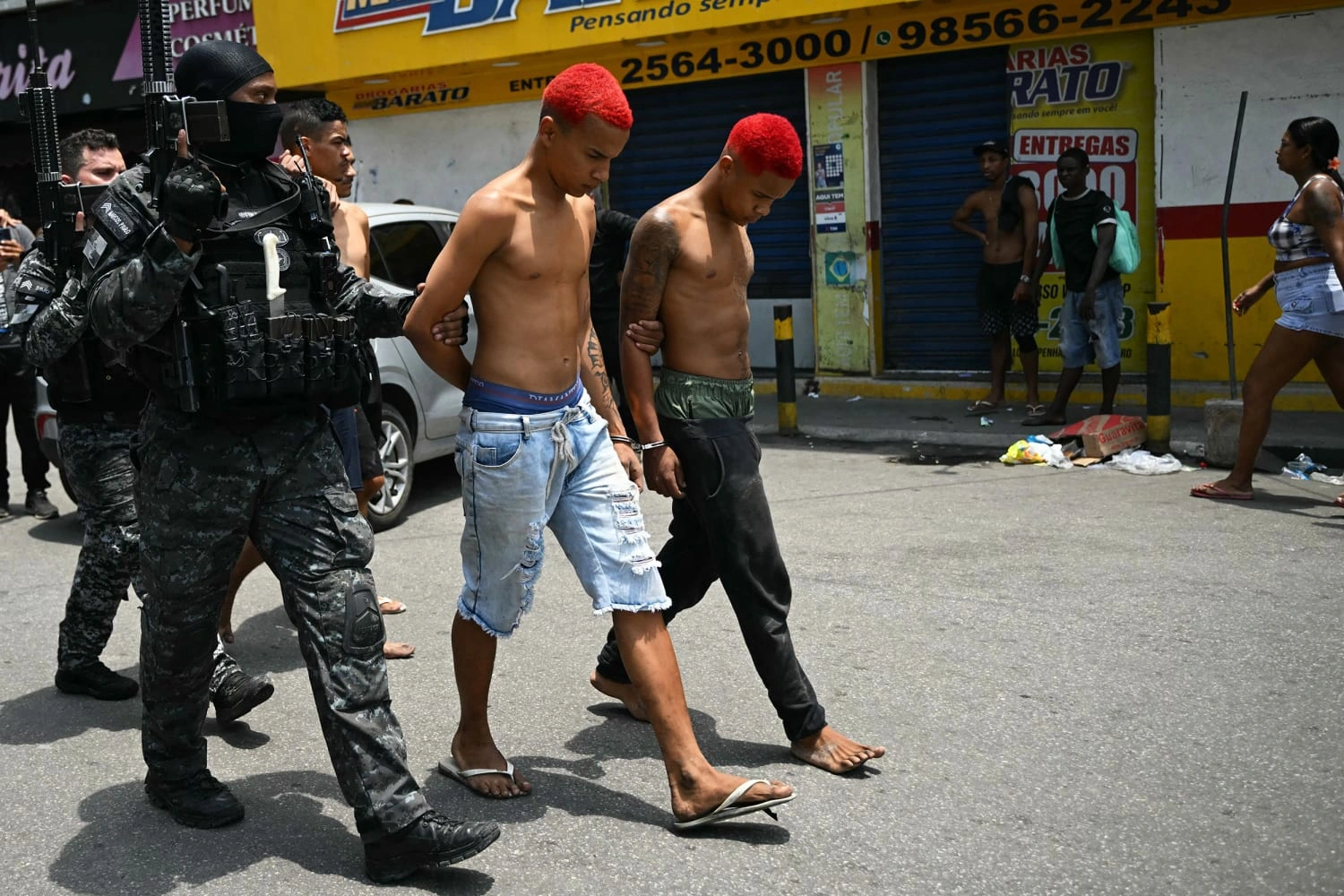
The argument nobody wins
The judiciary committee cleared the text by 44 votes to 18 in June. That was a decision on whether the proposal may be considered, not on whether it is right.
Its rapporteur there stripped out the original plan to grant sixteen-year-olds full adult civil rights. He argued that one subject per amendment avoids legal confusion.
An opposition deputy called the result an aberration, saying a teenager would be an adult in a criminal court and a child everywhere else. Another cited a 2023 national survey showing that killings account for a small minority, twelve percent, of offences by young people.
Mendonça Filho’s case rests on scale. In the committee debate he said a quarter of Brazilians live under the direct influence of militias, traffickers and criminal groups that recruit minors on purpose.
On being handed the report he thanked the Speaker and claimed that “80% of the population is in favour”. Motta, more carefully, said the subject draws great public interest and promised a broad debate.
Why a 308-vote win might not be a win
Here is the part that matters to anyone reading Brazil for country risk. Government-aligned deputies argue the amendment cannot lawfully be made at all.
Their reasoning is that protection of under-eighteens is an individual guarantee, and the Constitution forbids amendments that tend to abolish such guarantees. Those provisions are called entrenched clauses, and only the Supreme Court can settle whether this one applies.
So the road is long and the destination uncertain. The committee has forty plenary sessions to report, and if it misses that window the Speaker may take the text straight to the floor, which turns the timetable into a lever.
Then come two rounds in each chamber, 308 deputies and 49 senators, and afterwards the judges. The rapporteur has already reminded colleagues that a proposal like this one cleared the lower house before and was buried in the Senate.
One small detail rewards attention. Aluisio Mendes, who will chair this committee, spent Tuesday as the author of the report handing three percent of Brazil’s betting-tax take to the Federal Police.
The same deputy, two security files, a day apart. In an election year where crime outranks the economy in voters’ minds, that is what the legislative agenda looks like from the inside.
What is Brazil’s age of criminal responsibility today?
Eighteen. Anyone younger is handled under the juvenile code, where the maximum penalty for a serious offence is three years of confinement.
Could the Supreme Court strike the amendment down?
It could. Opponents argue the protection of minors is an entrenched individual guarantee that no amendment may abolish, and that question would ultimately reach the court.
When will Brazil vote on it?
The committee starts in the second week of August and has up to forty plenary sessions. Any floor vote would follow that, in the middle of the election campaign.
More: Brazil news in English, every day from The Rio Times.
Frequently Asked Questions
What is the current law in Brazil regarding juvenile offenders?
Under current Brazilian law, offenders aged 12 to 18 serve socio-educational measures rather than adult criminal sentences, with detention capped at three years. The proposed amendment would lower the age of adult criminal liability from 18 to 16.
How many votes are needed for the amendment to pass?
The amendment requires approval by 308 deputies in two separate votes in the lower house. Then 49 senators must vote in favour twice, before it can reach the Constitution.
Has a similar measure been attempted before in Brazil?
Yes. The rapporteur Mendonça Filho himself has noted that an identical measure once passed the lower house but ultimately died in the Senate. The special committee is set to begin work in the second week of August, after the parliamentary recess.
Connected Coverage
Brazil Freezes $2 Billion in PCC Assets Days After US Sanctions Land
Brazil Warns Congress the US Terror Label Could Invite Military Force
What the Terror Label Means for Corporate Compliance in Brazil
This article was produced by The Rio Times’ automated newsroom system. How we use AI · Report an error · Editorial responsibility: Matthias Camenzind, Editor-in-Chief