Bolsonaro Is World’s Third Most Popular Ruler on Social Media
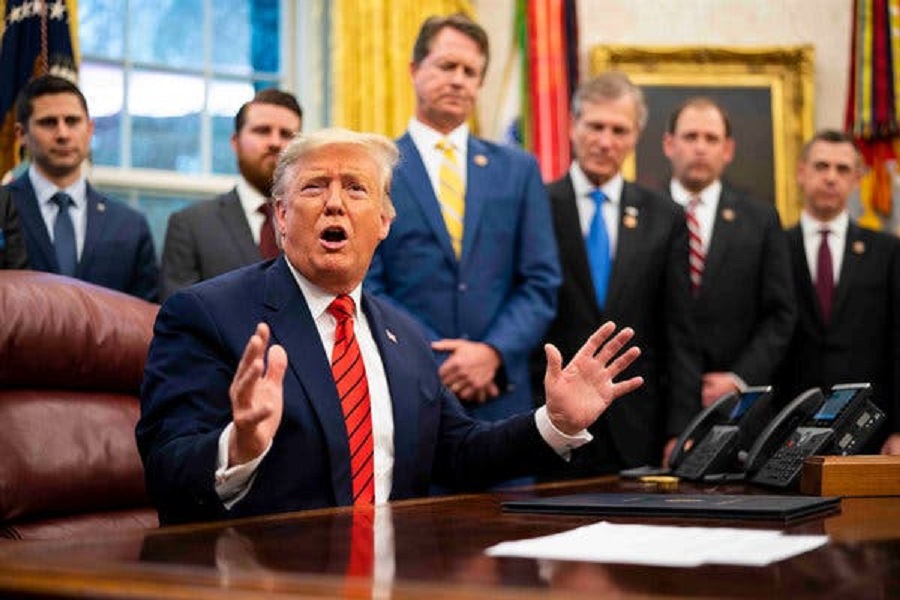
RIO DE JANEIRO, BRAZIL – President Jair Bolsonaro is the world’s third most popular head of state on social media. The Brazilian president is second only to Narendra Modi, Prime Minister of India, and US President Donald Trump, according to the Digital Popularity Index (IPD), prepared by the Quaest consultancy on behalf of Estado newspaper. Like the US president, Bolsonaro uses social media to announce government actions, attack opponents and criticize the press.
The index was compiled for a sample of 18 world leaders from the collection of social media usage figures on Facebook, Instagram, and Twitter. As a result, a monthly index was created for each leader, between January 2019 and January 2020, in addition to the average index in the period. The IPD is rated from 0 to 100, from the lowest and highest popularity ratings, respectively.

The average index in the period under review features Narendra Modi in the first place, with 63.25 (out of 100) points, Donald Trump is second, with 62.27, and Jair Bolsonaro is third, with an IPD of 52.75. Next in line are Turkish President Recep Erdogan, Uruguayan President-elect Luis Lacalle Pou, and Argentine President Alberto Fernández, who defeated Mauricio Macri in the last elections in the neighboring country. Below is the complete list.
How is the Digital Popularity Index measured?
The IPD measures politicians and brands’ popularity on social media. Data are processed using an artificial intelligence algorithm that determines the power of a given profile in the digital environment.
The index takes into account 40 network variables, divided into five categories: digital presence (active profiles on social media); popularity (number of followers); engagement (interaction, comments, and likes by post); mobilization (sharing of posts) and valorization (proportion of positive reactions against negative reactions).
The political scientist and director of the Quaest consultancy, Felipe Nunes, explains that the size of the population, the language and the length of time in the position are taken into account in the calculations. “The fact that Trump and Modi post in English may explain this popularity to some extent since it enables them to reach more people and attract more followers around the world,” he said.
He points out that the size of India’s population — about 1.3 billion people — partly influences Modi’s “success,” but it’s not decisive. The algorithm takes population into account and calculates per capita in the metrics considered to be qualitative. “But one cannot rule out the influence of population size, particularly in terms of popularity, which takes into account the number of followers.
The leader of China, the most populous country in the world, Xi Jinping, is not included in the survey as he does not have an official social media account.
Positions
The survey shows the dominance of three leaders: Modi, Trump and Bolsonaro, the only ones to achieve, at least for a month, first place in the monthly rankings. “Together with Erdogan in fourth place, this group forms a front line on political networks regarded as populist or far-right,” the study’s report points out.
According to Kléber Carrilho, professor of the post-graduate course in political marketing at ECA/USP, the world is experiencing a time when leaders are greater than ideas and social media is fertile ground for politicians of such “lineage”. “Explanations about the future of the world are much more present in the personification of the leaderships than we can classically refer to as ideology, that is, a set of ideas,” he said.
These individuals find an environment conducive to the growth of a cult figures on social media, Carrilho explains. “This enables those who have an organized communication based on the concept of an iconic cult based on the central character, to develop a public image, as we have mainly seen in these three examples, but in large part of those who are in the top ranked places,” he said.
In the period analyzed, Bolsonaro reached the top of the list only once: in August last year, the month when he clashed with the French President Emmanuel Macron on social media.
The clash occurred during the G7 meeting, in which Macron placed himself as one of the most critical voices of Brazilian environmental policy, which at the time was facing a fire crisis in the Amazon, a fact that drew the attention of the international community. Amid the “exchange of pleasantries” with the French, Bolsonaro even joked about the first lady’s physical appearance, Brigitte Macron.
“This international turmoil caused by Bolsonaro on social media involving Macron explains why he reached first place in August,” explained Felipe Nunes. The incident also led to the French president reaching his best position in the period – eighth place. In the overall average, he is ranked tenth.
Narendra Modi
The Indian People’s Party (PJP) Prime Minister Narendra Modi, leader of the popularity ranking on social media, is a Hindu nationalist right-wing brand, explains diplomat Fausto Godoy, former Consul General of Brazil in Mumbai and former Embassy Secretary in New Delhi. Hindu is the main religion in India, practiced by nearly 80 percent of the population, followed by Islam and Christianity.
“Modi has been advancing this Hindu agenda little by little and becoming increasingly popular with the Hindu population, which represents about 85 percent of India,” said Godoy, who explains this nationalist policy has sparked controversy among the country’s Muslims and caused discontent among India’s intellectual elite.
Godoy says the prime minister is very popular, but his popularity is contested by certain sectors. “The topic he often uses is the issue of Hindu nationalism and since the Hindu population is very large, his government is popular. Modi is an extremely controversial ruler and uses social media extensively to try to preserve himself as such,” he said.
Ranking of most popular politicians on social media (IPD 0-100) between January 2019 and January 2020:
Narendra Modi, India – 63.25
Donald Trump, USA – 62.27
Jair Bolsonaro, Brazil – 52.75
Recep Tayyip Erdogan, Turkey – 44.65
Cristina Kirchner, Argentina – 32.48
Luis Lacalle Pou, Uruguay – 27.2
Alberto Fernández, Argentina – 19.67
Matteo Salvini, Italy – 19.35
Evo Morales, Bolivia – 18.75
Emmanuel Macron, France – 18.37
Nicolás Maduro, Venezuela – 18.2
Iván Duque, Colombia – 18.14
Benjamin Netanyahu, Israel – 17.85
Justin Trudeau, Canada – 17.52
Sebastián Piñera, Chile – 17.26
Rodrigo Duterte, Philippines – 16.58
Boris Johnson, UK – 15.81
Viktor Orbán, Hungary – 15.61
Source: Terra
More: Brazil news in English, every day from The Rio Times.
This article was drafted with automated assistance and reviewed before publication. How we use AI · Report an error · Editorial responsibility: Matthias Camenzind, Editor-in-Chief