Bolivia Enacts IMF Loan Law as Church Offers to Mediate Diesel Dispute
Key Facts
Bolivia is trading an end to fuel subsidies for a US$1.9 billion IMF programme. The law is now in force, and the fight over diesel prices has moved to the streets.
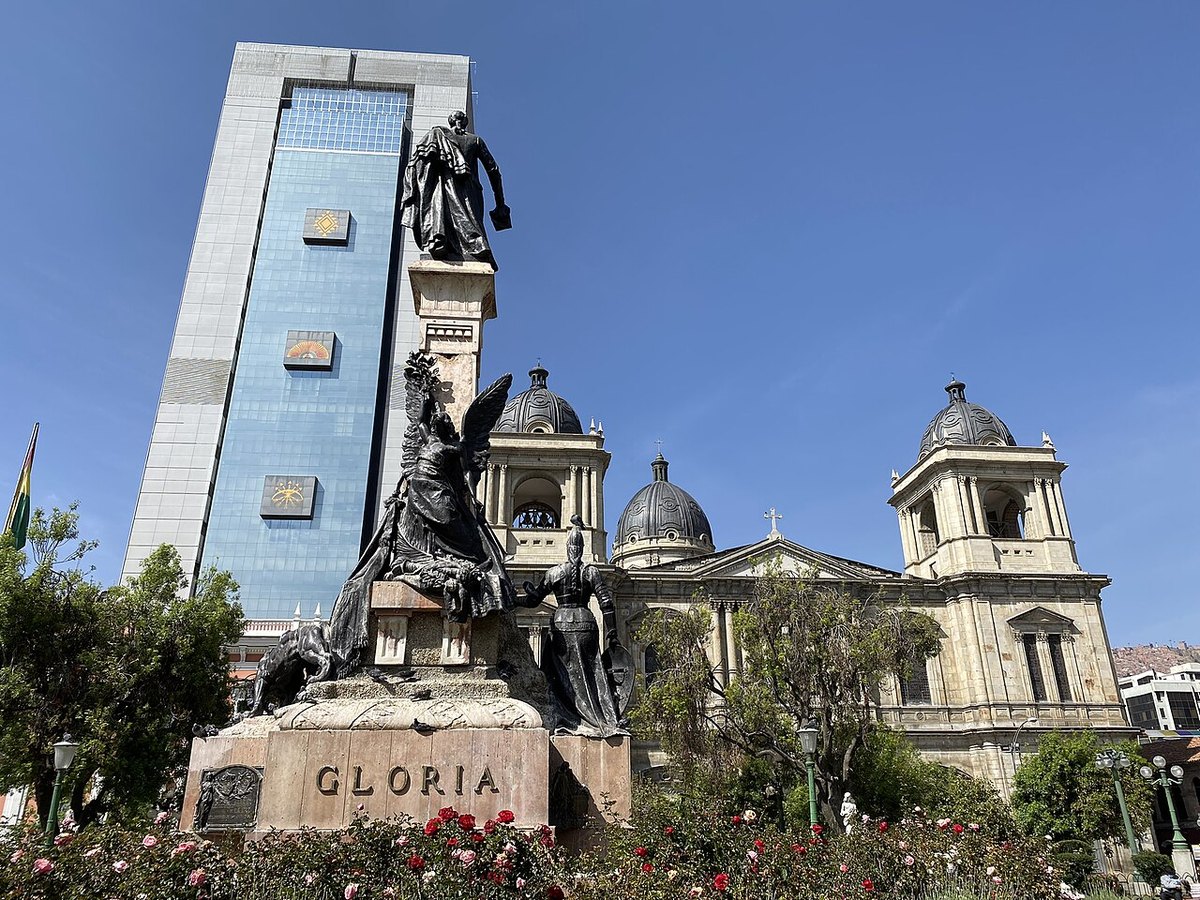
President Rodrigo Paz has enacted Law 1765, which took effect on publication in the Official Gazette, EFE reported on 20 September. The law approves Bolivia’s loan agreement with the International Monetary Fund (IMF).
Why It Matters
Fuel subsidies have been a heavy cost for the Bolivian state. Paz has said subsidies, mainly on diesel, cost about US$55 million a week.
Officials expect the IMF deal to unlock up to US$5 billion from other multilateral lenders, Infobae reported. Those lenders have not confirmed that figure.
Congress approved the deal on 17 and 18 September, as The Rio Times reported from both chambers. A day later the government ended the diesel subsidy, raising the pump price by 83%.
Paz won Bolivia’s first presidential runoff on 19 October 2025 and took office on 8 November. He inherited a severe dollar shortage, with liquid reserves below one month of imports, Al Jazeera reported.
Bolivia imports about 85% of the diesel it uses, the Associated Press (AP) reported. Every subsidised litre therefore drained dollars the country did not have.
The government had sought US$3.3 billion in IMF assistance in February 2026, Al Jazeera reported. The approved programme covers a little more than half of that request.
What Law 1765 Does
The programme is worth 1,369 million special drawing rights, about US$1.9 billion, Infobae reported. Each disbursement is repayable within up to ten years, at a 3.47% rate that can vary.
Red Uno said the money comes through the IMF’s Extended Fund Facility and will arrive in phases. Disbursements can run for up to 36 months, and repayments start after four and a half years, Infobae said.
The government had formalised the agreement with the Fund on 29 July, according to the same report. The contract cites persistent fiscal deficits, falling gas revenue and shrinking reserves, the Cochabamba daily Opinión reported.
Its debt analysis says the loan raises borrowing slightly but does not by itself make debt unsustainable. The law obliges the economy ministry to report to Congress on the loan every six months.
Paz flew to the United States on Saturday for the UN General Assembly, Infobae reported. His spokesman, José Luis Gálvez, said he would meet institutions that are “part of the economic plan”.
Deputy Treasury Minister Óscar Navarro said a first disbursement of about US$250 million could follow within days, AFP reported. That timetable comes from the government, and the Fund has not published a schedule.
The Diesel Price Behind the Protests
Diesel now costs Bs17.95 (US$1.63) a litre, up from Bs9.80 (US$0.89), under Supreme Decree 5716. Dollar figures use the Banco Central de Bolivia official rate of Bs11.00 per US dollar, valid until 21 September.
The first rise came in December 2025, when Decree 5503 lifted diesel from Bs3.72 (US$0.34) to Bs9.80 (US$0.89) a litre. Protests led by the COB forced its repeal in January 2026, but the higher prices stayed, Unitel reported.
Paz said diesel will now cost what Bolivia pays to import it, so that “a few” cannot steal it. He promised supply “24 hours, seven days a week” and said savings would go to schools, hospitals and roads.
Public Works Minister Mauricio Zamora said any government would have had to lift the subsidy. He called two decades of subsidies “the biggest robbery” in Bolivia’s history, Opinión reported.
Zamora said diverted diesel had been resold at Bs15 to Bs20 (US$1.36 to US$1.82) a litre. He has proposed a decree to speed up converting diesel buses to natural gas and to renew the fleet.
The government also announced a cash transfer, Bono Pepe II, worth Bs874 million (US$79.5 million) in total. A credit line of Bs800 million (US$72.7 million) targets transport operators, traders, artisans and producers.
The Church, the Unions and the Strike
On 20 September, Archbishop Percy Galván of La Paz called for a sincere and transparent dialogue. He urged the government, the COB union federation and social groups to talk, Opinión reported.
Galván said dialogue should aim at solutions, “not to block, to close, to shut down”. The COB, Bolivia’s main trade-union federation, declared a state of emergency over what it called the “dieselazo”.
It called an emergency national assembly of its affiliates but set no date or venue, Opinión reported. Congress had already extended a state of exception that restricts protest measures across the country.
Interdepartmental bus operators left talks with ministers at YPFB, the state oil company, on Sunday evening. Leader Evert Chino said there had been no dialogue and no proposals, Unitel reported.
Hours later, three Santa Cruz transport federations called off their Monday strike after meeting Zamora and Defence Minister Ernesto Justiniano. The news site eju.tv said interprovincial, interdepartmental and intermunicipal services there would run normally.
In La Paz, the Primero de Mayo drivers’ federation ruled out a strike for Monday morning, Red Uno reported. Its leader, Edson Valdés, called the decree “irresponsible” and set an emergency assembly for 14:00 on Monday.
Transport groups in the Santa Cruz valleys said they would block the old Santa Cruz–Cochabamba road on Monday. Santa Cruz traffic police stopped departures towards La Paz, Oruro and Cochabamba’s new road from 18:00 on Sunday.
Did the Strike Take Place?
As of early Monday, 21 September, Bolivian media had not reported how widely the strike was observed. The reports reviewed show a divided sector, with some groups striking and others promising normal service.
What It Means If You Travel, Live or Invest in Bolivia
Travellers should check with bus companies before heading to terminals, especially for routes to the west. Road blockades can appear at short notice, and departures may be restricted with little warning.
Residents should expect pressure on bus fares and freight costs as operators pass on the higher diesel price. Investors gain a clearer fiscal path, but the IMF board vote is the next milestone to watch.
What Is Not Yet Known
It is not known whether the government will accept the church’s offer to mediate. Transport leaders said an assembly on Tuesday will decide whether to extend the strike to 48 or 72 hours.
Navarro expects board approval on 2 October, AFP reported, but no payment has been made. The size and timing of the first disbursement have not been confirmed by the Fund.
The COB has not yet set a date for its emergency assembly. It is unclear how many operators joined Monday’s strike outside Santa Cruz.
Frequently Asked Questions
Why does Bolivia’s IMF law matter?
It unlocks about US$1.9 billion for a country short of dollars. Officials say it could also open up to US$5 billion from other lenders.
What does Bolivia’s IMF law do?
Law 1765 approves a loan of about US$1.9 billion from the IMF. The money is conditional on ending fuel subsidies.
Why are Bolivian transport operators striking?
They reject the 83% rise in diesel prices after the subsidy ended. One group called a 24-hour national strike for 21 September.
Did all bus operators join the strike?
No. Three Santa Cruz federations called theirs off, and the La Paz drivers’ federation ruled out a strike for Monday morning.
Sources: Infobae, Paz enacts the IMF agreement, Infobae/EFE, spokesman announces Law 1765, Red Uno, law enables the IMF credit, Opinión, the Church calls for dialogue and offers to mediate, AFP via Unitel, IMF board expected on 2 October, Unitel, interdepartmental transport confirms 24-hour strike, Opinión, Law 1765 and the terms of the IMF contract, Opinión, Zamora on the subsidy and diesel resale, Red Uno, decree proposal on natural gas conversion, Opinión, COB declares emergency, Red Uno, strike lifted after deal with the government, eju.tv, Santa Cruz drivers and government sign deal, Unitel, transport groups rule out strike after meeting, Red Uno, La Paz drivers rule out Monday strike, Unitel, Santa Cruz valley transport groups announce blockades, Unitel, traffic police restrict departures from the Bimodal terminal, Unitel, diesel price rises to Bs17.95 under Decree 5716, Unitel, government and COB agree to repeal Decree 5503, Banco Central de Bolivia, official exchange rate table, Red Uno, compensation package for diesel subsidy removal, Visión 360, Bono Pepe II amount, AP via La Nación, diesel imports and union reaction, Al Jazeera, Bolivia’s economic crisis, May 2026, Wikipedia, Rodrigo Paz
This article was produced by The Rio Times’ automated newsroom system. How we use AI · Report an error
In depth
Read More from The Rio Times