“Binational embarrassment”: Brazil, Vaca Muerta and the environmental controversy involving Lula and Argentina
The Brazilian president was heavily criticized after announcing that the National Bank for Economic and Social Development BNDES could finance Argentina’s Vaca Muerta gas pipeline, which is considered a threat to the climate and indigenous peoples.
After committing himself to recover the protagonism in the fight for the environment in Brazil, the Brazilian president, Luiz Inácio Lula da Silva, surprised us by announcing his intention that BNDES would finance part of the Néstor Kirchner Gas Pipeline of Vaca Muerta in Argentina.
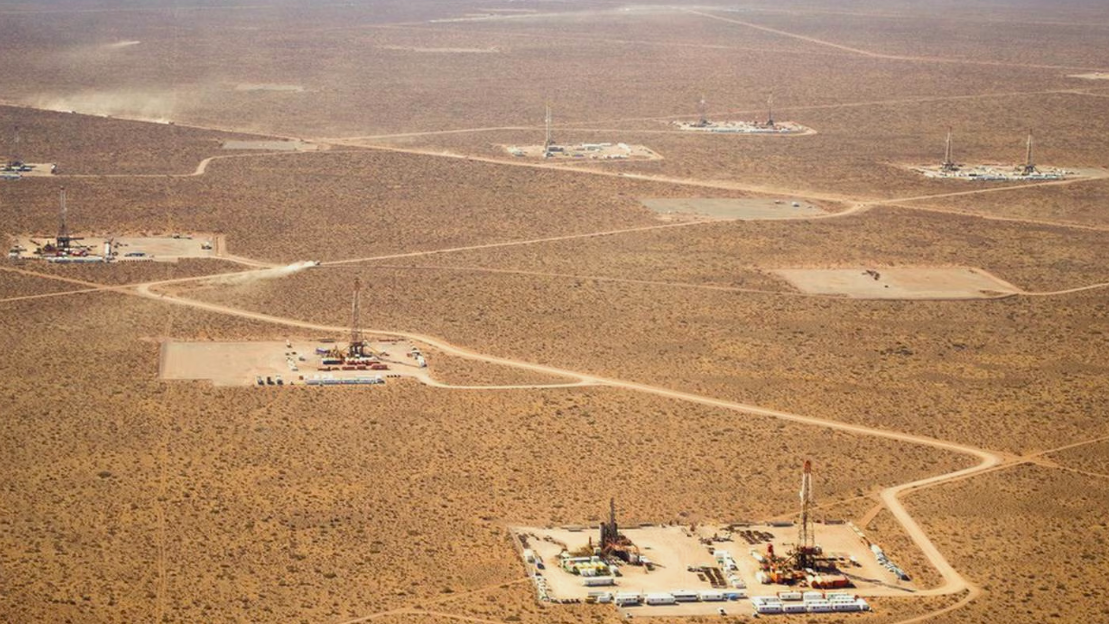
Specifically, this is a 467 km (and US$689 million) section of the pipeline that will carry gas from Vaca Muerta, in the southern province of Neuquén, to the province of Santa Fe, in the northeast.

Lula announced it during his trip to Buenos Aires to attend the Community of Latin American and Caribbean States (Celac) summit on January 24.
Lula spoke of the so-called “Vaca Muerta gas pipeline”, the largest infrastructure project in Argentina, to defend the return of “BNDES aid” to partner countries.
Immediately, the project was criticized even by members of his government.
“BINATIONAL EMBARRASSMENT” IN VACA MUERTA
For Ilan Zugman, Latin America director of the environmental organization 350.org, Vaca Muerta gas threatens the environment, the climate, the Mapuche indigenous people, and the Brazilian government itself.
“It’s a binational disgrace,” protests the climate activist, and stresses the risk of BNDES getting involved in a “climate bomb” that uses controversial hydraulic fracturing (or ‘fracking’).
“The problem is not financing works abroad; it is financing fossil energy,” Zugman points out.
Some “works abroad” made the BNDES the favorite target of the opposition since there were defaults by Venezuela, Mozambique, and Cuba of more than US$1 billion until December 2022.
Lula blamed the non-payments on former president Jair Bolsonaro for having broken diplomatic relations with Cuba and Venezuela, the reason for which these would have stopped paying.
THE GEOPOLITICS BEHIND THE PIPELINE
On October 31 last year, the day after Lula’s victory at the polls, Argentine President Alberto Fernández went to Brazil to visit him.
Cornered by low popularity, he may see his chances of reelection in October increase.
“Argentina faces a series of severe macroeconomic problems, most chronic. All this impacts the government’s popularity,” says Marina Pera, a Southern Cone at Control Risks consulting firm researcher.
In Argentina’s weakened economy, the support of Brazil, its leading trading partner, and the Vaca Muerta gas pipeline construction could boost Fernandez at the polls.
Pera says Fernandez’s reelection is also in Lula’s interest, especially as Mercosur renegotiates its free trade agreement with the EU.
“It is an obvious message that Lula wants to regain regional leadership,” says the political risk analyst.
Moreover, with the Russian invasion of Ukraine a year ago, natural gas has become a valuable resource on the international market.
Argentina sees in Vaca Muerta, which has the second-largest gas reserves and the fourth-largest shale oil reserves in the world, the opportunity to reverse the deficit in its “energy balance”.
POVERTY AND INDIGENOUS RIGHTS
Neuquén leads poverty rates in Patagonia.
“I saw with my own eyes that the promise of transforming Neuquén into the ‘Argentine Dubai’ is far from reality,” says Zugman.
According to the environmentalist, the exploitation of Vaca Muerta has intensified the dispute over natural resources in the region.
The most intense clash, however, is between the Argentine government and the Mapuche people, who oppose the exploitation of Vaca Muerta.
On January 16, 2023, the governor of the province of Neuquén, Omar Gutiérrez, signed the decree guaranteeing the Mapuche people the right to prior, accessible, and informed consultation, provided for in Convention 169 of the International Labor Organization (ILO).
“Isn’t it a contradiction that the Brazilian government announces its intention to finance a project abroad, which violates the rights of ancestral peoples while trying to save the Yanomami in their territory?” asks Zugman.
With information from BioBioChile
More: Brazil news in English, every day from The Rio Times.
Editorial responsibility: Matthias Camenzind, Editor-in-Chief · Editorial standards · Report an error