Biden-Xi Meeting: Small Steps Amid Global Tensions
Presidents Joe Biden and Xi Jinping met after a year with the aim of easing the growing tensions between the U.S. and China.
These tensions have worried nearby countries and threatened worldwide economic growth. The leaders managed to achieve modest successes at the meeting.
They made progress despite low expectations due to trade, Taiwan, and human rights differences.
This included efforts to tackle the fentanyl crisis and to reopen military communications. These communications had been halted after Nancy Pelosi’s visit to Taiwan.
Biden, speaking to reporters, talked about the U.S.-China competitive relationship. He focused on managing this competition to avoid conflicts.
However, larger issues like U.S. microchip export restrictions and South China Sea tensions remain unresolved.
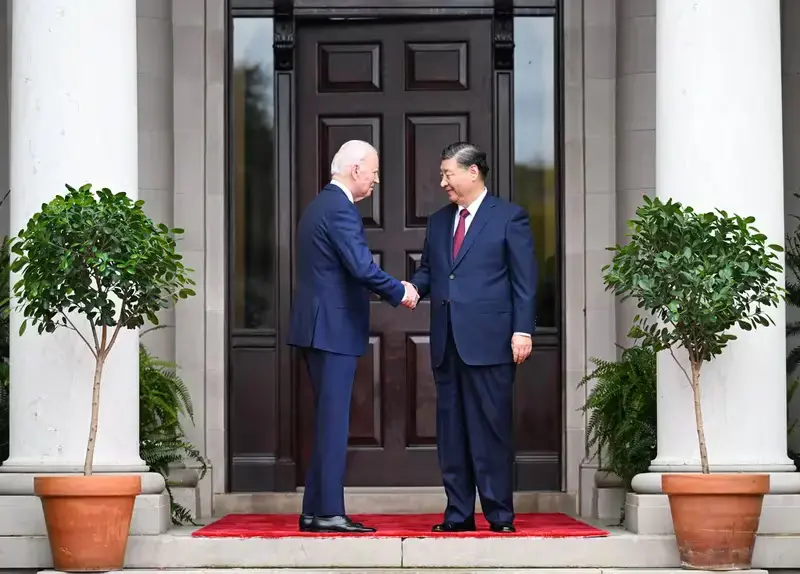
Xi Jinping sought agreements to boost China’s post-pandemic economy, but these were not achieved.
Xi also interacted directly with U.S. business leaders. He met with CEOs like Tim Cook of Apple and Larry Fink of BlackRock.
His goal was to draw foreign investment to China. Kurt Tong, a former U.S. diplomat, called the outcomes of the meeting “relatively small victories.”
The meeting took place near San Francisco. It was the peak of intense diplomatic efforts to repair a strained U.S.-China relationship.
This strain came from trade disputes, Russia’s Ukraine invasion, and a supposed Chinese spy balloon over the U.S.
Domestic pressures in the U.S. affect this relationship. Biden, after making planned remarks, responded to a reporter’s question about Xi being a dictator.
He affirmed that Xi is a dictator of a communist country, different from the U.S. This comment reflects the domestic pressure Biden faces, including from Republicans.
They criticize his approach to China as too soft. The 2024 election and accusations from Republicans like Donald Trump add complexity.
Trump compared himself to Biden, portraying Biden as weaker than Xi.
The tension between the U.S. and China underlines deep differences despite attempts to stabilize their relationship.
China Wanted to Reshape Relationship
China wanted to reshape its relationship with the U.S. at the meeting, but this goal was not met. The U.S. continues to see China as a competitor.
Xi highlighted his perspective at an APEC summit dinner. He questioned whether the U.S. sees China as an adversary or a partner. He warned against poorly informed policies.
Regarding fentanyl, China has started acting against firms sending chemicals abroad for drug production.
On military communication, China agreed to discussions between defense chiefs and senior military staff from both countries.
The U.S. believes engaging with China is essential to reduce the risk of conflict. Analysts emphasize the need for this engagement, especially with Xi’s growing power.
Despite these cooperative steps, the U.S. views China as a rival, and Beijing thinks the U.S. is trying to contain it.
This article was produced by The Rio Times’ automated newsroom system. How we use AI · Report an error · Editorial responsibility: Matthias Camenzind, Editor-in-Chief