Bangladesh Banks Navigate Uncertain Waters Amid Merger Plans
State-owned BASIC Bank and Rajshahi Krishi Unnayan Bank (Rakub) have sought clarity from the finance ministry on their proposed mergers.
This request follows substantial deposit withdrawals after the merger announcements, destabilizing both institutions.
In early April, after merger news broke, BASIC Bank saw deposit withdrawals totaling around Tk2,500 crore ($215 million).
This massive outflow, initiated by government entities and private depositors, has left the bank with a statutory liquidity reserve (SLR) deficit of Tk1,800 crore ($180 million).
The bank’s managing director, Md. Anisur Rahman voiced concerns over potential check dishonors and loss of public trust without swift government intervention.
Similarly, Rakub hesitated to merge with Bangladesh Krishi Bank (BKB), concerned about BKB’s poorer financial health.
Despite this, BKB’s board went ahead and approved the merger in late April, aiming to cut costs and improve service in the Rajshahi and Rangpur divisions.
Rakub’s Managing Director, Niranjan Chandra Debnath, remains focused on achieving financial stability by June 2024 through better banking practices.
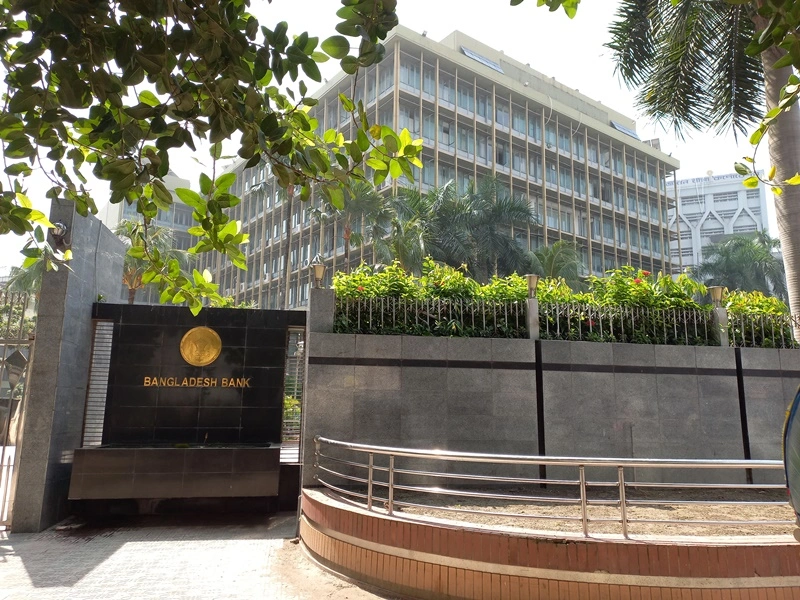
The forced mergers, initiated by Bangladesh Bank in March, involve ten private and state-owned banks.
In addition, the central bank aims to bolster governance and reduce bad loans by merging weaker banks with stronger ones.
The plan, however, sparked a crisis of confidence, leading to widespread deposit withdrawals and liquidity shortages.
Bangladesh’s Banking Sector Crisis
Bangladesh’s banking sector is reeling under a liquidity crisis, worsened by poor management and billions in bad loans.
International bodies like the IMF and the World Bank have voiced concerns over potential bank failures, prompting these drastic consolidation measures.
The merger plan includes combining Padma Bank with Exim Bank, Bangladesh Development Bank with Sonali Bank, and BASIC Bank with City Bank, among others.
Critics, including former central bank governor Salehuddin Ahmed, blame the crisis on political interference and lax oversight.
As these mergers progress, the stability of Bangladesh’s financial sector and the confidence of its depositors hang in the balance.
This article was produced by The Rio Times’ automated newsroom system. How we use AI · Report an error
Read More from The Rio Times