Argentina: Population in Mendoza Successfully Fights for Their Water
RIO DE JANEIRO, BRAZIL – Massive protests in Argentina’s most important wine-growing region, Mendoza, have led to the withdrawal of a change in the law that was intended to simplify the conditions for mining gold and silver.
Thus, the original Water Protection Act 7722, which regulated mining in Mendoza by banning the use of cyanide and sulfuric acid, was reinstated. In a fast-track procedure, the government in Mendoza had repealed Law 7722 shortly before Christmas and replaced it with Law 9209.

Subsequently, the Senate of the Province of Mendoza decided by 34 votes in favor and two against, to revoke the controversial law.
Both the ruling right-wing conservative-liberal alliance “Cambia Mendoza” and the mostly left-wing Peronist “Frente de Todos” had initially voted by a majority for the new Law 7722, which was intended to pave the way for investments in mining.
The use of cyanide, mercury, sulfuric acid, and other contaminating substances had been prohibited by law until then, thus indirectly banning water-intensive mining in Argentina’s most important wine-growing region.
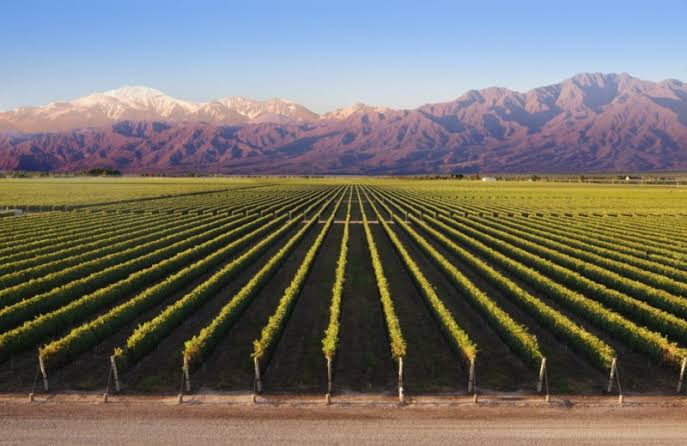
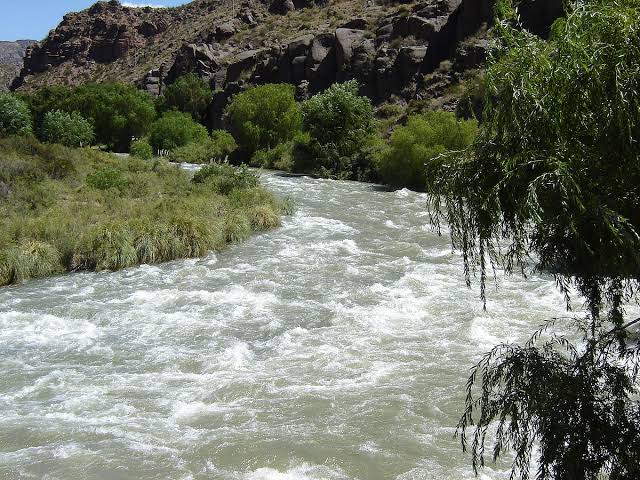
Mendoza is located in the dry steppe region in western Argentina as an oasis, which is only supplied with the meltwater of the Andean glaciers by a sophisticated irrigation system.
Before colonial times, the Huarpes built irrigation canals, referred to as ‘acequias’, whose course today supplies the vineyards of hundreds of wineries, in addition to households and tree-lined avenues in the city. According to official figures, over 80 percent of the water flows into agriculture.
However, for years scientists have been warning of an increasing drought in the region. Average temperatures are rising, ice glaciers are melting and not freezing sufficiently, and less water is flowing in the rivers.
In 2019/20, according to the local authority for irrigation (DGI), eleven percent less water will be available than last year. “For ten or eleven years, the panorama has been repeating itself every year,” says chairman Sergio Marinelli, “depending on the river, there is more or less water.
The water situation today is worse than last year. This is the new order of things, climate change. We have to prepare ourselves for it.”
Resistance to mining projects is a tradition in Mendoza. Twelve years ago, under pressure from the population, the same water protection law was hardened. “People are worried about potential effects on the water supply in this province,” said Lucrecia Wagner, who was already researching the protests at CONICET Argentinean research institute at the time.
A few hours after the change in the law became known, people from the surrounding departments gathered in streets and squares to protest under temperatures above 30 degrees Celsius.
Protesters continued over the Christmas holidays, wineries joined in and the wine queens of the districts threatened to boycott the wine festivals in March.
After a week of resistance, Governor Rodolfo Suárez finally bowed: “We were elected with 40 percent of the vote, but there seems to be no social consensus here now”. The conservative-liberal parliamentary majority candidate only took office on December 10th – at the same time as the new national government under the left-wing Peronist Alberto Fernández. According to Suárez, the Argentine President had promised him support for the new law.
The conservative-liberal opposition and the government alliance seem to be united at least in the exploitation of natural resources. When he took office, President Fernández lowered the tax on mining activities from 12 to eight percent, described the sector as “priority” and also referred to gold and silver areas in Chubut province in Patagonia. In the meantime, the first protests have also begun to stir there, as similar intentions as in Mendoza exist to relax water protection.
The center-left government hopes to revive the economy by means of large gas and oil production. Argentina is estimated to have the world’s second-largest reserves of shale gas. In the new year, the mega-fracking project at Vaca Muerta in northern Patagonia reported a production record.
The first delivery of liquefied natural gas from Vaca Muerta is expected to reach Europe for the first time in a few days.
More: Latin America news in English, every day from The Rio Times.
Live Market IntelligenceArgentina — Live Market Board
Rio Times · Live Market Intelligence
Argentina — Live Market Board
—
204,120.12
-1.15%
70,249.54
+1.43%
10,780.31
-1.87%
3,017,221
—
2,528.42
-1.25%
59,561.23
-4.26%
| Instrument | Last | Change | YoY | Prev. | High | Low | Volume |
|---|---|---|---|---|---|---|---|
| MERVAL | 3,017,221 | — | +30.51% | 3,022,485 | 3,042,365 | 2,991,150 | — |
| USD/ARS | 1,493 | +0.10% | +12.96% | 1,491 | 1,494 | 1,480 | — |
| YPF | 7,810 | +0.26% | +72.84% | 7,790 | 7,850 | 7,600 | 1,763,858 |
| GGAL | 6,980 | -0.78% | +1.82% | 7,035 | 7,115 | 6,920 | 1,564,062 |
| PAMPA | 5,115 | +0.69% | +26.70% | 5,080 | 5,140 | 5,000 | 721,190 |
| TXAR | 747.50 | -2.35% | +18.67% | 765.50 | 770.00 | 742.50 | 771,892 |
| ALUAR | 938.00 | -1.21% | +29.83% | 949.50 | 951.00 | 932.50 | 135,426 |
| TGS | 8,870 | -0.17% | +15.05% | 8,885 | 9,075 | 8,720 | 143,546 |
| CEPU | 2,156 | +1.84% | +28.36% | 2,117 | 2,165 | 2,086 | 404,146 |
| MIRGOR | 1,650 | -1.20% | -92.90% | 1,670 | 1,670 | 1,635 | 20,877 |
| COME | 40.93 | -0.73% | -30.47% | 41.23 | 41.60 | 40.50 | 4,258,884 |
| LOMA NEGRA | 3,130 | +0.08% | +5.80% | 3,128 | 3,205 | 3,090 | 182,992 |
| BYMA | 275.00 | -1.70% | +35.14% | 279.75 | 282.50 | 272.00 | 1,409,575 |
| TELECOM ARG | 4,233 | -0.70% | +55.19% | 4,263 | 4,335 | 4,160 | 31,896 |
| GLOBANT | 38.10 | -2.26% | -49.65% | 38.98 | 38.70 | 36.77 | 793,552 |
| MERCADOLIBRE | 1,870 | -3.59% | -20.71% | 1,940 | 1,927 | 1,870 | 329,640 |
This article was produced by The Rio Times’ automated newsroom system. How we use AI · Report an error · Editorial responsibility: Matthias Camenzind, Editor-in-Chief