Brazil Launches Local Fertilizer Plan After 85% Import Dependency
RIO DE JANEIRO, BRAZIL – Brazil’s federal government will launch a national fertilizer plan in December amid escalating prices for these products worldwide. The objective of the set of guidelines is to reduce the country’s extreme dependence on international suppliers.
In some cases, imports amount to 95% of what the country needs, which leaves agribusiness, the main weight in the Brazilian trade balance, very susceptible to international crises, such as the current one.
According to the Ministry of Agriculture, the foreign share will be reduced from 85% to about 60% over the next 30 years. This will not solve the current crisis that will affect the 2022/2023 harvest, but it may minimize future global supply/demand shocks.

Fertilizers are mineral compounds used to improve plant nutrition. “Brazilian soil is naturally poor in nutrients and acidic, especially in the Cerrado,” explains José Carlos Polidoro, a researcher at Embrapa (Empresa Brasileira de Pesquisa Agropecuária) Solos, to Poder360.
The main fertilizers used in agriculture are the so-called NPK group, about the letters representing the elements in the periodic table. N refers to nitrogen (nitrogen-based), P to phosphates (phosphorus-based), and K to those containing potassium.
This year alone, the prices of some fertilizers have more than doubled. This inflation is due, basically, to two main factors:
Natural gas: nitrogenous products are produced from gas. The mismatch between supply and demand for the fuel, accentuated by the onset of winter in the northern hemisphere, hit production hard. The price of natural gas began to rise significantly in September after China announced it would increase its consumption until the end of the first half of 2022;
The embargo on Belarus: The country is the 2nd largest exporter of potash (potassium compounds) to Brazil. About 1/5 of the country’s consumption comes from there. The prices of these fertilizers skyrocketed in June and August after the international community announced sanctions on the country in retaliation for President Alexander Lukashenko’s anti-democratic practices. The U.S. embargo will be in force for fertilizers starting in December. Brazil will follow the Americans. Yesterday, the European Union announced new sanctions.
Luís Eduardo Rangel, a special advisor to the Ministry of Agriculture, says the plan is in the final stages of preparation and will be launched through a decree by President Jair Bolsonaro (no party).
“The government realized that an interruption at the international level can compromise our economic base, which is agriculture. We cannot go through these scares of global shocks. We need to have room for maneuver to overcome this,” said Rangel to local press.
THE PLAN
According to the Ministry of Agriculture and Embrapa, the National Fertilizer Plan will have as critical points.
- Fiscal and tax incentives to manufacturers;
- Mapping of areas with mineral reserves to be explored and exposure of these potentials to private initiative;
- Debureaucratization of the entire production chain, including licensing processes for mining exploration, such as those of potassium and phosphorus;
- Opening of special credit lines for investors in the sector;
Stimulating research on new technologies for plant nutrition available in Brazil to reduce the participation of traditional fertilizers; and - A national campaign with guidelines on optimizing the use of fertilizers in the field to avoid waste.
Rangel says that the plan began to be considered in early 2021 when Bolsonaro issued a decree creating a working group to oversee its preparation, which included the Ministry of Agriculture, the Ministries of Infrastructure, Economic, Mines and Energy, and Science, Technology and Information.
Although the launch coincides with the worsening of the current crisis, it does not aim to solve it. “The plan is not aimed at emergency action. It is a structuring plan aimed at changing the panorama in 30 years, with cycles. It starts with short to long-term actions,” said Rangel.
Among these short-term measures, the government is considering two: the leasing of the two nitrogen plants that are still with Petrobras but without production; and the beginning of the exploration of the potassium reserve in Autazes, in the state of Amazonas.
HISTORIAL PROBLEM
The Brazilian dependence on the foreign market is a historical problem. The country never bothered to form a fertilizer industry, but it was not for lack of warning.
José Carlos Polidoro, from Embrapa, says that the federal government had been warned for at least ten years about the need to draw up a national strategy to solve the problem. “There was a lack of a program, a state policy. Now, this crisis has turned on the warning signal,” said Polidoro.
To date, there have only been four nitrogen plants, all belonging to Petrobras. The company got rid of two of them, one in Bahia and the other in Sergipe. They were leased in 2020 by Unigel and started producing again in the second half of 2021.
The other two plants, one in Paraná and another in Mato Grosso do Sul (still under construction), need to be sold. Petrobras negotiated them with the Russian group Acron in 2019, but the sale was not finalized.
For Marcelo Mello, StoneX fertilizer director, Petrobras did a good deal by selling the two factories in the Northeast. He says that attributing to the transaction, the worsening of the fertilizer market in the country is a mistake because the factories met a small portion of the Brazilian demand.
“Of the approximately 40 million tons of fertilizers that the country consumes per year, more or less 1/3 is nitrogen based. The two plants [Sergipe and Bahia], together, produced about 1 million. That is, it was 1 million within the 13 million. So, this was not what was going to save the homeland,” said Mello.
The specialist says that the plant in Mato Grosso do Sul is considered the “crown jewel” for its high production capacity. According to Petrobras, 81% of the plant’s construction is complete. When it is sold and starts operating, it will have the capacity to produce, daily, 3,600 tons of urea and 2,200 tons of ammonia.
“It is a new production technology. And to make ammonia, you have to be very close to the raw material, which is natural gas. And it is ‘on top of the Brazil-Bolivia gas pipeline. So, the raw material is passing under it. This means zero freight”, said Mello.
The lack of infrastructure, especially gas pipelines (Brazil is rich in natural gas but has fewer pipelines than Argentina), and the high cost of natural gas in the country contributed to the lack of interest from private initiatives in investing in the production of nitrogen-based products.
“Our gas is expensive. This is the Brazilian scenario. There is a direct relationship between nitrogen fertilizers and petroleum. Cheap energy generates competitiveness for nitrogen production,” said Rangel from the Ministry of Agriculture.
“Brazil does not produce nitrogen because it is a country of expensive energy, one of the most expensive in the world. The aluminum industry left here because of this,” said Mello from StoneX.
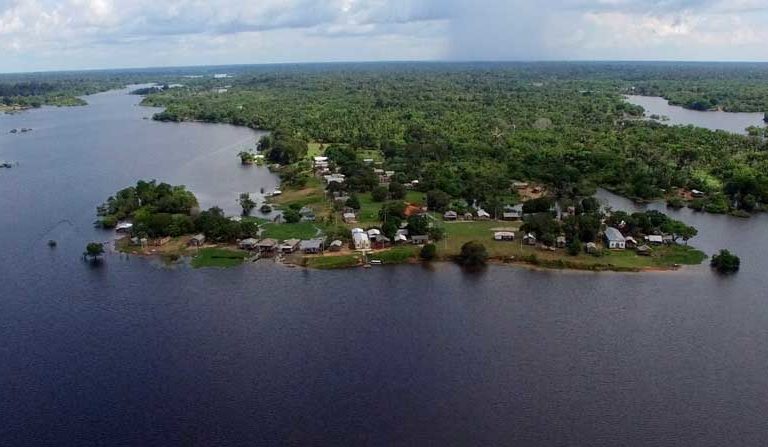
As for potash, all eyes of the government and agribusiness are on the Autazes reserve in Amazonas. Marcio Remédio, director of geology and mineral resources of the Brazilian Geological Service, a state-owned company linked to the Ministry of Mines and Energy, says that the mine will supply about 20% when production starts of the domestic market’s consumption.
Marcio says that the deposit is inserted in a much larger area called the Amazonas Sedimentary Basin, which was discovered in the 1970s during Petrobras’ oil and gas exploration research. In late 2020, the Geological Survey concluded the re-evaluation of the data, made available by the ANP (National Agency of Petroleum, Natural Gas and Biofuels).

“We concluded that this geological structure has the same potential as the world’s largest potash producers. We identified a total volume of more than 2 billion tons. Autazes and Fazendinha [Petrobras’ potash reserve, still unexplored] have about 3 billion tons,” said Marcio.
The holder of the exploration rights for the Autazes mine is Potássio do Brasil. José Carlos, from Embrapa Solos, said that the socio-environmental restrictions for the start of production, which involve indigenous areas, are being overcome. “We expect Autazes to start construction in 2023 and operation in 2025,” he said.
The Brazilian dependence on imported phosphates is much lower, from 70% to 75%. The main national reserves are in Minas Gerais and Goiás. From the Ministry of Agriculture, Rangel says that Brazil even has reasonable quantities but of low quality. “Our phosphate rocks are less efficient than those from Morocco, considered the best international source,” he said.
The crisis will make the basic food basket more expensive
Specialists consider inevitable the impact of more costly fertilizers on the costs of Brazilian agriculture for the 2022/2023 harvest, but they disagree about the risk of shortage.
For José Carlos, family agriculture will be the most affected and, consequently, produce foods such as vegetables, rice, and beans.
“The producer will have two alternatives: continue to use fertilizers, especially on vegetables, and sell at higher prices. Or decrease productivity. But then we will also have an increase in prices because there will be a shortage of food due to reduced supply. The risk for the internal supply and the pressure on the basic food basket is what worries us most,” he said.
The Embrapa Soils researcher also says that commodities will also be affected. Still, because it is a dollarized market – such as fertilizers -, it will have the more significant financial capacity to resist the crisis.
Besides, soy, one of the primary commodities in Brazil, does not need nitrogen-based products. “It has a bacterium, fixed in the root, through which it captures nitrogen from the air. This revolution that we achieved with soy, in the ’70s [the bacteria was enhanced by Brazilian researchers], if we could advance with sugarcane and corn, with the same technique, we would diminish the dependence on gas,” said Rangel, from the Ministry of Agriculture.
With information from Poder360
More: Brazil news in English, every day from The Rio Times.
This article was produced by The Rio Times’ automated newsroom system. How we use AI · Report an error · Editorial responsibility: Matthias Camenzind, Editor-in-Chief