Analysis: Unprecedented, 29 car factories stand idle in Brazil
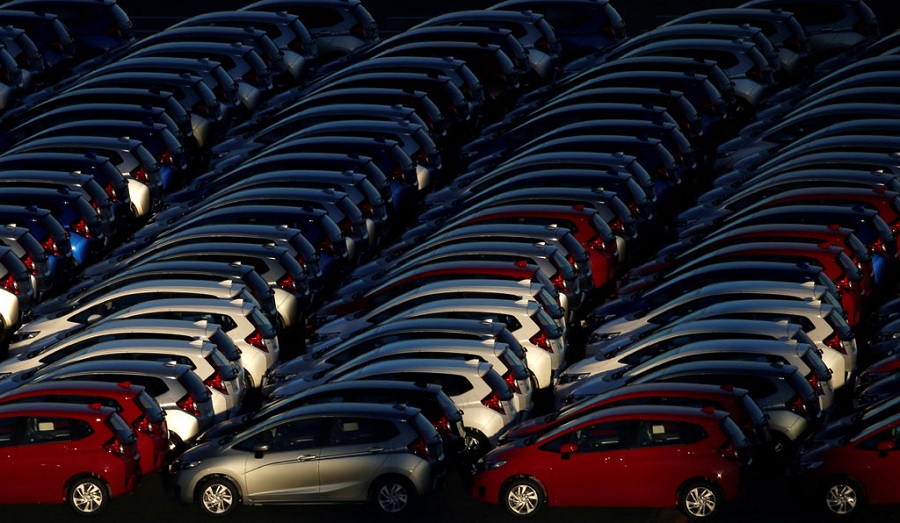
RIO DE JANEIRO, BRAZIL – A crisis considered “unprecedented” in the supply of components, coupled with the fall in demand in the domestic market with the worsening of the pandemic, led to the total or partial shutdown of 13 of the 23 automakers in the country, which total 29 factories stopped, out of a total of 58. The data are from Anfavea (National Association of Automotive Vehicle Manufacturers).
This is not the first time that part of the industry stops its activities in Brazil this year.
Between January and February, during the oxygen shortage crisis in Manaus, at least four motorcycle manufacturers in the Free Trade Zone temporarily halted production, according to Abraciclo (Brazilian Association of Manufacturers of Motorcycles, Mopeds, Scooters, Bicycles and Similar Vehicles). Other industries in the region had to reduce shifts due to the curfew imposed to contain the spread of the virus in the state.

The temporary paralysis of part of the industry worsens the outlook for the performance of the Brazilian economy in 2021. The projections for the GDP (Gross Domestic Product) have already been reduced since January, due to the worsening of the pandemic and the slow progress of vaccination.
At the beginning of the year, the market’s median projection for GDP growth in 2021 was 3.4%, after a 4.1% drop in 2020. In the most recent Focus bulletin from the Central Bank (March 29), the growth forecast for this year was already 3.18%. But the most pessimistic are already betting on figures below 3%.
Cascading shutdowns
Volkswagen was the first automaker to announce the suspension of production in the country, on March 19th. “With the worsening of the number of pandemic cases and the increase in the rate of occupation of ICU beds in Brazilian states, the company adopts this measure in order to preserve the health of its employees and families,” the company informed at the time.
In the following days, the stoppage announcements followed one after another. Some of the companies pointed to the lack of components as a reason for reducing production, as in the case of Volvo and GM.
“The reason is the high level of instability in the global and local supply chain of parts, mainly semiconductors, combined with the worsening of the pandemic.
In the last Anfavea survey (3/30), the following were stopped: Mercedes, Renault, Scania, Toyota, Volkswagen, Volkswagen Trucks and Buses, BMW, Agrale, Honda, Jaguar, and Nissan. GM and Volvo did not stop completely, but reduced production substantially.
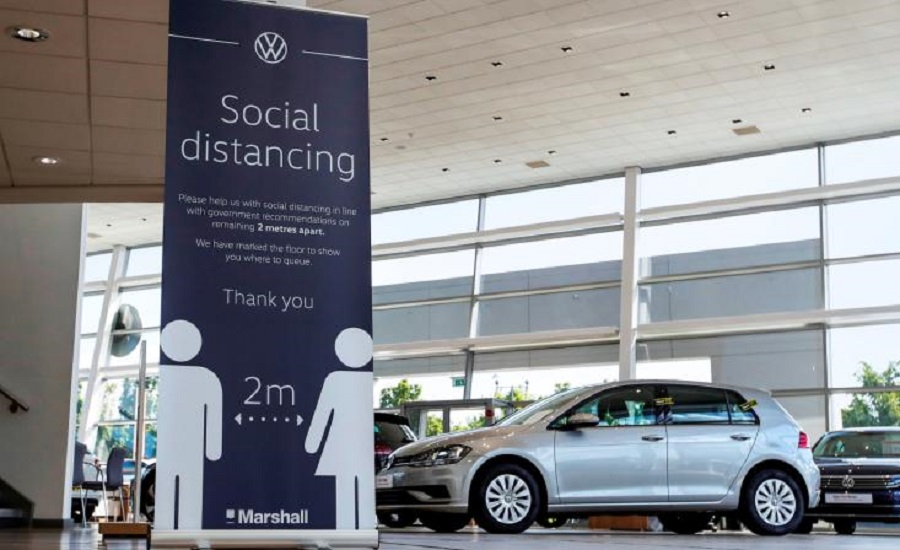
The stoppages began on March 24th and the companies plan to return between April 5 and the end of May. But analysts assess that the stoppages may be extended, depending on the progress of social isolation measures in the states and municipalities, since in many of them the dealerships are closed, preventing sales.

Shortage of chips around the world
According to Milad Kalume Neto, business development manager at Jato Dynamics, a consulting firm specializing in the automotive market, there are two main reasons that led to the wave of shutdowns in Brazilian automobile factories.
“The first reason is the lack of parts, due to international logistics, and supply problems, especially for semiconductors,” says the consultant.
According to the specialist, the product deficit is due to the recovery of the Chinese economy. The Asian country is the largest producer of chips in the world and has prioritized its domestic market in the recovery, to the detriment of exports to other countries.
In addition, semiconductors are also used by the industry of notebooks, computers, video game consoles, televisions and cell phones, products whose sales grew a lot in the pandemic, due to people staying at home.
“In parallel to this, there is also the decrease in sales due to the paralysis of large urban centers by the second wave of the covid,” says Kalume Neto.
According to data from Fenabrave, association that represents the dealers, in the accumulated January and February of this year, about 339 thousand vehicles were registered in Brazil, among cars, light commercials, trucks and buses.
The amount represents a 14% drop over the same period in 2020, also impacted by the increase in ICMS on vehicle sales in São Paulo, a state that accounts for more than 23% of new car sales and 40% of used car transactions in the country.
Cassio Pagliarini, associate consultant at Bright Consulting, also cites the social concern of automakers amid the worsening of the health crisis. “With the increase in the number of deaths and infections, the automakers decided, together with the unions, to stop activities and make a plan to recover production further ahead,” says Pagliarini.

Revision of projections
With the production stoppage, Jato Dynamics revised its estimate for how many cars should be sold in Brazil this year, from an estimate of 2.3 million to 2.4 million at the beginning of the year to 2.1 million. In 2020, 1.95 million vehicles were sold.
“We will have to hope very hard for it to reach 2.1 million, it will depend a lot on how long the shutdown lasts. Each day that the factories are closed this affects the projections”, says Kalume Neto.
Bright Consulting cut its projection from 2.45 million to 2.38 million
“Now we are in the hand of the pandemic,” says Pagliarini. “Because of the lockdowns and isolation measures enacted by the state and municipal governments, the dealerships have closed and the customer has become more aloof. So whatever we lose now, we won’t be able to recover, not because of industry capacity, but because of purchasing capacity.”
Pagliarini points out that in 2020, vehicle sales recovered quickly because they compete primarily with home renovations, courses, and travel. Although renovations continued, courses and travel were greatly reduced, which led more consumers to invest in cars, also in the face of the perceived insecurity of public transportation.
Automotive downtime has a knock-on effect
The temporary halt in the automotive industry will impact industrial production and also the performance of the GDP in 2021, says economist Claudio Considera, coordinator of the GDP Monitor of the Ibre-FGV (Brazilian Institute of Economics of the Getulio Vargas Foundation).
Based on data from the System of National Accounts of the IBGE (Brazilian Institute of Geography and Statistics) for 2018, Considera points out that the manufacture of cars, trucks, buses and auto parts represents 0.9% of the Brazilian GDP and 6.7% of the GDP of the manufacturing industry; 0.4% of the country’s total employment and 4.1% of industry employment; in addition to 1.4% of the economy’s wages and 8.8% of the wages of the industrial sector.
“Here’s the thing: that’s just the direct weight. Because the automotive industry buys plastic, rolled steel, chemicals, metal products, rubber products,” the economist lists. “All of that ceases to be in demand when you stop producing automobiles.”
In February, even before the stoppage of the automakers, the Brazilian industrial production had already retreated 0.7%, in relation to January, with a drop of 7.2% in the production of vehicles, according to IBGE.
The Ibre-FGV estimates that the country’s GDP should fall 0.5% in the first quarter and another 0.5% in the second quarter. Still, the institute projects a 3.2% high GDP for the year, counting on the progress of vaccination and gradual reopening of activities in the second half.
Manaus Free Trade Zone on alert
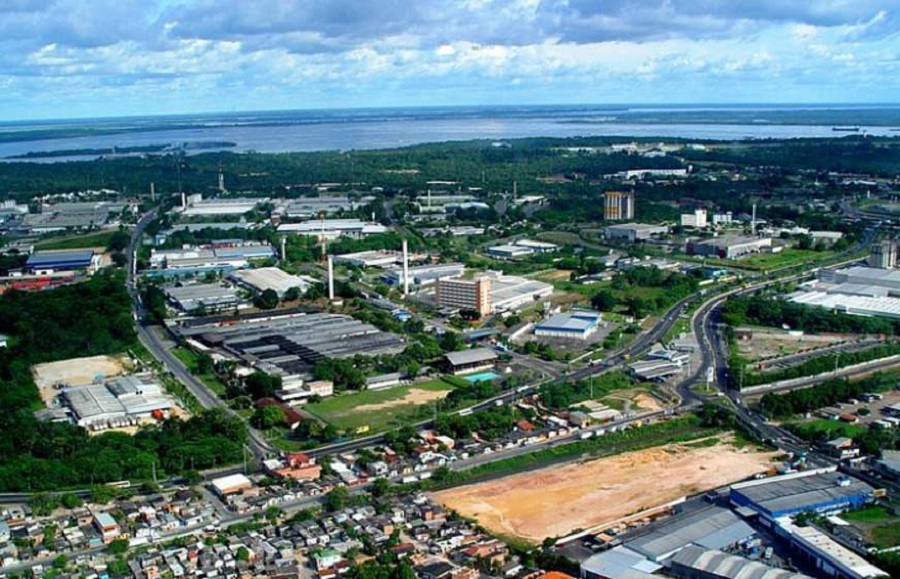
The perspective of lower growth of the Brazilian GDP this year puts the manufacturers of the Manaus Industrial Pole in a state of attention.
Algacir Polsin, superintendent of Suframa (Superintendence of the Manaus Free Trade Zone), an agency linked to the Ministry of Economy that manages the Free Trade Zone, recalls that companies in the center had their activities affected earlier this year, during the crisis of lack of oxygen in Amazonas.
“There was a stoppage at night, the third shift of the factories, due to the restrictions of the state government,” says Polsin. “There were also momentary production stops, by decision of some companies, for safety, lack of parts, or even for the issue of oxygen, which is used in the industry and was reallocated for health.”
According to Abraciclo, an entity that represents the motorcycle industry, manufacturers Honda, Dafra, Triumph and J. Toledo (Suzuki’s representative in Brazil) even temporarily stopped production in Manaus.
In January, when the industrial production in Brazil as a whole advanced 0.4% in relation to the previous month, the production in Amazonas dropped 11.8%, according to IBGE. There is still no regionalized data for February.
“At this moment, we already have the industrial hub working at a normal pace. But we are waiting for what is happening in the rest of the country,” says Polsin. “It is natural that any reduction in demand for finished products, due to traffic and trade restrictions in the rest of the country, can affect the Manaus Industrial Hub.”
The performance of the automotive industry is also being closely monitored. “We have car parts that are manufactured here in Manaus and we are following the situation, to see if this can, over time, impact the hub.”
Polsin points out however that in 2020, the Free Trade Zone recorded a 14% growth in revenue, compared to 2019, even amid the severe effect of the coronavirus on Manaus. “Production was very affected in April and May last year, due to the pandemic. But then it started to grow again,” says the superintendent.
According to him, this was possible due to the change in habits of the Brazilian population, which resulted in an increase in sales of air conditioners and computer items, due to remote working and distance learning. Besides the strong growth in the demand for motorcycles and bicycles, as a result of the delivery advance.
In a year that started with the announcement of Ford’s exit from Brazil and that has already registered significant stops in March in most of the automotive sector, the question naturally arises: can other automakers follow the American company and leave the country?
For Kalume Neto and Pagliarini, from Jato Dynamics and Bright Consulting, this is a scenario that cannot be ruled out, but it is not the most likely in the short to medium term.
Pagliarini explains that Ford’s exit is linked to the company’s decision to dedicate itself to the production of pick-ups, vans and SUVs (sport utility vehicles), electrified vehicles and the luxury model Mustang. With this, the company decided to abandon the production of hatches and sedans, the two most popular models in Brazil.
In addition, the company was granted tax benefits in the country for 15 years, between 2003 and 2018. With the termination of these benefits, Ford had no profitability at the Camaçari plant in Bahia.
“The pandemic came and accelerated everything,” says the Bright Consulting analyst, explaining that, in view of the company’s change of strategy and the lack of profitability and idleness of its plants in Brazil, the drop in demand caused by the pandemic accelerated the decision-making process regarding leaving the country.
Thus, Pagliarini highlights that Ford’s case had particularities. But it is necessary to take into account that the installed capacity in Brazil is for the production of 4.8 million vehicles per year and are currently being produced practically half of this. “There is more than 2 million idle capacity in the country,” highlights the analyst.
“With the decrease in the market, there is always the risk that a company ends up leaving, but no factory is on the horizon to be closed in the Brazilian market today,” evaluates Kalume Neto, from Jato Dynamics.
Can automakers lay off workers again?
As for the maintenance of employment in factories, analysts assess that everything will depend on the extent of production stops.
“Historically, before the last crisis, the national industry worked with 125,000, 130,000 employees,” recalls Kalume Neto. “Today we are between 100 thousand and 105 thousand, so there has already been a decrease and this is very visible when you visit the automakers.”
According to the analyst, the second half of 2020 was a resumption of production and employment, but this process can now be interrupted. “With this new pandemic cycle, companies are on hold. They are not laying off, but they are examining the market.” This is also the assessment of Renato Almeida, vice president of the Metalworkers Union of São José dos Campos and Region and a GM worker.
The assembler announced in March the shutdown of its plants in São Caetano do Sul (SP) and Gravataí (RS) due to lack of electronic components. In São José dos Campos (SP), 600 workers were put on lay-off for two months – they join another 368 employees who had already had their contracts suspended since last year.
“We see with great concern the current economic and political situation in Brazil. Added to this is this unprecedented crisis of lack of parts, which has disorganized the entire Brazilian industrial park,” says Almeida. “We made the lay-off agreement with the company’s management with job stability, which means that there can be no lay-offs for ten months, neither for those who are at the plant today nor for the lay-off workers,” he says.

“This gives us a certain security, but nothing is certain. How many agreements have automakers torn up? Ford itself had a stability agreement until 2021 and ended up determining the closing of the plants”, recalls the union leader.
Machine operator Adriano Henriques Silva, 40 years old, ten of them spent at GM plant in São José, was one of the 600 workers included in the most recent lay-off.
He must stay at home between March 8th and May 2nd, receiving a benefit paid by the government from FAT (Workers Support Fund) resources, with a salary supplement by the company. This is the second time the employee has been put on lay-off, the previous time was during the 2013-2014 crisis, when Silva stayed home for five months.
“Since I am scheduled to return in two months, the days are not being so hard. I’m looking at it as a vacation, but since it’s during the pandemic, there’s no way to walk around,” Silva says.
“I hope that, the way I left, two months from now when I return, everything will be the same, with the same co-workers, and that production will normalize. That’s what I hope.”
Source: G1
More: Brazil news in English, every day from The Rio Times.
This article was produced by The Rio Times’ automated newsroom system. How we use AI · Report an error · Editorial responsibility: Matthias Camenzind, Editor-in-Chief