Agri Column: Foreign Investors Increasingly Interested in Brazilian Agritech Startups (Week 31/2020)
RIO DE JANEIRO, BRAZIL – One of the main innovation and technology events of the agritech startups, the World Agritech South America Summit, held last week, provided good results for Brazil. The event placed Brazilian startups in the showcase and opened a huge window for foreign investors to watch, through a magnifying glass, what is being done in the country’s agricultural and livestock technology.
Francisco Jardim, investor and CEO of SP Ventures fund, was present. Son of an ambassador, Jardim has been in the agritechs business since the area was in its infancy.
With incursions in Silicon Valley, for many years, Jardim brought the world’s main startup development models to Brazil.
The Agro&Business column interviewed CEO Francisco Jardim, of SP Ventures, one of the largest promoters of agritech startups in Brazil. Jardim talked about the event and criticized the negative propaganda being made about Brazilian agriculture. “We are losing the narrative,” he said.
“At the event we saw researchers, investors, entrepreneurs, showing that Brazil is not just about food production. We have a complete ecosystem of agritech startups, closed, guided and based on science and innovation, which is what has placed Brazil at the forefront we are in today. To be the main tropical agricultural power in the world”.
In the opinion of the entrepreneur and investor, there is negative propaganda about Brazilian agriculture, which needs to be reversed through counter-information.
“I don’t think this story is well reported abroad. And the agendas out there eventually become very negative, about the environment and so on, and stealing the stage from what is true agribusiness. So I think the event here was a unique opportunity to shed light and show what true Brazilian agribusiness is all about.”
Despite the limited opportunities for competitiveness, Brazilians stand out in foreign trade focused on agribusiness. “It’s an entrepreneurial Brazilian agribusiness that doesn’t depend on the state, we have much fewer subsidies than Europeans and Americans, and [even so] we compete with them out there, we gain market share,” Francisco Jardim says.
Another Brazilian challenge is the lack of infrastructure. “Our agricultural producers are heavily penalized from the gateway; we don’t have railways, we don’t have waterways, we don’t have ports like the Americans do, and yet we get out there and conquer markets in China, as well as other consumers.”
Brazil is advanced in terms of “good agriculture”, contrary to what is spread abroad, that several poisons are used. “We have an organic industry that complements or replaces the use of chemicals and generates an IPM, or ‘Integrated Pest Management’, much more sustainable than what we see in many countries abroad. And yet we are seen out there as a poisonous agricultural crop producer, with an unbridled use of poisons.”
One of the required actions is the investment in foreign marketing, in order for the world to better understand Brazilian agriculture. “We need more marketing of our organic industry, more marketing of our research centers of excellence, but marketing about our environmental laws and preservation code, protected areas, and many other things that must be explained. For surely we are losing the narrative.”
Dairy Policy: Rio Grande do Sul milk producers deliver requests to Bolsonaro
Dairy farmers expect the federal government to pay greater attention to the sector. This expectation is the result of a meeting between the leaders of the Construindo Leite Brasil Movement and the Construindo Leite Association with President Jair Bolsonaro, in late July, in the city of Bagé (Rio Grande do Sul). They handed Bolsonaro the demands of dairy farming. One of the main requests is the extension of the Proagro insurance for pasture and silage, among other activities, in milk production.
The dairy sector’s agenda consists of the following:

*Regulating milk imports;
*Encouraging internal milk consumption, including government actions;
*Encouraging the export of domestic milk;
*Rural insurance for producers, which has coverage in corn silage and pastures due to various phenomena and climate changes;
*Tax incentives for producers and exemption for the production of milk;
*Anticipated price to producers thus enabling them to plan, to know the amount they will receive for their product before the beginning of the following monthly period.
Soy Maximum Productivity Challenge
The UPL is in celebration, the producer of ‘defensives and biosolutions’. The combination was key for rural producers to win five of the six awards granted by the Challenge of Maximum Soy Productivity in the 2019/2020 harvest, an initiative hosted annually by the Strategic Committee Soy Brazil (CESB). The combination of chemicals and biosolutions is part of the Pronutiva program, developed exclusively by the UPL company.
The great national champion, who also won in the South region, was Laercio Dalla Vechia, from Mangueirinha (Paraná). Using the Foltron Fisioactivator and the multisite fungicide Unizeb Gold, he reached 118.82 bags per hectare. In terms of irrigated soybean, Eliseu Jose Schaedler was the champion, from Boa Vista das Missões, with 111.93 sc/ha, using products that make the physiological modulation of the plants.
“The combination of crop protection solutions with biosolutions is the proposal of our Pronutiva program, with which we take care of the entire crop cycle in an integrated and sustainable way. With healthier plants, we can achieve high quality and productivity levels, such as those registered in this edition of the CESB challenge,” says Jorge Tame, marketing manager for Pronutiva at UPL Brazil.
Ethics in organic products
Native, the organic products brand of the Balbo Economic Group, has just become the first food company in the world to receive the ‘ethical supply system certification’ granted by the UEBT (Union for Ethical BioTrade) – an international non-profit association that has established a ‘global standard’ for the sustainable use of biodiversity in the production chain.
The ‘Respectfully Supplying’ label, as it is called, recognizes the principles that guide ethical sourcing: conservation and sustainable use of biodiversity, respect for workers’ rights, systems for ethical sourcing, among others.
In the case of Native, the seal certifies that all the company’s efforts regarding the supply of organic sugar and alcohol have been assessed and are in accordance with the EUBT principles for ethical biocommerce. The company accounts for between 18 and 20 percent of global organic sugar production, exporting its products to 70 countries on five continents.
Startups: Biological Pest Control
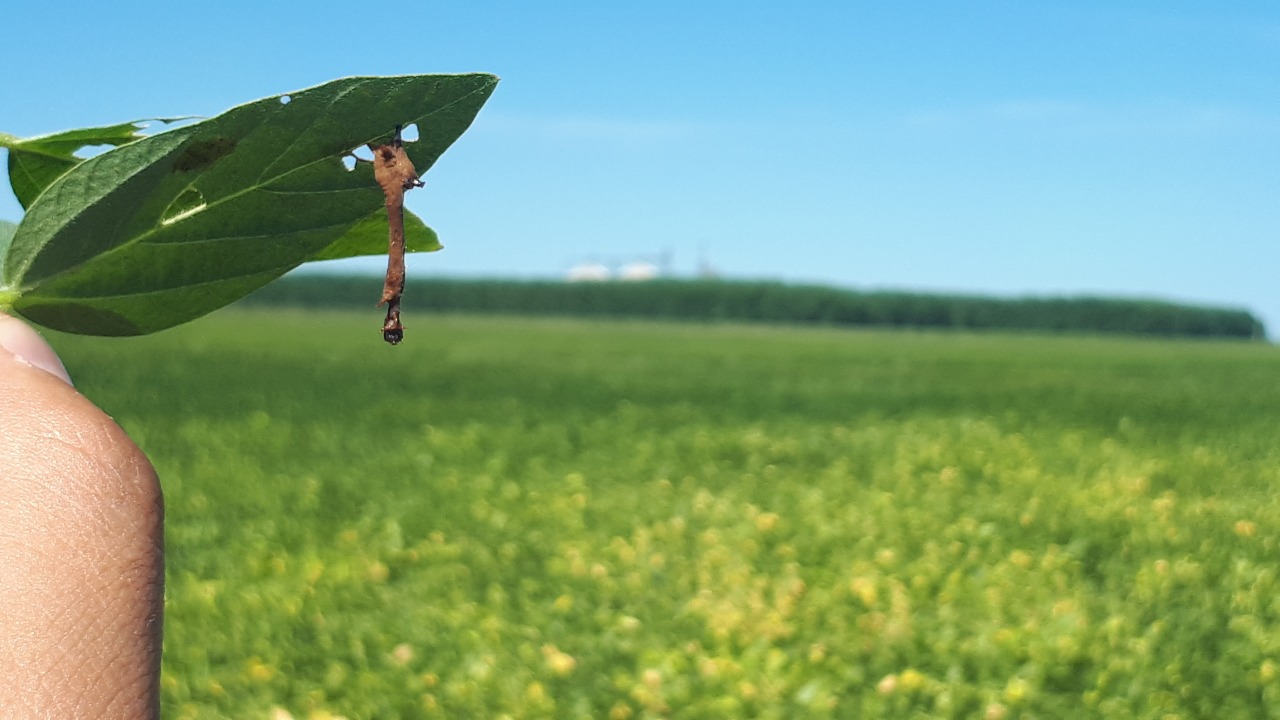
AgBiTech took the lead in the market of baculovirus for soy caterpillars, three years after its debut in Brazil. AgBiTech’s share in the movement of ‘biologicals for caterpillars’ in soy reached 17 percent of the category’s sales, equivalent to US$18 million, in the 2019/20 harvest.
The result has pushed the company to the status of player in the segment and, concurrently, made it the market leader in baculovirus for oleaginous beans. The data are from Spark Strategic Consulting.
In the same period, AgBiTech’s products for soybean caterpillars and other crops reached a total of two million hectares treated, growing more than 200 percent over the 600,000 hectares of the 2017/2018 cycle, when the brand made its commercial debut.
According to Spark, in the last harvest, the total market for caterpillar insecticides, including chemicals, dropped five percent in value to US$480 million. There was also a six percent decline in treated area to 64.6 million hectares.
In contrast to the market, sales of bio-insecticides for soybean caterpillars grew 28 percent compared to the 2018/2019 cycle. In treated area, in the same period, they rose 19 percent, to 1.7 million hectares.
The Spark data project a strong trend of continuous progress of the organic market, given that the adherence to supplies reached 21 percent of farmers in the areas analyzed by the consultancy, in the 2019-20 harvest.
Industry projections also show that over an estimated five- to ten-year period, organic insecticides will account for approximately 20 percent (US$150 million) of insecticide sales (total market), currently at approximately US$900 million.
New command
Brazil’s performance led the Paine Schwartz Partners (PSP) controlling fund to elect the country as its key market. Now, Brazilian executive Adriano Vilas Boas is at the helm of AgBiTech’s business strategy. Until last June, he was the CEO for Latin America and has just taken over the position of Global CEO.
Outside Brazil, Vilas Boas says that AgBiTech will seek growth in consolidated markets, such as the United States and Australia, and also in emerging regions, such as countries in Africa and areas in Paraguay, in the latter due to the fast expansion of the soybean industry.
AgBiTech has also further strengthened its portfolio of bio-insecticide solutions. Through an agreement with Startup Tarvos, from Campinas, the company will operate in the caterpillar monitoring market.
Tarvos has developed a state-of-the-art ‘trap’ system, unprecedented in the world, which enables the counting of ‘moths’ per square meter. With the use of a satellite, the model does not require connectivity to operate with precision in Brazilian areas.
The AgBiTech-Tarvos system will allow cost cutting, ranging from 20 to 40 percent, in caterpillar control treatments, as well as reducing the use of chemical products.
Agro drone cuts costs and reduces environmental impact
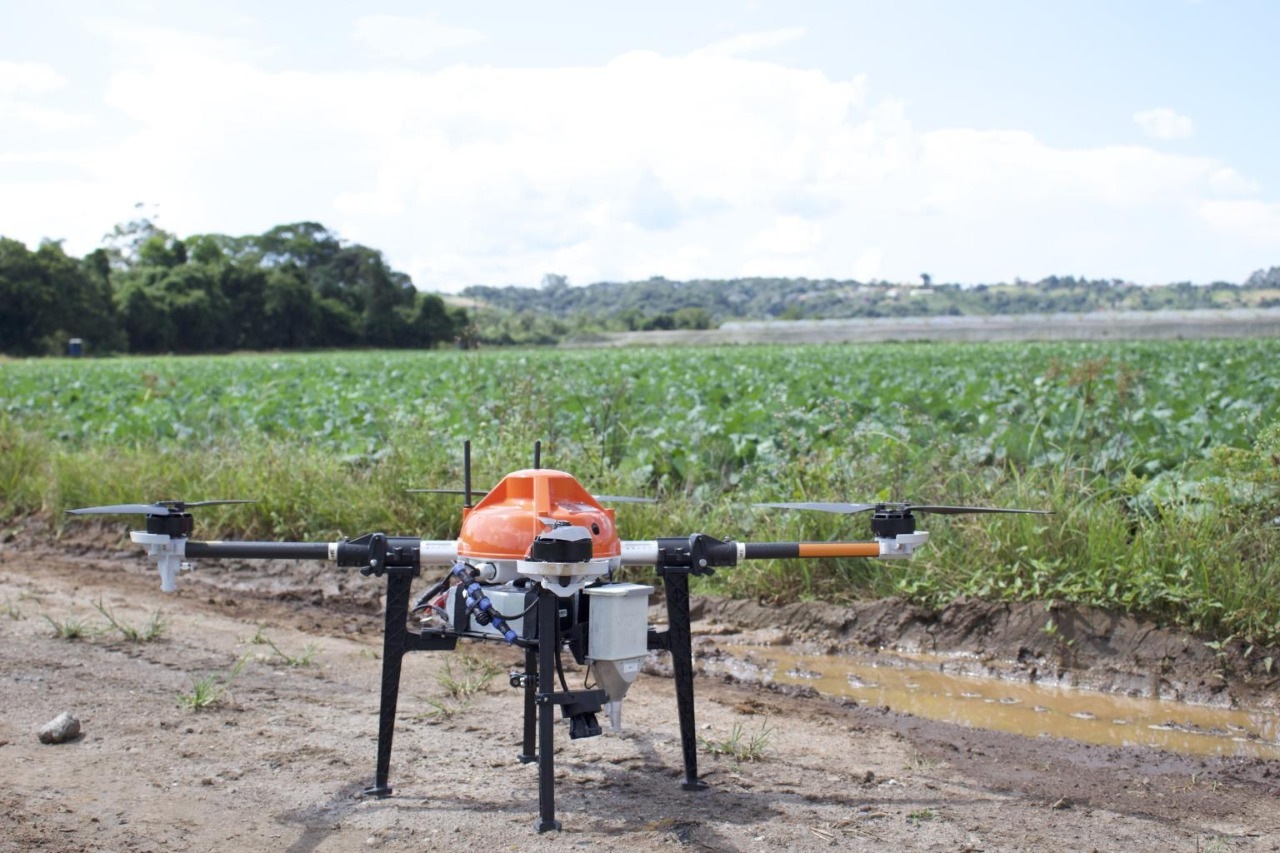
The application of microbiological defensives relies on technological strategies of spraying through drones. The technique, known for the release of macrobiologicals, has been adopted by horticulturists of the São Paulo green belt with financial gains and savings in the use of natural resources. The application of Koppert’s products is performed by VOA, a company from São José dos Campos.
According to Nei Brasil, CEO of VOA, the first tests of drone application are being conducted on kale and cabbage crops, with the application of Boveril (Beauveria bassiana) and Trichodermil (Trichoderma harzianum); the first is an insecticide and the second, a biological fungicide and nematicide.
The introduction of drones for spraying when compared to manual or motorized sprayers can represent an operational field capacity 30 times higher.
This new form of application also represents a reduction in labor cost for crop treatments, in addition to reducing the impact of treated areas such as plant kneading and soil treading.
Another positive feature of the drone application is the reduction in water use: although other forms of spraying use 800 l/ha, with drones the solution is only 30 l/ha – an approximately 26-fold reduction in water consumption for the same service.
The company estimates that 80 percent of fruit, vegetable and legume production uses manual spraying.
Agroindustry: Oliq launches 2020 harvest of avocado oils
After the launch of the 2020 harvest of olive oils in April, it was time for the Oliq avocado oils to reach the market. This year, the harvest offers two types of olive oil, the 100 percent avocado, which is pure avocado olive oil of this variety, and the Sicilian lemon flavored one, which results from the infusion of lemon peel in the oil.
The avocado oil, as well as the olive oil, is extracted from the fruit pulp. It is therefore possible to extract it ‘raw’, i.e. by purely mechanical means, without using chemical solvents.
The machine developed for olive oil extraction performs the same task with avocado. However, some adjustments are required. “When processing olive oil, the stone is ground together with the pulp and then discarded with it. The avocado seed, as well as its peel, leaves an unpleasant residue in the oil. Consequently, to extract the oil from the avocado, it must first be pulped by hand,” explains Vera Masagão, Oliq’s partner and owner.
The extraction of the 2020 harvest has just begun. To date, over 6 tons of avocado have been processed, resulting in approximately 850 liters of oil. The process will continue for the next few months, totaling some 15 tons of fruit and two thousand liters.
Given its the large amount of phytosterols and vitamin E, avocado oil has many positive, anti-bacterial, antiviral and anti-inflammatory properties, as well as being a powerful antioxidant, thus helping to decrease the signs of aging.
JBS Biodiesel expands production in Santa Catarina
JBS last month started the construction of its new biodiesel plant, located in the municipality of Mafra, Santa Catarina. The plant will be operated by JBS Biodiesel, a division of JBS Novos Negócios, with an investment of R$180 million through Seara Alimentos.
The JBS Biodiesel plant in Mafra will cover a total area of 76,000 square meters, with a production capacity of some one million liters of biodiesel per day. Around 400 jobs will be generated for its construction. The inauguration is scheduled for June 2021 and should create 100 direct, plus some 300 indirect jobs.
The municipality of Mafra is located in a strategic region for the national biofuel sector. As well as relying on efficient logistics of loading and unloading by rail and road, it is 120 kilometers away from Araucária, where the Presidente Getúlio Vargas Refinery is installed, one of the main diesel mixing and distribution units in the country.
More: Brazil news in English, every day from The Rio Times.
Editorial responsibility: Matthias Camenzind, Editor-in-Chief · Editorial standards · Report an error