Analysis: A dangerous security dilemma is rapidly developing in Pakistani-Taliban relations
One of the greatest fears of International Relations scholars is the development of a security dilemma in the relations between any particular pair of states.
This concept refers to the gradual breakdown of trust that subsequently leads to one side preemptively taking action in defense of what its leadership regards as their objective national interests.
Read also: Check out our coverage on curated alternative narratives
Their counterpart, however, perceives these moves as unprovoked and destabilizing, which in turn leads to them responding in their own way that they sincerely believe to be in defense of their objective national interests as well.

The result is a self-sustaining cycle of mutual tensions that risks sparking a conventional conflict by miscalculation, one which could even be indirectly encouraged through a third party’s meddling to advance their interests at those two’s expense.
The abovementioned dynamics regrettably describe the present state of Pakistani-Taliban relations after the second’s Defense Minister just accused that neighboring state of being an American military proxy that allegedly allows US drones to transit its airspace en route to Afghanistan.
However, this development didn’t occur out of nowhere, as all security dilemmas owe their origins to prior moves that contributed to the public drama between whichever pair of parties it is that is currently caught in this self-sustaining cycle of mutual tensions.
The purpose of this piece is therefore to comprehensively explain the reasons why this dangerous dynamic has come to define Pakistani-Taliban relations and then conclude with some well-intended suggestions about what should be done to reverse this trend.
THE ROOTS OF MUTUAL SUSPICIONS
America’s chaotic evacuation from Afghanistan one year ago prompted plenty of speculation that Pakistan would emerge as the kingmaker of that neighboring country’s affairs, but that scenario hasn’t come to pass for several reasons.
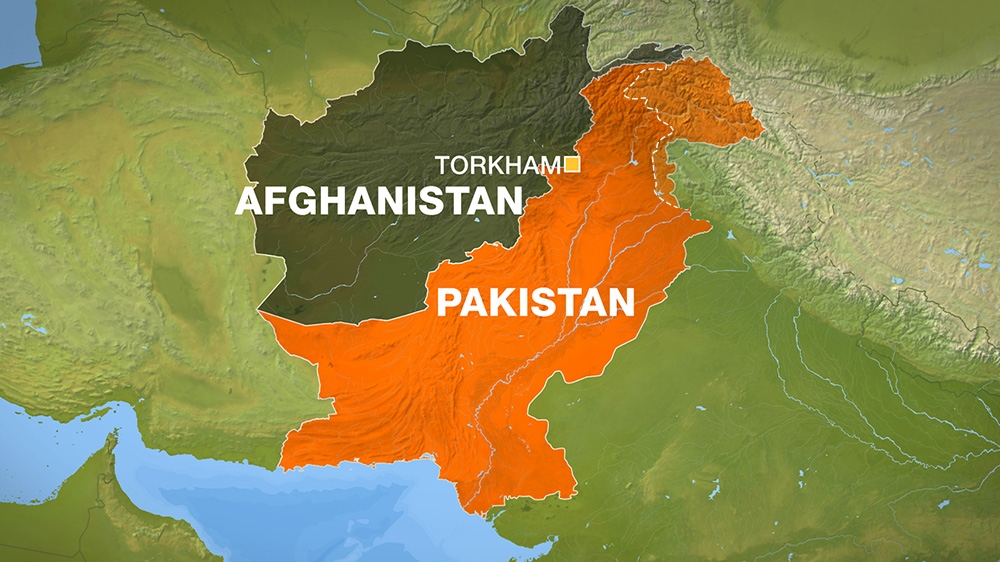
First, the Taliban appreciated Pakistan’s reported patronage of it at times and support for that group’s national liberation campaign, but it’s also fiercely independent and thus feared falling so deeply under Islamabad’s influence that it might ultimately feel pressured to unilaterally concede on sensitive issues that it regards as being in Afghanistan’s national interests such as Kabul’s rejection of the Durand Line.
This perceived concern of losing its strategic autonomy and resultant capability to independently rule its homeland set everything in motion.
Pakistan, for its part, wanted to ensure that Afghan territory wouldn’t ever again be used by third parties to stage terrorist attacks against it.
To that end, it had a vested interest in at the very least “supervising” the Taliban’s post-war policies, especially its defense and foreign ones.
It can only be speculated how Pakistan planned to implement this in practice, but its intended method seemingly spooked the Taliban into suspecting that Islamabad had “hegemonic” motives even if its reported patron never had any such plans.
In any case, the point in drawing attention to this is to raise awareness of how both sides gradually began to distrust one another: the Taliban feared Pakistani “hegemony” over Afghanistan, while Islamabad feared that Afghanistan would continue posing a terrorist threat.
THE MUTUAL MANAGEMENT OF EACH OTHER’S MULTI-ALIGNMENT
The second development in this security dilemma sequence came after the Taliban began practicing a policy of multi-alignment by cultivating equally close relations with all responsible stakeholders like Russia and China to preemptively avert any potentially disproportionate dependence on Pakistan through friendly, gentle, and non-hostile means.
It has the independent right to do so as Afghanistan’s de facto leaders, especially since its increasingly Russian-focused geo-economic balancing act posed no direct threat to any third parties like Pakistan.
This genuinely multipolar foreign policy complemented Pakistan’s at the time under former Prime Minister Imran Khan prior to his removal in early April through a US-orchestrated but domestically driven post-modern coup.
Up until that point, there was no credible chance of Pakistan ever hosting US military bases or even “passively facilitating” American drone strikes in Afghanistan by letting them transit through its airspace after its former leader famously replied “absolutely not” when asked about this scenario last summer.
Nevertheless, despite Pakistan and the Taliban’s mutually beneficial and complementary multipolar foreign policies in the nearly nine months since the US’ chaotic evacuation from Afghanistan, one particular issue remained a lasting irritating in their relations: the Taliban’s de facto alliance with the terrorist-designated TTP (Pakistani Taliban).
Islamabad couldn’t help but be very concerned about this and what it might mean for the future of its people’s security, hence why it promptly asked Kabul to broker talks.
The Taliban did so to project an international image of themselves as a peaceful and non-radical force as well as to allay its neighbor’s concerns about the scenario of it employing that group as an anti-Pakistani proxy sometime in the future or at the very least “passively facilitating” third parties’ use of them to that end.
The talks didn’t really lead to much, but they were still a positive development that helped maintain trust between Pakistan and the Taliban in spite of each side’s earlier mentioned concerns about the other that were already leading to the gradual growth of a security dilemma.
So long as the Taliban didn’t let third parties meddle in their relations through the TTP and Pakistan continued to practice its “absolutely not” policy, ties remained comparatively stable and predictable.
THE POST-MODERN COUP GAME CHANGER
That all suddenly changed after the US overthrew former Prime Minister Khan through its post-modern coup plot, which in hindsight was carried out as punishment not only for the Eurasian dimension of his independently promulgated multipolar foreign policy but especially for his refusal to host American military bases or at least let its drones transit through Pakistani territory en route to Afghanistan.
In an instant, the Taliban came to immensely distrust what the ousted leader accurately referred to as his country’s imported government, which in turn resulted in the group expanding its multi-alignment policy in a way that also immediately provoked distrust of its intentions from Islamabad after the group began actively courting Pakistan’s Indian rival a lot more enthusiastically than ever before.
Pakistan and India are perfect examples of what a security dilemma looks like in practice, especially with respect to that conceptual dynamic unfolding in a third country such as Afghanistan as it has since the start of the century after the onset of America’s two-decade-long occupation of that country.
Pending a resolution of the long-running Kashmir Conflict, Islamabad will always feel uncomfortable with any Indian activity in that neighboring state.
Yet it diplomatically declined to condemn earlier post-war engagements between the Taliban and its rival since it accepted Kabul’s independent right to cultivate ties with Delhi so long as they didn’t manifest themselves in any way that threatened Pakistan’s objective national interests or appeared poised to do so.
It’s impossible to know whether the Taliban intended to explore the resumption of American-occupied Afghanistan’s close military-security ties with India in ways that it knew would have provoked a sharp reaction from Pakistan, but that’s nevertheless the outcome that resulted from the intensification of their contacts after the US-orchestrated but domestically driven post-modern coup against former Prime Minister Khan.
The Taliban feared that this imported government would secretly renege on his public promise to “absolutely not” host US military bases or allow its drones to transit their territory en route to Afghanistan, while Pakistan feared that the intensification of Taliban-Indian relations could lead to Kabul letting Delhi employ the TTP as proxies against it exactly as it claimed had earlier been the case.
INDIAN-LEANING AFGHANISTAN VS. AMERICAN-LEANING PAKISTAN
Therefore, the fourth development in the Pakistani-Taliban security dilemma directly emerged from the US’ post-modern coup against former Prime Minister Khan and took the form of both parties suddenly practicing dramatically different foreign policies that provoked mutual suspicions of their intentions.
Pakistan began to suspect that the sudden difficulties in negotiating with the TTP might have resulted from speculative Indian influence “passively facilitated” by the Taliban.
The Taliban began to suspect that the US’ post-modern coup catalyzed Pakistan’s economic collapse and could lead to Islamabad secretly reneging on its former leader’s public promise to not at the very least “passively facilitate” drone strikes against Afghanistan in exchange for Washington unlocking urgent aid.
At this point, the security dilemma between those two became undeniable but remained comparatively more manageable than it presently is until the fifth stage unfolded in early August.
America’s assassination of the Al Qaeda chief in Afghanistan was widely suspected to have been “passively facilitated” by Pakistan’s US-installed post-modern coup regime, letting its patron’s armed drone transit through that country’s airspace.
Shortly after, senior TTP leaders were also killed in Afghanistan, likely due to special operations by Pakistani intelligence and their local assets.
These almost certainly weren’t coordinated with Kabul but were carried out unilaterally to eliminate what Islamabad regarded as Taliban-tolerated and Indian-influenced threats.
Several weeks later, the Taliban’s Defense Minister accused Pakistan of being an American military proxy, as was mentioned earlier in this analysis, which marked the sixth and current phase of their rapidly intensifying and thus extremely dangerous security dilemma.
Neither side had hitherto publicly implied that the other constituted a serious security threat to their objective national interests (whether directly or indirectly, as in this case).
Although Pakistan has yet to openly say so, observers can confidently assume that it’s begun to suspect that the Taliban also constitutes a serious indirect threat to its security through its enthusiastic embrace of India and continued patronage of the TTP.
Islamabad seems to think the latter two are now working together with the Taliban’s blessing.
DEBUNKING THE CONSPIRACY OF COORDINATED INDIAN-AMERICAN MEDDLING
At this point, it can be said that while the Pakistani-Taliban security dilemma owes its origins to “innocent” misperceptions of the other that were previously manageable since neither suspected that any adversarial third party was meddling in these mutually sensitive issues, this dynamic has now evolved to the point where both suspect their counterparts of colluding with their hated enemy (if not outright being under their influence) in ways that threaten their objective national interests.
Pakistan and the Taliban each believe that their respective rivals have regional divide-and-rule intentions motivated by their desire to advance zero-sum goals, which further exacerbates the mutual distrust that’s come to define their bilateral relations and thus reduces the chances of reversing this trend.
Be that as it may, observers shouldn’t fall for the speculation that India and the US are colluding with one another to divide and rule Pakistan and the Taliban since ties between the first pair are actually increasingly characterized by their own security dilemma.
This destabilizing dynamic began to unfold in the 18 months from June 2020-December 2021 but became an issue of global significance after America unsuccessfully attempted to pressure India into scaling back its relations with Russia following the latest US-provoked phase of the Ukrainian Conflict.
Delhi’s multipolar leadership proudly rebuffed it and instead doubled down on the Russian dimension of its dual-tripolarity grand strategy.
Since the US signaled that it’d retain this failed policy, relations with India will likely remain strained.
For this reason, it’s unrealistic to suspect that they’re in cahoots and coordinating their efforts to exacerbate the rapidly intensifying and extremely dangerous Pakistani-Taliban security dilemma.
That doesn’t mean that each hasn’t played a role in bringing this dynamic to its present state.
It is simply a conspiracy theory to publicly claim that they are working hand in hand to that end when they have clearly had a major falling out over Russia in the last six months.
Acknowledging this, it’s possible that one or both of them (albeit in an uncoordinated fashion) might further contribute to worsening mutual distrust between Pakistan and the Taliban, especially if Washington demands that Islamabad facilitate more anti-Afghan drone strikes.
CONCLUDING THOUGHTS
To review, the Pakistani-Taliban security dilemma naturally emerged from mutual suspicions of the other’s terrorist sympathies and hegemonic yearnings respectively but remained manageable until the US-orchestrated post-modern coup against former Prime Minister Khan, after which each party’s policies suddenly diverged in extremely radical ways.
The result is that they now regard one another as credible threats to their objective national interests, especially since their counterpart is suspected of colluding with their hated enemies (if not being outright influenced by them).
From this, it can be concluded that the US-orchestrated post-modern coup and Pakistan’s subsequently suspected “passive facilitation” of an American drone strike in Afghanistan were watershed events in this regard.
Accordingly, only a democratic reversal of the US’ recent regime change in Pakistan and the attendant return to its former leader’s principled policy of “absolutely not” supporting American attacks against Afghanistan can restore trust between that country and the Taliban.
The asymmetry of threat perceptions between the Taliban’s fear of “passive facilitation” of further U.S. drone strikes by Pakistan and Pakistan’s fear of “passive facilitation” of India by the Taliban using the TTP as a proxy against it suggests that Kabul will not make the first move.
It fears unilaterally abandoning the only “deterrent” it has to keep Islamabad’s secretly restored military alliance with Washington in check.
If Pakistan does not take the first step, its security dilemma with the Taliban will only worsen.
Join us on Telegram: t.me/theriotimes
Editorial responsibility: Matthias Camenzind, Editor-in-Chief · Editorial standards · Report an error