Colombia · Reconstruction
Key Facts
- How much damage the quake did: As of Sunday 16 August, Colombia’s disaster agency UNGRD counted 289 dead, 4,187 injured, 143 missing and 186,016 people affected across the country. Nearly 27,000 homes were destroyed outright.
- What the president promised Buenaventura: Abelardo De la Espriella flew into the Pacific port on Sunday and announced a rescue package for its health system, plus help to rebuild homes. He put no price tag on it.
- The hospital ship that showed up: The navy vessel Benkos Biohó has been treating patients in Buenaventura since Friday, doing surgery, lab tests and X-rays. After five days it sails to remote coastal villages to look for people who cannot travel to a clinic.
- Why the town needed a ship at all: Both of Buenaventura’s main hospitals are out of action or close to it — Hospital Luis Ablanque de la Plata is running reduced services and Clínica Santa Sofía is damaged.
- How families are meant to rebuild: The state will hand out building materials and send in professional supervisors, and families do the building themselves. Anyone whose home is gone or unsafe can also get a rent subsidy.
- The money actually on the table: Colombia has drawn US$200 million from a World Bank disaster credit line worth up to US$450 million, and private families have pledged COP 250 billion — about US$80 million. Not one peso of it has been publicly earmarked for Buenaventura.
- The paperwork that has not arrived: The president said an economic-emergency decree is coming, but as of Monday it had not been published. Until it is, nobody outside government knows who will run the reconstruction fund or how big it will be.
Colombia’s new president brought a hospital ship and a long list of promises to the battered Pacific port — the price tag is still blank.
Colombia’s new president took a hospital ship and a stack of promises to Buenaventura on Sunday, a week after the earthquake that wrecked the Pacific port city. The Buenaventura reconstruction plan is specific about what the government will do — and silent on how many pesos it will spend.
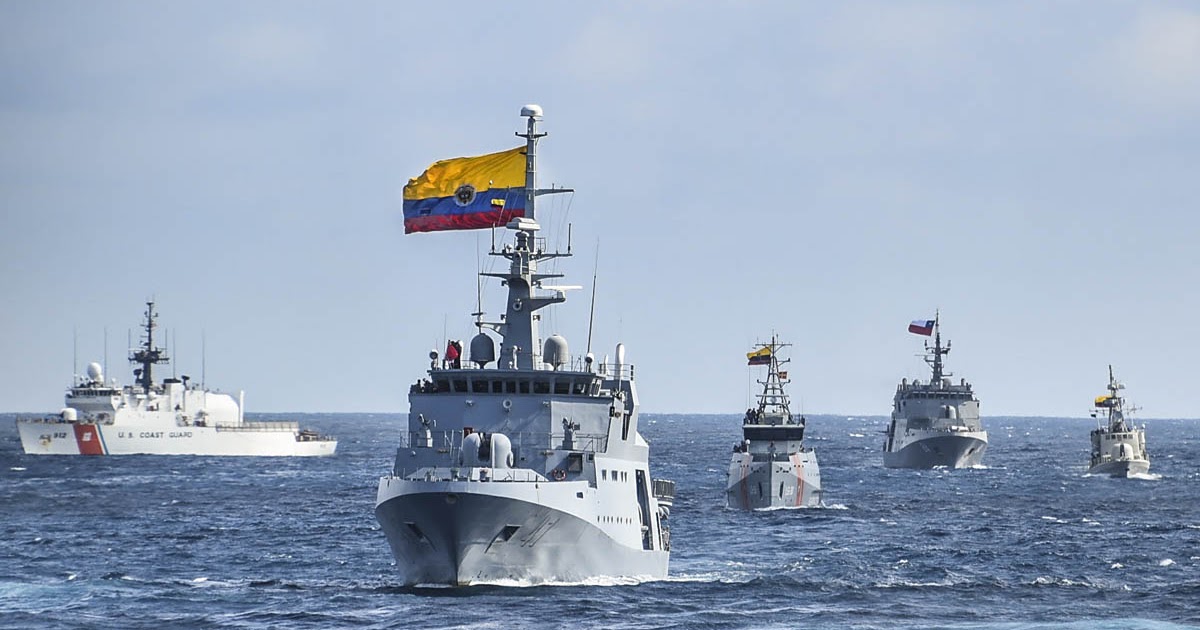
A week after the quake, the president shows up at the port
Exactly one week after a magnitude 7.4 earthquake hit western Colombia on Monday 10 August, President Abelardo De la Espriella travelled to Buenaventura. He came with a hospital ship and a list of promises for the city’s collapsing health system.
The epicentre was near San José del Palmar in Chocó department, but Buenaventura — poor, long neglected and central to Colombia’s trade — took a heavy hit. The national count stood at 289 dead and more than 186,000 people affected as of Sunday, according to UNGRD, Colombia’s national disaster-management agency, and you can follow how it climbed in our earlier report on the rising death toll.
What is actually inside the package
The centrepiece is the navy hospital ship Benkos Biohó, put back into service and working since Friday 14 August. It prioritises surgery and also runs lab tests and X-rays.
Caracol Radio reports the ship stays five days in Buenaventura, then sails to outlying villages such as Bahía Málaga, La Bocana and Juanchaco. There it goes house to house looking for patients too sick or too far away to reach a clinic.
It is there because the town’s two main hospitals are hurt — Hospital Luis Ablanque de la Plata is running reduced services and Clínica Santa Sofía is damaged. The government has also sent 260 kilos of medical supplies, put up tent wards with about 24 beds, flown complex cases out and brought in surgeons from Bogotá.
The Health Ministry says fresh money is coming to fix the finances of Hospital Luis Ablanque de la Plata, which was already under government intervention and broke before the quake. The amount has not been disclosed.
Houses, schools, water — and the catch
On housing, the government is going with self-build, or autoconstrucción: it supplies the materials and professional supervision, and families put their own homes back up. Households whose homes are gone or unsafe get a rent subsidy in the meantime.
Children whose schools are unusable keep learning online. The president also promised to settle Buenaventura’s “historic debt” in water supply and sewerage, a grievance the city has nursed for decades.
Here is the catch. No peso figure has been published specifically for Buenaventura, so nobody can yet say how much of the national reconstruction pot will actually land here.
The city’s own damage count is still moving. Mayor Ligia del Carmen Córdoba’s administration reported 10,148 homes affected, 954 destroyed outright, 150 buildings judged unsafe and 26 dead — up sharply from an earlier tally of 19 dead and 3,965 homes.
Then the sea joined in. An unusually high tide known locally as a puja peaked at about 4.91 metres early on 16 August and flooded several neighbourhoods, with Semana reporting hundreds of families evacuating and no official damage figure yet.
The money behind the miracle
The Buenaventura measures sit inside a national scheme called Plan Milagro de Reconstrucción, or Miracle Reconstruction Plan, funded through a vehicle named Fondo Milagro. It is meant to pool public and private money to rebuild homes, hospitals, schools, roads and airports across five departments.
The confirmed money so far is modest. The Finance Ministry says Colombia has taken a first US$200 million draw on a World Bank catastrophe credit line worth up to US$450 million, repayable over 20 years with five years’ grace, El Tiempo reports.
Asocajas, the association of Colombia’s compensation funds, has proposed freeing up COP 90 billion — about US$28.8 million — from the social-housing fund FOVIS for repairs, rebuilding and rent subsidies. That is a proposal, not a payment.
Private donors have moved faster. The Santo Domingo family pledged COP 100 billion — about US$32 million — and banker Jaime Gilinski and his wife Raquel pledged COP 150 billion — about US$48 million — though the Gilinski gift is earmarked for hospitals and schools in Cali, not Buenaventura.
Set that against the size of the job. Investment bank BTG Pactual puts the full reconstruction bill at roughly COP 20 trillion — about US$6.4 billion, or around 1% of Colombia’s economy — and that is an analyst’s estimate, not a government budget.
The president said from Quibdó that an economic-emergency decree is coming, using the emergency powers in Colombia’s constitution. As of Monday it had not been published, and Fondo Milagro’s legal structure, administrator and total size were all still unknown.
The same week: fires in the hills, drones in the northeast
Colombia is fighting a wildfire emergency at the same time. On 16 August La FM counted 32 active fires, citing the weather institute IDEAM and UNGRD, while El País counted 36 the same day — the tallies differ by source.
El País also reported more than 1,000 hectares burned and 339 municipalities on red alert. IDEAM warned the same day of hotter weather and less rain from September, so this is likelier to get worse than better.
In Abejorral, Antioquia, governor Andrés Julián Rendón and the town’s mayor announced a reward pot of up to COP 500 million — about US$160,000 — on 16 August. It is for information identifying whoever is setting the fires, which authorities say are being lit deliberately.
Separately, the ELN — the National Liberation Army, Colombia’s largest remaining guerrilla group — has been active in the northeast. A commander using the alias “Silvana Guerrero” resurfaced in a video on 16 August threatening the state after a recent military offensive, Infobae reported.
The army says that on the night of 15 August its troops in Ábrego, Norte de Santander, were attacked with drones carrying explosives, and it blames an ELN unit. On 17 August the Defence Ministry said the group had also threatened a hospital in Ábrego with explosive-laden drones, and Semana reported it obstructed the transfer of wounded soldiers being treated there.
Treat that carefully. It is the government’s account of events, and no independent confirmation from the Fiscalía, the prosecutor’s office, or the Defensoría del Pueblo, the ombudsman, has been reported.
Why this matters if you invest or live in the region
Buenaventura moves a large share of Colombia’s foreign trade, so how fast it recovers is a supply-chain question as much as a humanitarian one. Notably, no official damage assessment for the port itself has been published a week after the quake.
The thing to watch is the gap between announced measures and committed pesos. Until the emergency decree appears and Fondo Milagro has a number attached to it, the fiscal cost of this disaster — and what it does to Colombia’s borrowing — is guesswork.
Frequently Asked Questions
What is actually in the Buenaventura reconstruction plan?
A hospital ship, tent hospitals, medical supplies and extra staff for the health system, plus a self-build housing scheme where the state supplies materials and families do the work. There are also rent subsidies, online schooling and a promise to fix the city’s water and sewerage.
How much money has been committed?
Colombia has drawn US$200 million from a World Bank disaster credit line worth up to US$450 million, and two families have pledged COP 250 billion — about US$80 million — between them. No peso figure has been published for Buenaventura specifically.
Why does Buenaventura matter beyond the humanitarian story?
It is Colombia’s busiest Pacific port and handles a large share of the country’s trade. No official damage assessment for the port has been released, so the trade impact is still an open question.
Did the ELN really threaten a hospital?
Colombia’s Defence Ministry said on 17 August that it did, in Ábrego, Norte de Santander, using drones fitted with explosives. That is the government’s account — the prosecutor’s office and the ombudsman have not publicly confirmed it.
Connected Coverage
Colombia Earthquake Death Toll Reaches 289
Karol G and Miguel Bosé Headline a Bogotá Solidarity Concert for Quake Victims
Colombia Earthquake Reconstruction Faces a Funding Gap as the Toll Hits 281
Sources: El Tiempo — De la Espriella announces special attention for Buenaventura’s health system; La República — Government announces reconstruction plan and measures for Buenaventura; Presidencia de Colombia — President reports 289 dead and more than 186,000 people affected; Caracol Radio — Hospital ship Benkos Biohó reinforces care in Buenaventura; El Tiempo — How to finance a reconstruction of this size: government activates plan with multilateral support; Semana — Fenómeno de puja hits Buenaventura: families evacuate as tide surges after the quake; El Colombiano — COP 500 million reward offered over those responsible for the Abejorral fire; El País — Wildfires worsen the emergency: 36 active fires and 339 municipalities on red alert; Infobae — Colombian government denounces ELN threats against a hospital in the northeast; Semana — After drone attack, ELN obstructed transfer of wounded soldiers from Norte de Santander hospital; Pulzo — The De la Espriella government’s roadmap to rebuild after the earthquake, step by step; NTN24 — Buenaventura mayor after De la Espriella’s visit
This article was produced by The Rio Times’ automated newsroom system. How we use AI · Report an error
Read More from The Rio Times