Economy · Argentina
Key Facts
—The endorsement. IMF Managing Director Kristalina Georgieva praised President Javier Milei’s austerity and reform agenda.
—The message. She said Argentina is now better positioned to meet its debt obligations after years as a serial defaulter.
—The visit. Georgieva was the first IMF chief to visit Buenos Aires in eight years.
—The numbers. Annual inflation has slowed to about 33%, down from roughly 210% when Milei took office in late 2023.
—The upgrades. Moody’s recently raised Argentina’s credit rating, following earlier upgrades by S&P and Fitch.
Argentina’s painful economic overhaul has won a powerful endorsement. The head of the IMF praised President Javier Milei’s austerity drive and said the country is better placed than in years to pay its debts.
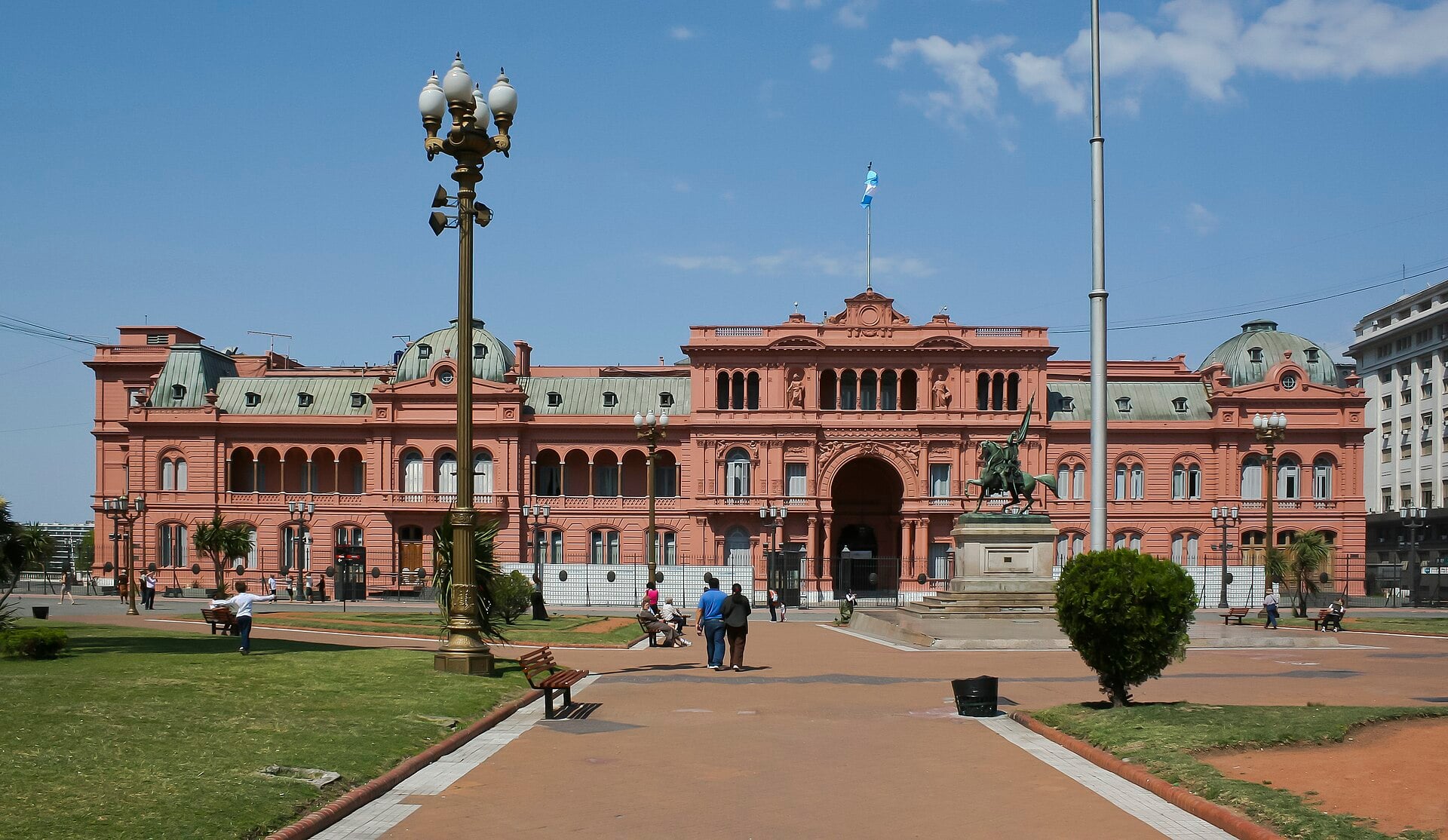
A rare vote of confidence
IMF Managing Director Kristalina Georgieva hailed what she called a “much sounder” Argentine economy under President Javier Milei. She said his austerity policies and reforms had restored market confidence in a country long regarded as a serial defaulter.
Georgieva was the first IMF chief to visit Buenos Aires in eight years, a symbolic gesture given the fund’s fraught history with Argentina. She expressed confidence that the country could meet its debt obligations.
For a foreign reader, the term “serial defaulter” carries a specific weight. It describes a sovereign nation that has repeatedly failed to make payments on its bonds or loans, eroding trust among international lenders.
Argentina’s ninth sovereign default in 2020 was the latest chapter in a cycle that has kept the country locked out of affordable global credit for long stretches. An IMF endorsement, therefore, is not just diplomatic praise.
It acts as a signal to private banks and bond funds that the country is a safer bet, which can lower the interest rate Argentina must offer to borrow money.
What has improved
Argentina’s outlook has brightened on several fronts, with bond prices rising and central-bank reserves increasing. Annual inflation has slowed to about 33%, down sharply from roughly 210% when Milei took office in late 2023.
Credit-rating agencies have taken notice. Moody’s recently upgraded Argentina’s sovereign rating, months after similar moves by S&P and Fitch, signalling improved confidence in the government’s finances.
A sovereign credit rating is essentially a scorecard for a national government’s ability and willingness to repay its debts. When agencies such as Moody’s, S&P or Fitch raise that rating, they are telling the world that the risk of default has decreased.
For Argentina, a series of upgrades means its bonds become more attractive to pension funds and insurance companies abroad that are only permitted to hold assets above a certain quality threshold. Rising bond prices and growing central-bank reserves are two sides of the same coin: the former reflects market demand, while the latter gives the government hard-currency firepower to manage exchange-rate pressures and pay foreign bills.
No new money needed
Georgieva said she sees no need for additional IMF disbursements before Argentina’s 2027 presidential election. That stance suggests the fund believes the current programme and market access are sufficient for now.
For a country that has repeatedly turned to the IMF, the comment marks a notable shift. It implies Argentina can fund itself without fresh emergency support, at least in the near term.
This matters because IMF programmes typically come with strict conditions on public spending, taxes and subsidies. A declaration that no extra money is needed suggests the Fund views the existing reform path as credible enough to stand on its own.
It also reduces the political risk for Milei, who can argue that his government is not simply swapping one form of dependency for another. The question worth watching is whether this self-sufficiency holds if global interest rates rise or commodity prices fall, both of which would squeeze Argentina’s dollar income.
The other side of the ledger
The praise comes as Milei faces declining approval ratings at home. His austerity has coincided with weak consumer spending, stagnant wages, rising household debt and a modest increase in unemployment.
Many Argentines have borne the cost of stabilisation through reduced subsidies and tighter budgets. The gap between market optimism and household strain is now central to the political debate.
Austerity, in plain terms, means the government deliberately spends less than it collects to close a budget deficit. In Argentina’s case, that has meant cutting subsidies on things like electricity, gas and public transport, which for years kept daily costs artificially low for households.
When those supports are removed, families feel the change immediately even if the national accounts look healthier. The tension between Wall Street’s applause and Main Street’s pain is a classic feature of stabilisation programmes, and it raises an open question: can consumer demand recover quickly enough to sustain jobs and wages before voters lose patience?
Why it matters
An IMF endorsement can lower borrowing costs and reassure investors weighing Argentine assets. For foreigners considering the market, it signals a government committed to orthodoxy after decades of instability.
Still, the durability of the turnaround depends on whether growth returns and inflation keeps falling. The 2027 election looms as a test of whether voters will sustain the adjustment.
Economic orthodoxy here refers to a set of policies long favoured by international financial institutions: a floating exchange rate, an independent central bank focused on inflation, and a government that does not print money to pay its bills. For decades, Argentina cycled through the opposite approach, using price controls, multiple exchange rates and central-bank financing of the treasury, which often ended in crisis.
The IMF’s backing suggests it believes Milei has broken that pattern. What remains unclear is whether a future government, perhaps one less committed to orthodoxy, would maintain the same course or revert to older habits.
The road ahead
Attention now turns to whether reserves and disinflation continue to improve through the rest of 2026. Sustained progress would strengthen Argentina’s case for a lasting return to capital markets.
For residents and investors alike, the coming months will show whether the recovery broadens beyond markets into everyday incomes. That is the measure by which Argentines are most likely to judge it.
A return to capital markets means Argentina could once again sell bonds to international investors at manageable rates, refinancing old debts without relying on bilateral loans or IMF programmes. The path to that goal runs through two observable indicators: the level of net foreign reserves at the central bank and the monthly inflation print.
If reserves keep climbing and the inflation rate edges closer to single digits, the government’s narrative strengthens. If either measure stalls, the debate will shift to whether the austerity dosage needs to be recalibrated, and whether the social tolerance for it has already been exhausted.
Frequently Asked Questions
What did the IMF say about Argentina?
IMF chief Kristalina Georgieva praised President Milei’s austerity and reforms and said Argentina is better positioned to meet its debt obligations.
How much has inflation fallen?
Annual inflation has slowed to about 33%, down from roughly 210% when Milei took office in late 2023.
Does Argentina need more IMF money?
Georgieva said she sees no need for additional IMF disbursements before the 2027 presidential election.
Sources
Connected Coverage
Sources: IMF Managing Director Kristalina Georgieva; Moody's; S&P and Fitch.
This article was produced by The Rio Times’ automated newsroom system. How we use AI · Report an error
In depth
Read More from The Rio Times