Brazil Navy Budget Freeze Threatens Nuclear Sub Program
Brazil · Defense
Key Facts
—Block size. The Brazilian Navy faces a R$1.43 billion (approx. US$250 million) freeze in its 2026 budget, part of a wider R$4.363 billion Defense Ministry contingenciamento.
—Contingenciamento. Contingenciamento is a government budget freeze that blocks already-approved discretionary spending to meet fiscal targets, halting equipment purchases and project continuity.
—Submarine risk. The Prosub nuclear-submarine program needs an extra R$1 billion in 2026 to avoid partial paralysis, with the Álvaro Alberto vessel already pushed from 2034 to 2038.
—Frigate impact. Support infrastructure for the new Tamandaré-class frigates is directly hit, though a separate R$500 million special credit may prevent outright interruption.
—Operational toll. The Navy warns of reduced fleet availability, delayed repairs, munition shortages, and a progressive loss of maritime response capacity against cross-border crime.
*Brazil’s most ambitious naval modernization in decades faces a sudden funding squeeze, putting the timeline for Latin America’s first nuclear-powered submarine and a new frigate fleet in doubt.*
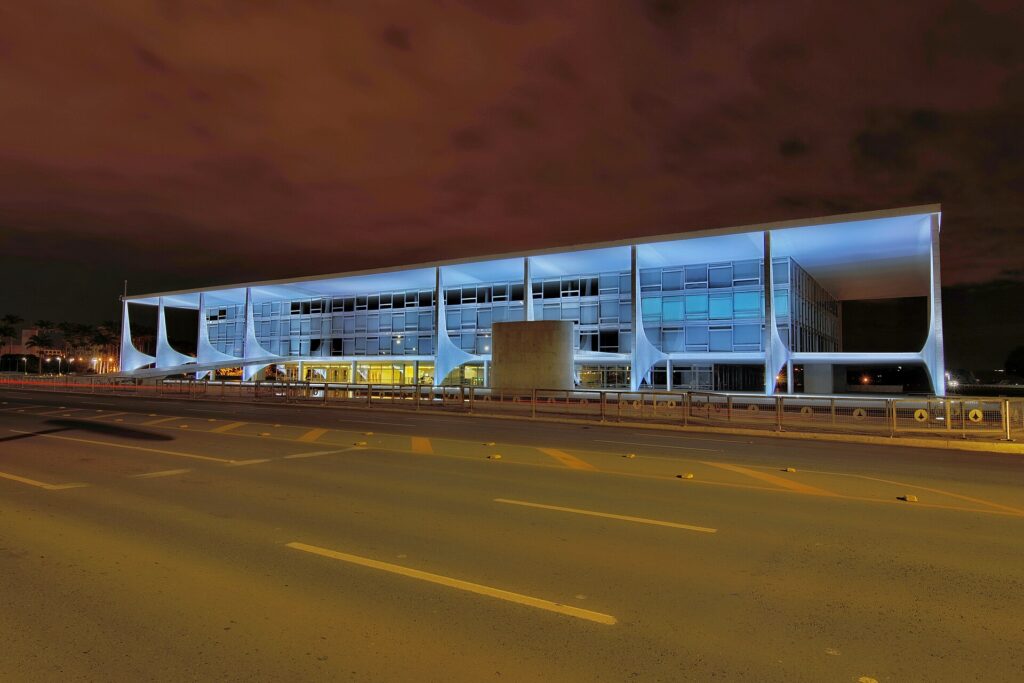
What contingenciamento means for defense
Contingenciamento is a fiscal tool Brazil’s government uses to freeze budgeted funds mid-year, blocking ministries from spending money Congress already approved. It targets discretionary expenses—equipment, projects, and operations—rather than salaries or mandatory transfers.
In 2026, the Defense Ministry absorbed the single largest hit: R$4.363 billion frozen out of a government-wide R$23.7 billion block. The Navy alone lost R$1.43 billion, making it the hardest-hit service branch.
Nuclear submarine timeline slips again
The Prosub program, which aims to deliver Latin America’s first nuclear-powered attack submarine, is the Navy’s most vulnerable strategic project. After an earlier R$200 million block forced roughly 200 layoffs at the Itaguaí shipyard, the Navy now says the remaining R$890 million for 2026 is insufficient to meet commitments.
Without an additional R$1 billion this year, the Navy warns of a real risk of interrupting essential activities at two critical sites: the Labgene land-based nuclear reactor prototype in Iperó, São Paulo, and the Itaguaí Naval Complex in Rio de Janeiro state where submarines are assembled.
The launch date for the Álvaro Alberto nuclear submarine has already been officially reprogrammed from 2034 to 2038, with the Navy explicitly citing “resource unavailability and lack of budget predictability.” Further delays could scatter highly specialized engineering and nuclear teams and strain international technology-transfer contracts worth over R$3.17 billion with France’s Naval Group.
Frigate and surface-fleet programs squeezed
The budget freeze directly hits support infrastructure for the Tamandaré-class frigates, a cornerstone of Brazil’s surface-fleet renewal. These advanced escort ships are designed to protect maritime traffic with modern sensors and weapons systems.
The picture is mixed: while core Navy funding is blocked, a separate Bill No. 32/25 proposes a R$500 million special credit to capitalize Emgepron, the Navy’s project-management company, and keep the Tamandaré program running through 2026. Continuity now depends on Congress approving that extra-budgetary injection and fully using a new defense funding channel outside the spending cap.
Patrol vessels, missiles, and Antarctic research hit
Beyond the flagship submarine and frigate efforts, the freeze has forced reduction, postponement, or rescheduling of the Miramar patrol vessel construction, missile and weapons-systems contracts, and Antarctic scientific research. The Marine Corps also faces cuts to vehicle and equipment acquisition.
Operationally, the Navy warns of delayed fleet repairs, difficulty replenishing munitions, possible paralysis of hydrographic survey vessels, and reduced availability of ships used for maritime traffic safety. The cumulative effect, the Navy states, is a progressive reduction of presence and response capacity at sea.
A stopgap fund that falls short
To cushion strategic programs from stop-start financing, Brazil approved a mechanism channeling up to R$5 billion per year—R$30 billion over six years—into defense investment outside the fiscal cap. The fund prioritizes the nuclear submarine, Tamandaré frigates, Gripen fighter jets, and Army systems like Astros and border-monitoring SISFRON.
Yet naval analysts calculate the Navy’s long-term rearmament plan through 2040 requires roughly R$250 billion. The extra-cap fund, shared across all three armed forces, covers less than 15% of the Navy’s declared needs, leaving modernization and maintenance programs in what one commentary calls a “silent collapse” operating state.
Frequently Asked Questions
What is contingenciamento?
It is a mid-year budget freeze the Brazilian government imposes on already-approved discretionary spending to meet fiscal targets, blocking ministries from using funds for equipment, projects, and operations.
How does the freeze affect Brazil’s nuclear submarine?
The Prosub program faces partial paralysis in 2026 without an extra R$1 billion. The Álvaro Alberto submarine’s launch has already slipped from 2034 to 2038, and further delays risk dispersing specialized nuclear teams and straining contracts with France’s Naval Group.
Are the new Tamandaré-class frigates at risk?
Support infrastructure for the frigates is directly hit by the freeze, but a proposed R$500 million special credit for the Navy’s project company Emgepron could prevent outright interruption if Congress approves it.
What happens to naval operations if the block persists?
The Navy warns of reduced fleet availability, delayed repairs, munition shortages, and a gradual loss of capacity to combat cross-border crime and exercise sovereignty over Brazil’s vast offshore maritime domain.
Connected Coverage
Sources: Brazilian Navy.
This article was produced by The Rio Times’ automated newsroom system. How we use AI · Report an error
Read More from The Rio Times