Uruguay Holds Steady at 2.5% Growth Forecast as Inflation Stays on Target
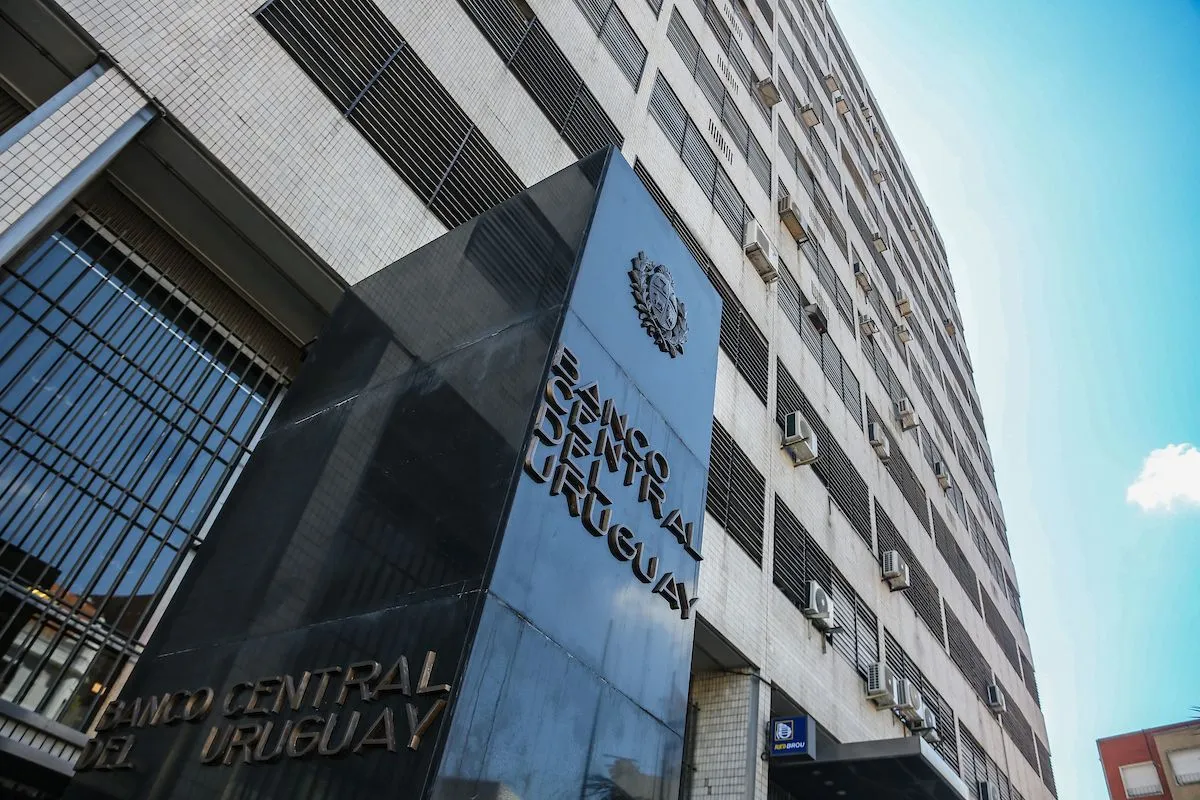
The Central Bank of Uruguay (BCU) released in August its latest Expectations Survey, which projects economic growth of 2.5% in 2025.
Analysts consulted by the institution have maintained this forecast for five consecutive months, showing a consistent outlook for moderate expansion. The same survey places growth for 2026 at 2.0%, a sign of stability rather than acceleration.
Official data underline why expectations remain cautious. Gross Domestic Product expanded 3.4% in the first quarter of 2025 compared with the previous year. On a seasonally adjusted basis, growth stood at 0.5%.
The Ministry of Economy confirmed that the economy grew 3.1% during 2024, supported by stronger agricultural output following a drought, increased pulp production, and renewable energy exports.
While these factors provided short-term momentum, they also highlight how dependent growth remains on external demand and weather conditions.
The BCU survey reveals a narrow band of expectations. The most pessimistic projection puts 2025 growth at 1.9%, while the most optimistic reaches 2.8%.
This consensus suggests that most institutions see limited room for major surprises, positive or negative. Such predictability may help investors and companies plan, but it also underlines the absence of drivers for faster expansion.
Inflation has become a key achievement. The National Statistics Institute reported that consumer prices rose 4.53% in the twelve months through July 2025.
This figure remains well within the central bank’s revised target of 4.5% with a tolerance of 1.5 percentage points. Inflation has now stayed inside that range for more than two years, which is rare in Uruguay’s recent history.
For 2025, survey respondents expect inflation of 4.5%, while for 2026 they see 4.8%. The BCU has defended this stability with a restrictive monetary stance.
In May 2025, the policy rate was kept at 9.25%, a level designed to anchor inflation expectations firmly. While this maintains credibility, it also means that borrowing costs for households and businesses remain high, limiting credit expansion.
Currency forecasts also reflect moderate expectations. Analysts consulted in the August survey expect the peso to close 2025 near 41 per US dollar, moving to around 42.5 in 2026.
These levels suggest relative stability rather than sharp depreciation, which should help importers and exporters plan with more certainty.
Behind these numbers lies a broader reality. Uruguay has delivered stability in prices and currency, achievements that reinforce confidence in its institutions.
Yet growth forecasts point to a plateau rather than a new wave of expansion. The economy is advancing, but not at a pace that ensures strong gains in jobs or wages without new investment and productivity gains.
More: Latin America news in English, every day from The Rio Times.
This article was produced by The Rio Times’ automated newsroom system. How we use AI · Report an error
Read More from The Rio Times