U.S. Labor Demand Slows Sharply as Job Openings Hit 19-Month Low
The U.S. labor market showed clear signs of cooling in December 2024, with employers listing just 7.6 million job openings—a steep 556,000 shortfall from analyst expectations.
New data from the Bureau of Labor Statistics’ JOLTS report confirms employers grew cautious amid economic uncertainty, trimming vacancies to their lowest level since May 2023.
Professional services firms slashed 225,000 postings, while healthcare and financial sectors cut 180,000 and 136,000 roles respectively. Hospitality businesses countered the trend, adding 65,000 openings as consumers prioritized leisure spending.
Despite the pullback, employers maintained 9% more vacancies than pre-pandemic levels, resisting full retreat from tight labor conditions. Workers faced a paradox—layoffs dipped to 1.77 million even as opportunities dwindled.
Steady hiring rates of 3.4% suggested businesses prioritized filling critical roles over expansion. Quit rates flatlined at 2%, signaling employees’ reluctance to risk stable jobs.
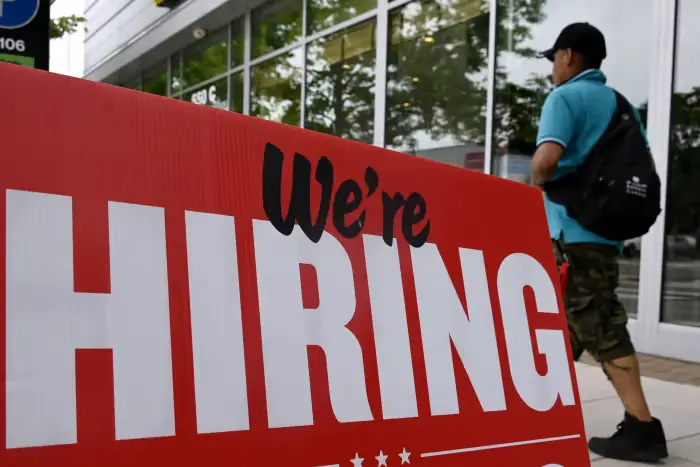
“This isn’t collapse—it’s recalibration,” said Raymond James economist Eugenio Aleman, noting corporate hesitancy to fully unwind pandemic-era hiring strategies.
U.S. Job Market Signals Economic Crossroads
Federal Reserve policymakers now confront conflicting signals. While labor slack increased slightly—with 1.24 job seekers per opening—persistent wage growth for job switchers (4.8% average raises) complicates inflation containment.
Markets slashed odds of March rate cuts to 15% following the report, aligning with Chair Powell’s patient monetary stance. Sector impacts varied wildly. Manufacturers cut 13,000 posts as tariffs bit, while K-12 schools added 17,300 roles amid enrollment rebounds.
Retailers quietly expanded workforces by 43,400 positions, capitalizing on holiday demand without fanfare. Geographic disparities emerged too—Midwestern factories shed jobs while Southern logistics hubs grew.
The cooling trend accelerated through 2024, erasing 1.1 million openings since January. Analysts link the retreat to Trump-era trade threats and Fed rate volatility rather than economic weakness.
December’s surprise hiring spike (256,000 jobs added) further muddies the waters, revealing employers’ stop-start adaptation to shifting conditions. For businesses, the data signals a pivot toward precision hiring—prioritizing essential roles over speculative growth.
Investors eye service-sector resilience against manufacturing headwinds, while workers weigh stability against stagnating mobility. As openings stabilize near 7.5 million, the economy inches toward equilibrium—a “Goldilocks” labor market that could either enable soft landings or mask gathering storms.
This article was produced by The Rio Times’ automated newsroom system. How we use AI · Report an error · Editorial responsibility: Matthias Camenzind, Editor-in-Chief