Brazil Electoral Court Keeps 2022 Spending Caps for 2026 Vote
Brazil · Politics
Key Facts
—Rule issued. The TSE published Ordinance No. 449/2026 on July 21, 2026, formalizing the limits.
—2022 caps kept. The court decided on July 1, 2026, to maintain the same spending ceilings from the 2022 election.
—Penalty for excess. Overspending triggers a fine of 100% of the excess amount, payable within five business days.
—What counts. Limits cover direct contracts, cash transfers to parties or candidates, and in-kind donations.
—Legal basis. The caps follow Law No. 9,504/1997 and TSE Resolution No. 23,607/2019.
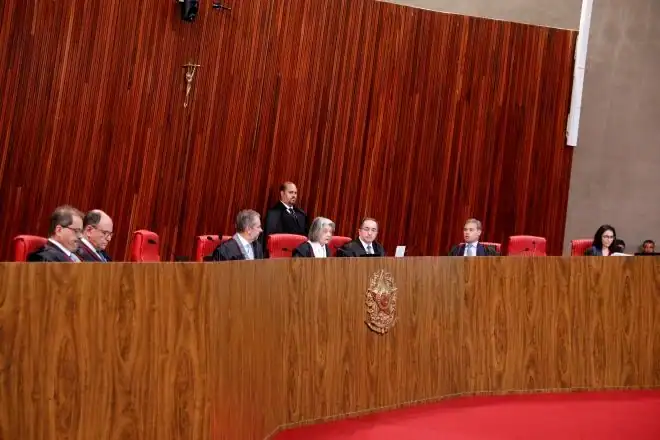
TSE campaign spending limits for Brazil’s 2026 general elections were officially published on July 21, keeping the same ceilings used in the 2022 race and setting clear financial rules for every office from president to state deputy.
How the TSE campaign spending limits work
The spending cap applies to the total cost of a candidacy, not just directly contracted expenses. It also includes cash transfers to parties or other candidates and the estimated value of donated goods and services.
Any amount spent above the limit results in a fine equal to 100% of the excess. The violation can also be prosecuted as an abuse of economic power, which may lead to further electoral sanctions.
Presidential and congressional race caps
A presidential candidate can spend up to R$88.9 million (US$17.4 million) in the first round. If a runoff is needed, an additional R$44.4 million (US$8.7 million) is allowed.
Candidates for federal deputy face a limit of roughly R$3.1 million (US$608,000). Those running for state or district deputy can spend about R$1.2 million (US$235,000).
State-level races: governors and senators
In São Paulo, Brazil’s richest state, a governor candidate can spend up to R$26.6 million (US$5.2 million) in the first round, with an extra R$13.3 million (US$2.6 million) for a runoff. A Senate seat in the same state is capped at R$7.1 million (US$1.4 million).
In Bahia, Minas Gerais, and Rio de Janeiro, the governor’s race limit is R$17.7 million (US$3.5 million) in the first round, plus R$8.8 million (US$1.7 million) for a second round. Senate candidates in those states can spend up to R$5.3 million (US$1.04 million).
Smaller states have lower caps. A governor’s race in Ceará is capped around R$11.5 million (US$2.25 million), while in Rondônia the limit is roughly R$6.2 million (US$1.2 million) for the first round.
Enforcement and penalties
Brazil’s Superior Electoral Court (TSE) enforces the limits. A candidate, party, or responsible individual who exceeds the cap must pay the fine within five business days after being notified of the judicial decision.
The court calculates limits based on the number of eligible voters and the office being sought. The full table of limits by state and office is available in the TSE ordinance.
Background: why spending limits matter in Brazil
Brazil introduced strict campaign spending caps to curb the influence of big money in politics after a series of high-profile corruption scandals. The rules are designed to level the playing field and reduce the advantage of wealthier candidates backed by large corporate donors.
For foreign investors and expats, these limits signal a maturing regulatory environment. Transparent spending rules help reduce political risk, making Brazil’s economic policy landscape more predictable during election cycles.
What it means for expats, investors, and the 2026 race
The 2026 election will shape Brazil’s fiscal and regulatory direction for years to come. Clear spending caps give observers a framework to gauge campaign scale and potential influence, especially in key states like São Paulo and Rio de Janeiro.
For tourists and short-term visitors, the election period may bring heightened political activity and occasional protests. Understanding the financial rules behind the campaigns offers useful context for anyone following local news during their stay.
More: Brazil news in English, every day from The Rio Times.
Frequently Asked Questions
What happens if a candidate spends more than the TSE campaign spending limits?
The candidate or party is fined 100% of the excess amount and must pay within five business days after being notified of the judicial decision. The violation may also be prosecuted as an abuse of economic power, which can lead to additional electoral sanctions including the potential annulment of the candidacy.
Do the 2026 spending limits apply to both rounds of the election?
Yes. A separate, additional limit is set for the second round for president and governor races if a runoff is necessary. The first-round cap and the runoff cap are distinct amounts, and spending in each round is tracked independently.
Are in-kind donations included in the spending cap?
Yes. The estimated monetary value of donated goods and services counts toward the total spending limit for a candidacy. This includes any item or service with economic value that a candidate receives without direct payment.
Sources: TSE; Law No. 9,504/1997; TSE Resolution No. 23,607/2019.
This article was produced by The Rio Times’ automated newsroom system. How we use AI · Report an error · Editorial responsibility: Matthias Camenzind, Editor-in-Chief
In depth