Trump’s 25% Tariffs Target Cars, Drugs, Chips, Shakes Global Trade
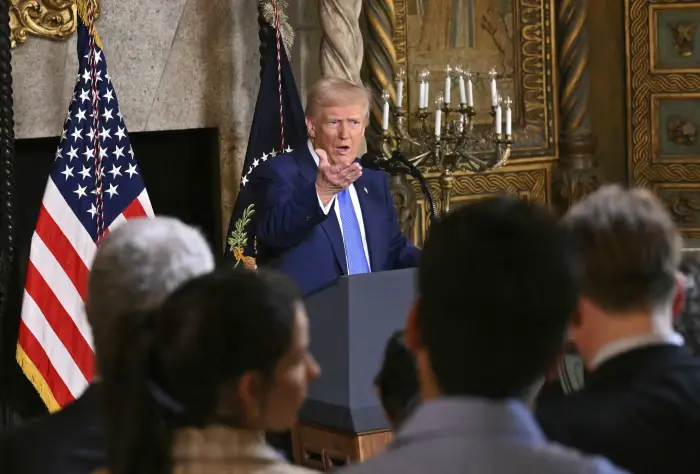
President Donald Trump confirmed on February 18, 2025, during a White House press briefing, plans to slap 25% tariffs on imported automobiles, pharmaceuticals, and semiconductors starting April 2.
He aims to push companies to build factories in the U.S., offering them time to relocate before the levies hit. The tariffs, targeting $374 billion in auto imports, $194 billion in drugs, and $53 billion in chips from 2023, promise to disrupt supply chains and jolt international markets.
Trump first hinted at this move on February 14, shifting the start date from April 1 to avoid April Fool’s Day superstition. He targets all nations, even USMCA partners Mexico and Canada, which exported $112 billion and $47 billion in vehicles last year.
The ripple effect looms large, as car prices may jump $3,000, while drug and chip costs could climb, straining U.S. consumers already battling inflation. Meanwhile, Mexico’s Economy Secretary Marcelo Ebrard schedules talks with U.S. officials like Commerce Secretary Howard Lutnick on February 20 in Washington.
He stresses the $800 billion U.S.-Mexico trade bond, arguing tariffs threaten 400,000 U.S. jobs. Ebrard seeks dialogue, not instant fixes, to navigate this economic tightrope amid integrated North American supply lines.
Global Economic Tensions Rise
Across the border, Canada braces for impact, while the EU and China scramble to respond—China already faces a 10% tariff since February 4. Experts from the Peterson Institute warn of a $200 billion GDP hit by 2029 if tariffs stick.
Retaliation looms, with Mexico’s President Claudia Sheinbaum vowing mirror tariffs, potentially slashing its auto exports by 50%. Trump doubles down, eyeing higher rates later in 2025, betting on domestic manufacturing gains.
Yet, businesses tremble as costs rise and trade ties fray. Ebrard frames it bluntly: tariffs could be “a shot in the foot” for all. As April nears, this bold gamble tests North America’s economic unity, with billions—and jobs—hanging in the balance.
This article was produced by The Rio Times’ automated newsroom system. How we use AI · Report an error · Editorial responsibility: Matthias Camenzind, Editor-in-Chief