IBOV 174,964.10 ▼ 1.00% IPSA 10,981.64 ▲ 0.59% IPC MEX 66,247.47 ▼ 1.56% MERVAL 3,306,661 ▼ 0.39% COLCAP 2,290.71 ▲ 0.33% BVL PERÚ 58,287.01 — — USD/BRL5.06▼ 0.46% USD/MXN17.46▼ 0.34% USD/CLP945.15▼ 0.08% USD/COP3,211▼ 0.13% USD/PEN3.40▲ 0.23% USD/ARS1,493▲ 0.27% USD/UYU40.14▲ 1.38% USD/PYG6,022▲ 1.26% USD/BOB11.18▲ 4.51% USD/DOP57.84▼ 0.53% USD/CRC449.17▲ 1.76% USD/GTQ7.63▲ 2.33% USD/HNL26.75▲ 0.82% USD/NIO36.62▲ 0.26% USD/VES740.37▲ 0.46% USD/PAB1.00— 0.00% USD/BZD2.00— 0.00% USD/JMD157.13▲ 0.01% USD/TTD6.71▲ 0.92% EUR/BRL5.76▼ 0.28% BRENT 97.23 ▼ 3.44% WTI 89.77 ▼ 2.63% IRON ORE 161.91 — — COPPER 6.35 ▲ 0.67% GOLD 4,063 ▲ 0.41% SILVER 58.59 ▲ 1.36% SOY 1,247 ▲ 0.75% CORN 482.50 ▲ 3.99% WHEAT 669.75 ▼ 3.81% COFFEE 314.65 ▲ 1.70% SUGAR 14.62 ▼ 0.48% ORANGE JUICE 142.45 ▼ 2.96% COTTON 80.00 ▲ 0.20% COCOA 5,370 ▲ 1.30% BEEF 223.70 ▼ 0.75% CATTLE 345.13 ▲ 0.39% LITHIUM 68.14 ▼ 1.27% PETR4 42.46 ▼ 1.14% VALE3 75.32 ▼ 0.48% ITUB4 42.25 ▼ 0.73% BBDC4 18.57 ▼ 0.80% ABEV3 15.78 ▼ 0.88% BBAS3 20.51 ▼ 2.01% B3SA3 15.62 ▼ 0.19% WEGE3 45.74 ▲ 0.15% PRIO3 59.31 ▼ 2.03% SUZB3 42.01 ▼ 0.99% RENT3 37.15 ▲ 0.03% AZZA3 16.85 ▼ 1.17% CSAN3 3.85 ▼ 1.28% RAIZ4 0.27 — 0.00% PCAR3 2.87 — 0.00% GMAT3 3.85 ▼ 0.52% PSSA3 54.75 ▼ 0.78% CVCB3 1.32 ▲ 0.76% POSI3 3.61 ▼ 1.63% SLCE3 13.77 — 0.00% NATU3 8.46 ▼ 1.17% BRKM5 6.14 ▼ 0.49% RANI3 7.93 — 0.00% CSNA3 5.35 ▲ 0.94% CMIN3 5.86 ▲ 0.51% USIM5 8.44 ▼ 0.59% GGBR4 24.16 ▲ 0.42% ENEV3 25.08 ▼ 2.41% CPFE3 45.53 ▼ 1.49% CMIG4 11.04 ▼ 1.34% EQTL3 38.40 ▼ 1.59% LREN3 13.24 ▼ 0.97% VIVT3 35.54 ▲ 2.42% RAIL3 13.70 ▼ 1.86% KLABIN 17.41 ▼ 1.42% RAIA DROGASIL 18.07 ▼ 0.66% RDOR3 33.27 ▼ 1.19% HAPV3 10.20 ▼ 2.58% FLRY3 16.39 ▼ 1.15% SMTO3 15.41 ▼ 1.91% UGPA3 32.85 ▼ 1.62% VBBR3 35.22 ▼ 1.07% BBSE3 41.52 ▼ 2.08% BPAC11 55.21 ▼ 1.94% CURY3 29.60 ▼ 0.07% AERI3 2.03 ▲ 0.50% VIVARA 21.28 ▼ 0.79% COMPASS 24.88 ▼ 0.80% VAMOS 3.23 ▲ 0.62% SANB11 26.39 ▼ 0.90% ASAI3 7.87 ▼ 1.87% SBSP3 28.48 ▼ 0.94% WALMEX 47.74 ▲ 0.85% GMEXICO 210.09 ▲ 0.40% FEMSA 223.14 ▲ 0.36% CEMEX 21.61 ▲ 0.61% GFNORTE 191.94 ▲ 1.42% BIMBO 58.58 ▼ 0.85% TELEVISA 9.78 ▼ 0.10% AMX 22.88 ▲ 0.53% GAP 376.62 ▲ 0.05% ASUR 267.99 ▼ 0.69% OMA 226.86 ▼ 0.20% KOF 179.60 ▼ 0.06% GRUMA 266.76 ▼ 0.81% KIMBER 39.69 ▲ 1.07% SQM-B 66,273 ▲ 1.18% COPEC 6,380 ▲ 1.92% BSANTANDER 80.01 ▲ 0.01% FALABELLA 6,105 ▲ 0.78% ENELAM 85.21 ▲ 0.25% CENCOSUD 1,963 ▼ 0.26% CMPC 1,040 ▼ 1.05% BANCO CHILE 192.12 ▲ 0.73% LATAM AIR 24.13 ▲ 2.68% YPF 81,200 ▼ 1.55% GGAL 7,915 ▼ 0.38% PAMPA 5,535 ▼ 1.69% TXAR 676.00 ▼ 0.59% ALUAR 976.00 ▼ 0.66% TGS 9,850 ▼ 1.45% CEPU 2,410 ▼ 0.41% MIRGOR 16,575 ▼ 0.90% COME 42.84 ▲ 0.73% LOMA NEGRA 3,675 ▼ 2.39% BYMA 292.50 — 0.00% TELECOM ARG 4,348 ▲ 0.52% ECOPETROL 16.18 ▼ 0.92% BANCOLOMBIA 87.94 ▲ 1.33% GRUPO AVAL 4.93 ▼ 0.20% CREDICORP 394.26 ▲ 1.71% SOUTHERN COPPER 182.23 ▲ 0.01% BUENAVENTURA 31.52 ▲ 0.64% MERCADOLIBRE 1,823 ▲ 1.38% NUBANK 14.29 ▲ 0.67% XP 16.97 ▲ 0.80% PAGSEGURO 9.38 ▼ 0.90% STONE 11.05 ▲ 0.64% GLOBANT 31.52 ▲ 2.97% TECNOGLASS 45.23 ▲ 3.40% GAP AIRPORT 215.63 ▲ 0.08% ASUR 267.99 ▼ 0.69% OMA AIRPORT 103.76 ▼ 0.37% AMX ADR 26.17 ▲ 0.85% FEMSA ADR 127.83 ▲ 0.59% CEMEX ADR 12.32 ▲ 0.49% PETROBRAS ADR 18.89 ▼ 0.61% VALE ADR 14.87 ▲ 0.24% ITAU ADR 8.34 ▼ 0.12% SANTANDER BR 5.34 ▼ 0.47% AMBEV ADR 3.11 ▲ 0.49% CSN 1.06 — 0.00% GERDAU 4.80 ▲ 0.52% LATAM ADR 49.96 ▲ 0.23% BTC 63,754 ▼ 1.98% ETH 1,853 ▼ 1.28% SOL 73.81 ▼ 2.70% XRP 1.09 ▼ 1.78% BNB 558.00 ▼ 1.58% ADA 0.16 ▼ 2.63% DOGE 0.07 ▼ 0.92% AVAX 6.20 ▼ 0.99% LINK 8.31 ▼ 1.80% DOT 0.79 ▼ 2.86% LTC 46.13 ▼ 1.70% BCH 208.96 ▼ 1.48% TRX 0.33 ▲ 0.46% XLM 0.18 ▼ 3.11% HBAR 0.07 ▼ 0.73% NEAR 1.84 ▼ 2.31% ATOM 1.39 ▼ 2.26% AAVE 94.19 ▼ 0.89% SELIC 14.25% EMBRAER 82.99 ▼ 0.49% EMBRAER ADR 65.64 ▲ 0.26% JBS 12.25 ▲ 0.99% JBS BDR 61.88 ▲ 0.10% MBRF3 15.26 ▼ 2.12% MBRFY 3.00 ▼ 2.91% INTER 5.48 ▲ 0.37% EGX 53,932 ▼ 0.11% USD/ZAR16.80▼ 0.10% USD/NGN1,363▼ 0.44% NIKKEI 64,611 ▼ 2.73% CSI300 4,649 ▼ 1.67% HSI 24,963 ▼ 0.98% NIFTY 23,767 ▼ 0.43% KOSPI 6,691 ▼ 5.72% JCI 6,196 ▼ 1.88% USD/JPY 163.77 — 0.00% USD/CNY6.76▼ 0.16% DAX 24,984 ▲ 0.89% CAC 8,337 ▲ 0.45% FTSE 10,709 ▲ 0.65% MIB 51,608 ▲ 0.57% IBEX 19,509 ▲ 1.26% STOXX 642.04 ▲ 0.43% EUR/USD1.14▲ 0.10% GBP/USD1.33▼ 0.22% SPX 7,411 ▲ 0.04% DJI 51,816 ▲ 0.20% NDX 28,239 ▼ 0.76% RUT 2,934 ▼ 0.20% TSX 35,316 ▲ 0.35% VIX 18.64 ▼ 0.32% USD/CAD1.41▼ 0.06% US10Y 4.6670 ▼ 0.77% IBOV 174,964.10 ▼ 1.00% IPSA 10,981.64 ▲ 0.59% IPC MEX 66,247.47 ▼ 1.56% MERVAL 3,306,661 ▼ 0.39% COLCAP 2,290.71 ▲ 0.33% BVL PERÚ 58,287.01 — — USD/BRL 5.06 ▼ 0.46% USD/MXN 17.46 ▼ 0.34% USD/CLP 945.15 ▼ 0.08% USD/COP 3,211 ▼ 0.13% USD/PEN 3.40 ▲ 0.23% USD/ARS 1,493 ▲ 0.27% USD/UYU 40.14 ▲ 1.38% USD/PYG 6,022 ▲ 1.26% USD/BOB 11.18 ▲ 4.51% USD/DOP 57.84 ▼ 0.53% USD/CRC 449.17 ▲ 1.76% USD/GTQ 7.63 ▲ 2.33% USD/HNL 26.75 ▲ 0.82% USD/NIO 36.62 ▲ 0.26% USD/VES 740.37 ▲ 0.46% USD/PAB 1.00 — 0.00% USD/BZD 2.00 — 0.00% USD/JMD 157.29 ▲ 0.11% USD/TTD 6.71 ▲ 0.92% EUR/BRL 5.76 ▼ 0.28% BRENT 97.23 ▼ 3.44% WTI 89.77 ▼ 2.63% IRON ORE 161.91 — — COPPER 6.35 ▲ 0.67% GOLD 4,063 ▲ 0.41% SILVER 58.59 ▲ 1.36% SOY 1,247 ▲ 0.75% CORN 482.50 ▲ 3.99% WHEAT 669.75 ▼ 3.81% COFFEE 314.65 ▲ 1.70% SUGAR 14.62 ▼ 0.48% ORANGE JUICE 142.45 ▼ 2.96% COTTON 80.00 ▲ 0.20% COCOA 5,370 ▲ 1.30% BEEF 223.70 ▼ 0.75% CATTLE 345.13 ▲ 0.39% LITHIUM 68.14 ▼ 1.27% PETR4 42.46 ▼ 1.14% VALE3 75.32 ▼ 0.48% ITUB4 42.25 ▼ 0.73% BBDC4 18.57 ▼ 0.80% ABEV3 15.78 ▼ 0.88% BBAS3 20.51 ▼ 2.01% B3SA3 15.62 ▼ 0.19% WEGE3 45.74 ▲ 0.15% PRIO3 59.31 ▼ 2.03% SUZB3 42.01 ▼ 0.99% RENT3 37.15 ▲ 0.03% AZZA3 16.85 ▼ 1.17% CSAN3 3.85 ▼ 1.28% RAIZ4 0.27 — 0.00% PCAR3 2.87 — 0.00% GMAT3 3.85 ▼ 0.52% PSSA3 54.75 ▼ 0.78% CVCB3 1.32 ▲ 0.76% POSI3 3.61 ▼ 1.63% SLCE3 13.77 — 0.00% NATU3 8.46 ▼ 1.17% BRKM5 6.14 ▼ 0.49% RANI3 7.93 — 0.00% CSNA3 5.35 ▲ 0.94% CMIN3 5.86 ▲ 0.51% USIM5 8.44 ▼ 0.59% GGBR4 24.16 ▲ 0.42% ENEV3 25.08 ▼ 2.41% CPFE3 45.53 ▼ 1.49% CMIG4 11.04 ▼ 1.34% EQTL3 38.40 ▼ 1.59% LREN3 13.24 ▼ 0.97% VIVT3 35.54 ▲ 2.42% RAIL3 13.70 ▼ 1.86% KLABIN 17.41 ▼ 1.42% RAIA DROGASIL 18.07 ▼ 0.66% RDOR3 33.27 ▼ 1.19% HAPV3 10.20 ▼ 2.58% FLRY3 16.39 ▼ 1.15% SMTO3 15.41 ▼ 1.91% UGPA3 32.85 ▼ 1.62% VBBR3 35.22 ▼ 1.07% BBSE3 41.52 ▼ 2.08% BPAC11 55.21 ▼ 1.94% CURY3 29.60 ▼ 0.07% AERI3 2.03 ▲ 0.50% VIVARA 21.28 ▼ 0.79% COMPASS 24.88 ▼ 0.80% VAMOS 3.23 ▲ 0.62% SANB11 26.39 ▼ 0.90% ASAI3 7.87 ▼ 1.87% SBSP3 28.48 ▼ 0.94% WALMEX 47.74 ▲ 0.85% GMEXICO 210.09 ▲ 0.40% FEMSA 223.14 ▲ 0.36% CEMEX 21.61 ▲ 0.61% GFNORTE 191.94 ▲ 1.42% BIMBO 58.58 ▼ 0.85% TELEVISA 9.78 ▼ 0.10% AMX 22.88 ▲ 0.53% GAP 376.62 ▲ 0.05% ASUR 267.99 ▼ 0.69% OMA 226.86 ▼ 0.20% KOF 179.60 ▼ 0.06% GRUMA 266.76 ▼ 0.81% KIMBER 39.69 ▲ 1.07% SQM-B 66,273 ▲ 1.18% COPEC 6,380 ▲ 1.92% BSANTANDER 80.01 ▲ 0.01% FALABELLA 6,105 ▲ 0.78% ENELAM 85.21 ▲ 0.25% CENCOSUD 1,963 ▼ 0.26% CMPC 1,040 ▼ 1.05% BANCO CHILE 192.12 ▲ 0.73% LATAM AIR 24.13 ▲ 2.68% YPF 81,200 ▼ 1.55% GGAL 7,915 ▼ 0.38% PAMPA 5,535 ▼ 1.69% TXAR 676.00 ▼ 0.59% ALUAR 976.00 ▼ 0.66% TGS 9,850 ▼ 1.45% CEPU 2,410 ▼ 0.41% MIRGOR 16,575 ▼ 0.90% COME 42.84 ▲ 0.73% LOMA NEGRA 3,675 ▼ 2.39% BYMA 292.50 — 0.00% TELECOM ARG 4,348 ▲ 0.52% ECOPETROL 16.18 ▼ 0.92% BANCOLOMBIA 87.94 ▲ 1.33% GRUPO AVAL 4.93 ▼ 0.20% CREDICORP 394.26 ▲ 1.71% SOUTHERN COPPER 182.23 ▲ 0.01% BUENAVENTURA 31.52 ▲ 0.64% MERCADOLIBRE 1,823 ▲ 1.38% NUBANK 14.29 ▲ 0.67% XP 16.97 ▲ 0.80% PAGSEGURO 9.38 ▼ 0.90% STONE 11.05 ▲ 0.64% GLOBANT 31.52 ▲ 2.97% TECNOGLASS 45.23 ▲ 3.40% GAP AIRPORT 215.63 ▲ 0.08% ASUR 267.99 ▼ 0.69% OMA AIRPORT 103.76 ▼ 0.37% AMX ADR 26.17 ▲ 0.85% FEMSA ADR 127.83 ▲ 0.59% CEMEX ADR 12.32 ▲ 0.49% PETROBRAS ADR 18.89 ▼ 0.61% VALE ADR 14.87 ▲ 0.24% ITAU ADR 8.34 ▼ 0.12% SANTANDER BR 5.34 ▼ 0.47% AMBEV ADR 3.11 ▲ 0.49% CSN 1.06 — 0.00% GERDAU 4.80 ▲ 0.52% LATAM ADR 49.96 ▲ 0.23% BTC 63,754 ▼ 1.98% ETH 1,853 ▼ 1.28% SOL 73.81 ▼ 2.70% XRP 1.09 ▼ 1.78% BNB 558.00 ▼ 1.58% ADA 0.16 ▼ 2.63% DOGE 0.07 ▼ 0.92% AVAX 6.20 ▼ 0.99% LINK 8.31 ▼ 1.80% DOT 0.79 ▼ 2.86% LTC 46.13 ▼ 1.70% BCH 208.96 ▼ 1.48% TRX 0.33 ▲ 0.46% XLM 0.18 ▼ 3.11% HBAR 0.07 ▼ 0.73% NEAR 1.84 ▼ 2.31% ATOM 1.39 ▼ 2.26% AAVE 94.19 ▼ 0.89% SELIC 14.25% EMBRAER 82.99 ▼ 0.49% EMBRAER ADR 65.64 ▲ 0.26% JBS 12.25 ▲ 0.99% JBS BDR 61.88 ▲ 0.10% MBRF3 15.26 ▼ 2.12% MBRFY 3.00 ▼ 2.91% INTER 5.48 ▲ 0.37% EGX 53,932 ▼ 0.11% USD/ZAR 16.83 ▲ 0.10% USD/NGN 1,363 ▼ 0.24% NIKKEI 64,611 ▼ 2.73% CSI300 4,649 ▼ 1.67% HSI 24,963 ▼ 0.98% NIFTY 23,767 ▼ 0.43% KOSPI 6,691 ▼ 5.72% JCI 6,196 ▼ 1.88% USD/JPY 163.77 — 0.00% USD/CNY 6.7616 ▼ 0.08% DAX 24,984 ▲ 0.89% CAC 8,337 ▲ 0.45% FTSE 10,709 ▲ 0.65% MIB 51,608 ▲ 0.57% IBEX 19,509 ▲ 1.26% STOXX 642.04 ▲ 0.43% EUR/USD 1.1380 ▼ 0.02% GBP/USD 1.3329 ▲ 0.10% SPX 7,411 ▲ 0.04% DJI 51,816 ▲ 0.20% NDX 28,239 ▼ 0.76% RUT 2,934 ▼ 0.20% TSX 35,316 ▲ 0.35% VIX 18.64 ▼ 0.32% USD/CAD 1.4093 ▲ 0.09% US10Y 4.6670 ▼ 0.77%
since 2009
Friday, July 24, 2026

Analysis Africa & Latin America

The Lagos–Santos Corridor: How West Africa’s Consumer Revolution Pulls Latin America In

By · July 24, 2026 · 10 min read

Africa Intelligence

A daily Africa read from a Latin American newsroom. Free.

By subscribing you agree to our privacy policy. We never share your email.

Rio Times · Analysis

Key Facts

A US$45 billion logistics market West Africa’s freight and logistics sector was valued at US$28 billion in 2025 and is projected to hit US$45 billion by 2035, growing at a compound annual rate of 6.1 per cent.

Nigeria’s FMCG boom Nigeria’s fast-moving consumer goods sector is estimated at US$28–32 billion, with potential to expand to US$50 billion, supported by new infrastructure such as the Lekki Deep Sea Port.

Informal trade at scale The OECD calculates that intra-regional food trade in West Africa is worth around US$10 billion annually, six times official figures, with Nigeria dominating flows of live animals, cereals and processed foods.

South American feed dominance Compound feed production across Africa remains low, so suppliers from the United States, Europe and South America currently dominate the market feeding West Africa’s booming livestock sector.

Nigeria in BRICS Nigeria’s entry into BRICS as a partner country places it in the same bloc as full members like Brazil, opening new channels for trade finance, investment protection and South–South logistics cooperation.

Brazilian agribusiness advantage Brazil’s soy, maize and feed-additive exporters are already embedded in West African supply chains; the opportunity now is to move from raw-input supplier to logistics and processing partner.

West Africa is building a consumer belt of remarkable scale and speed—a US$45 billion logistics market, a US$50 billion retail opportunity, and an informal food trade worth US$10 billion a year—and Brazilian business is already woven into its fabric.

A busy open-air market in Lagos, Nigeria, where informal food trade worth billions of dollars flows alongside the formal consumer economy.
A busy open-air market in Lagos, Nigeria, where informal food trade worth billions of dollars flows alongside the formal consumer economy. (Photo internet reproduction)
One-stop reference
Company Intelligence
Every listed company in Latin America — financials, ownership and structure for 1,450+ companies across 26 exchanges, in one place.
Browse the directory →
RT
Ask Rio Times
Latin American markets, currencies and companies.
Open the full Ask Rio Times →

The Market Taking Shape Between Lagos and Dakar

West Africa is not one market but a patchwork of economies moving at different speeds, yet the aggregate numbers tell a compelling story. PwC’s most recent outlook puts regional GDP growth at 4.4 per cent in 2025, driven by new oil and gas production in Senegal and Niger, and projects 4.2 per cent in 2026.

Within this regional picture, the WAEMU bloc—Côte d’Ivoire, Senegal, Benin and others—is growing even faster, at 6.2 per cent, while Deloitte reports that macroeconomic conditions in Nigeria and Ghana have improved markedly compared with 2024, with easing inflation, resumed interest-rate cuts and stabilising local currencies.

The West African freight and logistics market was valued at US$28 billion in 2025 and is projected to reach US$45 billion by 2035, a compound annual growth rate of 6.1 per cent. This is not speculative; it reflects concrete investments in ports, road corridors and cold-chain infrastructure that are already changing the physical landscape.

Maersk has identified Nigeria, Ghana and Senegal as emerging FMCG hubs serving a growing base of young, digitally connected consumers. The Danish shipping giant’s analysis puts Nigeria’s FMCG sector alone at US$28–32 billion, with potential to expand to US$50 billion.

For Latin American exporters, logistics firms and retailers accustomed to looking at Asian and North American markets, this is a demand signal that can no longer be ignored. The question is whether they will capture the value or watch European, American and Asian competitors do so.

The Lekki Deep Sea Port and the New Atlantic Infrastructure

The Lekki Deep Sea Port, on the eastern edge of Lagos, is more than a container terminal. It is the physical embodiment of West Africa’s logistics transformation—a deep-water facility capable of handling the largest vessels now plying global shipping routes, bypassing the congestion that has long made Lagos a choke point rather than a gateway.

Maersk’s analysis explicitly ties the port to the expansion of Nigeria’s FMCG sector, noting that improved cold-chain networks are making it possible to move perishable goods and high-value consumer products in ways that were previously prohibitively expensive or logistically impossible.

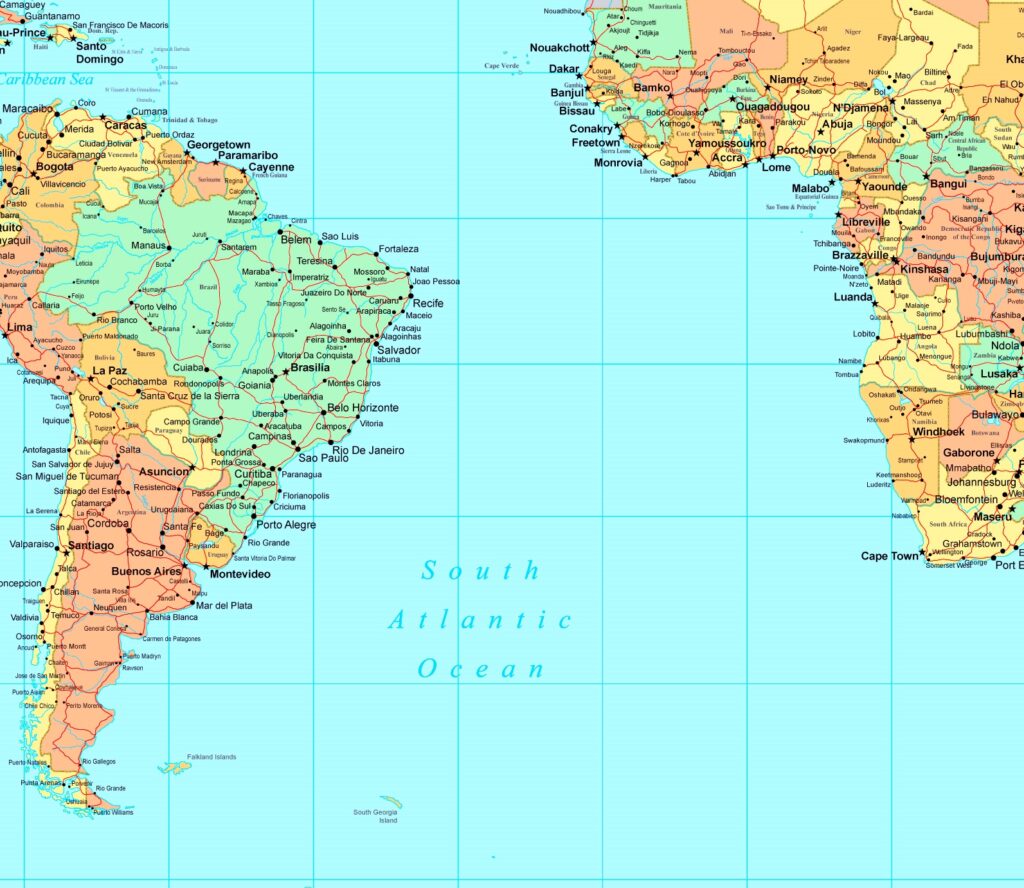
The port’s implications for Latin America are direct. The sea lane from Santos to Lekki is shorter than the route to many Asian destinations, and the vessel classes that serve the Brazilian export trade are precisely those that Lekki is designed to receive. A container loaded with Brazilian processed foods, animal feed or construction materials can now reach the heart of West Africa’s largest consumer market with fewer transshipments.

Other West African ports—Tema in Ghana, Dakar in Senegal, Abidjan in Côte d’Ivoire—are also upgrading, creating a network of Atlantic gateways that collectively shift the region from a logistics backwater to an emerging hub. The Research and Markets forecast of a 6.1 per cent CAGR to 2035 captures this infrastructure build-out in progress.

For Brazilian shipping lines, port operators and logistics-tech firms, the moment to study these corridors and secure terminal access or partnership agreements is now—before the European and Asian incumbents lock in the best positions.

Informal Trade: The US$10 Billion Blind Spot

Official trade statistics capture only a fraction of what moves across West Africa’s borders. The OECD estimates that intra-regional food trade—including both recorded and unrecorded flows—is worth around US$10 billion annually, at least six times higher than official figures suggest.

Nigeria dominates this informal trade, with key products including live animals, cereals and processed foods. The unrecorded flows are particularly concentrated in staples and high-value items like legumes and live animals, precisely the categories where Latin American agribusiness has comparative advantage.

This vast informal economy is both an opportunity and a risk for Latin American exporters. On one hand, it demonstrates real, cash-backed demand that formal trade channels are not capturing. On the other, it operates outside the frameworks of traceability, phytosanitary standards and trade credit that large Brazilian and Argentine firms require.

The livestock dimension is particularly instructive. A US Grains and BioProducts Council market profile notes that West Africa’s rapid population growth is generating surging demand for meat and fish, and livestock farming is booming thanks to government support and private investment. Yet compound feed production across Africa remains low.

The result is a market where feed suppliers from the United States, Europe and South America already dominate. Brazilian soy and maize are feeding West African chickens and cattle, often arriving through informal or semi-formal channels that mask the true scale of the trade. Formalising and scaling that link is the strategic prize.

Nigeria’s FMCG Revolution and the Digital Consumer

Nigeria’s FMCG sector, estimated at US$28–32 billion and potentially expanding to US$50 billion, is not growing in a vacuum. It is being pulled by a young, urbanising, digitally connected consumer base that is leapfrogging traditional retail formats and moving straight to mobile-first commerce.

Maersk describes Nigeria, Ghana and Senegal as emerging FMCG hubs that are reshaping supply chains. The logistics investments—Lekki port, cold chains, last-mile delivery networks—are the hardware. The software is a generation of consumers who order groceries, personal-care products and household goods on their phones.

For Latin American retailers and consumer-goods firms, this is a market that looks increasingly familiar. The challenges of serving price-sensitive but aspirational consumers in a fragmented retail landscape, with patchy infrastructure, are ones that Brazilian, Mexican and Colombian firms have been navigating at home for decades.

Brazilian fintech platforms, in particular, have expertise in digital payments, micro-credit and mobile banking that could find ready application in West African markets where financial inclusion is still low but mobile penetration is high. The BRICS link—Nigeria, a BRICS partner country, and full member Brazil now share an institutional roof—could facilitate the regulatory and investment-protection frameworks needed.

The timing matters. West Africa’s consumer revolution is at an earlier stage than Latin America’s was a decade ago, meaning there is still room to shape market structures, build brand loyalty and establish distribution networks before the field becomes crowded and margins compress.

BRICS and the Institutional Bridge

Nigeria’s accession to BRICS, noted in the West Africa market snapshot, is more than a diplomatic headline. It creates an institutional bridge between Latin America’s largest economy and Africa’s largest economy that did not previously exist in any meaningful trade or investment forum.

The New Development Bank, the BRICS financial arm, now has a natural constituency stretching from Brazil to South Africa to Nigeria. Project finance, infrastructure lending and currency-swap arrangements that once seemed fanciful for Africa–Latin America trade become administratively feasible within a shared institutional framework.

Brazilian construction and engineering firms, which built up expertise in African markets during the commodities boom of the 2000s before retreating during the political and economic turmoil of the 2010s, now have a new reason to look across the Atlantic. BRICS partnership gives Nigeria a stake in making the relationship work.

The diplomatic dimension also matters in an era of great-power competition. China’s Belt and Road Initiative has poured money into African infrastructure but has also generated debt-sustainability concerns and local pushback. Brazil, with a less geopolitically charged profile and a narrative of South–South solidarity, may find doors open that are closing to others.

This is not automatic. It requires Brasília to invest political capital, send trade missions, negotiate agreements and signal to the Brazilian private sector that Africa is a strategic priority. The institutional bridge exists; whether anyone walks across it depends on decisions being made now in both Lagos and Brasília.

The Feed and Food Chain: Brazil’s Edge

The US Grains and BioProducts Council profile is blunt: compound feed production across Africa remains low, so South American, European and American suppliers dominate the market. This is an existing position of strength that Latin America—Brazil and Argentina above all—can deepen.

Brazil is already the world’s largest exporter of soy and a major supplier of maize, and its agribusiness sector has spent decades refining the logistics of moving bulk commodities from the cerrado to Atlantic ports. The same infrastructure that serves Chinese demand can serve West African demand, often on shorter shipping routes.

The West Africa market profile highlights that rapid population growth is creating exponential demand for meat and fish, with livestock farming booming. Every chicken, pig and fish raised in West Africa’s growing commercial farms requires feed that local production cannot yet supply at scale.

This is a classic emerging-market agricultural opportunity: rising incomes drive protein demand, which drives feed demand, which drives grain and soy imports. Brazil’s agribusiness giants—and the trading houses that connect them to global markets—understand this dynamic intimately from decades of experience in Asia and the Middle East.

The step change comes when Brazilian firms move beyond being raw-input suppliers to investing in West African processing, storage and distribution. Joint ventures in feed mills, cold storage and logistics hubs would lock in market share and create barriers to competitors who only ship commodities in and out.

What a Brazil–West Africa Strategy Looks Like

The data points to a set of concrete steps that could convert West Africa’s consumer and logistics boom into a durable Latin American advantage. The first is mapping the Atlantic shipping routes: understanding vessel availability, transit times, port fees and customs procedures for the Lagos, Tema and Dakar corridors.

The second is financial infrastructure. Brazilian banks and fintechs should be exploring partnerships with Nigerian, Ghanaian and Senegalese counterparts to create trade-finance instruments, currency-hedging mechanisms and digital-payment rails that reduce the friction of cross-Atlantic commerce.

The third is diplomatic and regulatory groundwork. Double-taxation agreements, investment-protection treaties and air-service agreements between Brazil and key West African economies are underdeveloped or absent. The BRICS framework provides a venue to accelerate these.

The fourth is people. Brazilian business schools and trade associations should be building Africa-focused executive programmes and trade missions, creating a cadre of professionals who understand West African markets, regulations and business cultures—just as a previous generation learned to navigate China.

West Africa’s consumer belt is being built now, in real time, with concrete, steel and fibre-optic cable. The Latin American firms that show up early, build relationships and commit capital will be the ones that benefit when the US$45 billion logistics market and the US$50 billion FMCG sector stop being forecasts and become everyday commercial reality.

Frequently Asked Questions

How big is West Africa’s consumer market opportunity?

The freight and logistics market alone is projected to grow from US$28 billion to US$45 billion by 2035, while Nigeria’s FMCG sector could expand from US$28–32 billion to US$50 billion, driven by a young, digitally connected population.

What role does Brazil already play in West African supply chains?

Brazilian and Argentine soy, maize and feed additives already dominate the animal-feed market feeding West Africa’s livestock boom, though much of this trade flows through informal or semi-formal channels that understate its true scale.

How does Nigeria’s BRICS membership change the equation?

It creates an institutional bridge between Latin America’s largest economy and Africa’s largest, opening possibilities for trade finance, investment protection and logistics cooperation that did not previously exist in any shared forum.

Sources: sars.gov.za, un.org, insights.aib.world

Connected Coverage

Explore the cluster: Africa · World · Asia

LatAm Markets: Live Signals → — real-time movers, turnover leaders and FX across Latin America.

Read More from The Rio Times

The Rio Times · Power Map
See who really holds power in Latin America
Click to open the Power Map

Rotate for Best Experience

This report is optimized for landscape viewing. Rotate your phone for the full experience.