Brazil’s Justices Are Fighting Over What They May Read Before Tuesday
BRAZIL · SUPREME COURT
Key Facts
- —The demand Justice Cristiano Zanin asked for full access to the data taken from Daniel Vorcaro’s phone.
- —The reinforcement Gilmar Mendes backed it in a written petition to Fachin on Saturday 12 September.
- —The extra ask Gilmar also asked Fachin to take over management of the case from Mendonça.
- —The refusal Mendonça says the defence already has full access and that wider release could compromise the investigation.
- —The accusation Moraes has called Mendonça’s disclosure selective and directed.
- —The deadline It is all happening three days before the plenary session that judges the messages from that phone.
The justices who will vote on Tuesday are still arguing about what they are allowed to read before they do.
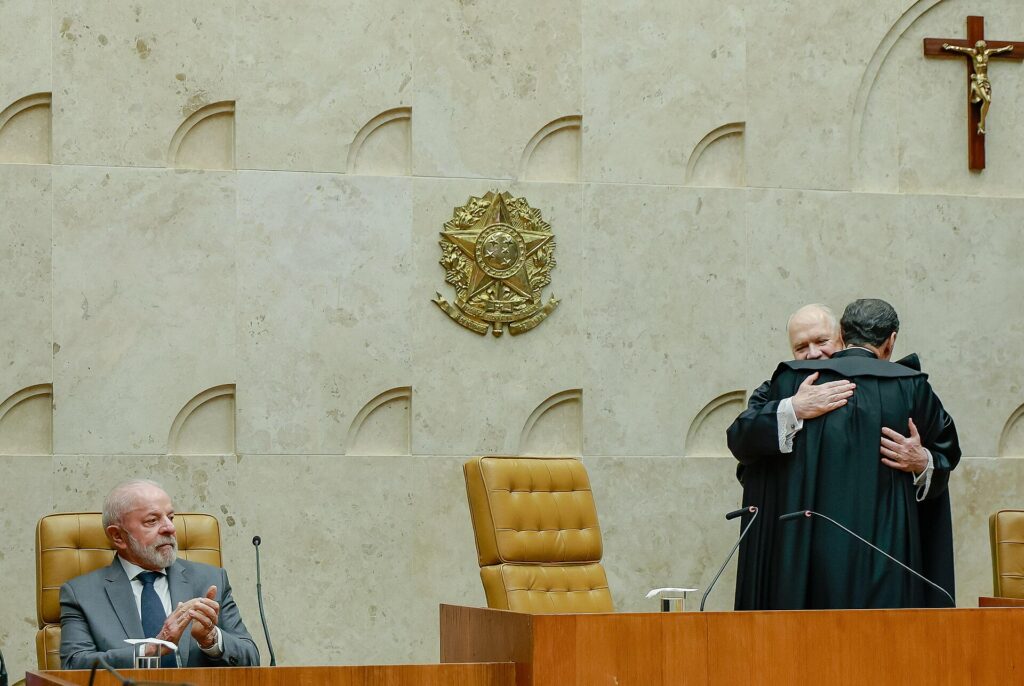
Two Supreme Court justices spent the weekend before a session on their colleague demanding access to the evidence that session will consider.
Who Asked for What
Cristiano Zanin made the original demand for full access to the material extracted from Daniel Vorcaro’s telephone. Gilmar Mendes reinforced it in a written petition to Fachin on Saturday 12 September.
Gilmar went further, asking Fachin to take over management of the case from Mendonça altogether. That is a request to remove a rapporteur from his own file, made by one justice about another, three days before a plenary session.
Alexandre de Moraes, whose conduct is the subject of that session, has separately accused Mendonça of disclosure that is selective and directed.

Mendonca’s Position
The rapporteur’s answer is that the defence already has full access to the material, and that releasing more of it more widely risks compromising an investigation that is still running.
That is a conventional argument and it would be unremarkable in an ordinary case. It is not an ordinary case, because the people asking are the judges who will vote.
A justice who votes on Tuesday without having seen the full extraction will be voting on a summary prepared by someone whose own conduct is scheduled for review eight days later.

Why the Sequence Matters
Fachin has already refused to merge the two sessions. The Moraes matter goes first, on 15 September, and the Mendonça matter follows on 23 September.
That ordering means the justice controlling the evidence for the first session is himself the subject of the second. Every procedural decision he makes this week is being read through that.
Whether Fachin grants the access request, and whether he takes over the file, are the two decisions that determine what Tuesday actually looks like.
Neither has been announced.
Why Access Is the Whole Fight
A plenary vote on whether to investigate a sitting justice rests entirely on what the voting justices have seen. Brazilian procedure gives the rapporteur control over disclosure in a sealed case, and that control is ordinarily uncontroversial because the rapporteur is not himself under review.
Here he is. Mendonça manages the evidence for Tuesday’s session and is the subject of the session eight days later, which means every disclosure decision he makes can be read as self-interested whether or not it is.
That is the structural problem Gilmar Mendes is pointing at when he asks Fachin to take over the file. It is not an accusation about what Mendonça has withheld. It is an argument that nobody in his position should be deciding.
Fachin has already shown he will intervene. He suspended two colleagues’ orders earlier in the week and removed Moraes from the fake-news inquiry, both extraordinary uses of the presidency.
What a Phone Extraction Contains
A full extraction from a device seized in a financial investigation is not a list of messages. It is the complete contents: contacts, location history, deleted material recovered from unallocated space, application data and the metadata attaching to all of it.
That is why disclosure fights over extractions are so bitter. The evidentially relevant portion is usually small and the rest is everything else in a person’s life, including communications with people who are not under investigation.
Mendonça’s stated objection, that wider release could compromise an ongoing investigation, is the standard argument and it is frequently correct. Material released to a full plenary does not stay in the plenary.
The counter-argument is that a justice asked to authorise an investigation into a colleague cannot reasonably be expected to vote on somebody else’s summary of the evidence.
More: Brazil news in English, every day from The Rio Times.
Frequently Asked Questions
Who wants access to Vorcaro’s phone data?
Cristiano Zanin made the original demand and Gilmar Mendes reinforced it in a petition to Fachin on 12 September.
What else did Gilmar Mendes ask?
That Fachin take over management of the case from André Mendonça.
What is Mendonça’s position?
That the defence already has full access and that wider release could compromise the ongoing investigation.
What has Moraes said?
He has accused Mendonça of selective and directed disclosure.
When is the session?
Tuesday 15 September, on the leaked messages between Moraes and Vorcaro.
Sources: ac24horas, WSCOM, Rede98, Conjur.
This article was drafted with automated assistance and reviewed before publication. How we use AI · Report an error
Read More from The Rio Times