Starting Today, Ecuador Implements Daily Eight-Hour Blackouts
Ecuador has entered a period of scheduled power outages and curfews as the country grapples with its most severe drought in over six decades.
The government announced national power cuts, starting today, as part of broader efforts to maintain the electrical grid.
From 10:00 p.m. to 6:00 a.m., curfews will accompany the outages, initially planned for maintenance on the National Transmission System and electric distribution networks.
The government emphasized that the timing of the power cuts aims to minimize disruption to productivity and work schedules.
Tonight, essential maintenance will be conducted on equipment at four substation sites, operated by Celec Transelectric. The total investment in this effort amounts to $1.19 million.
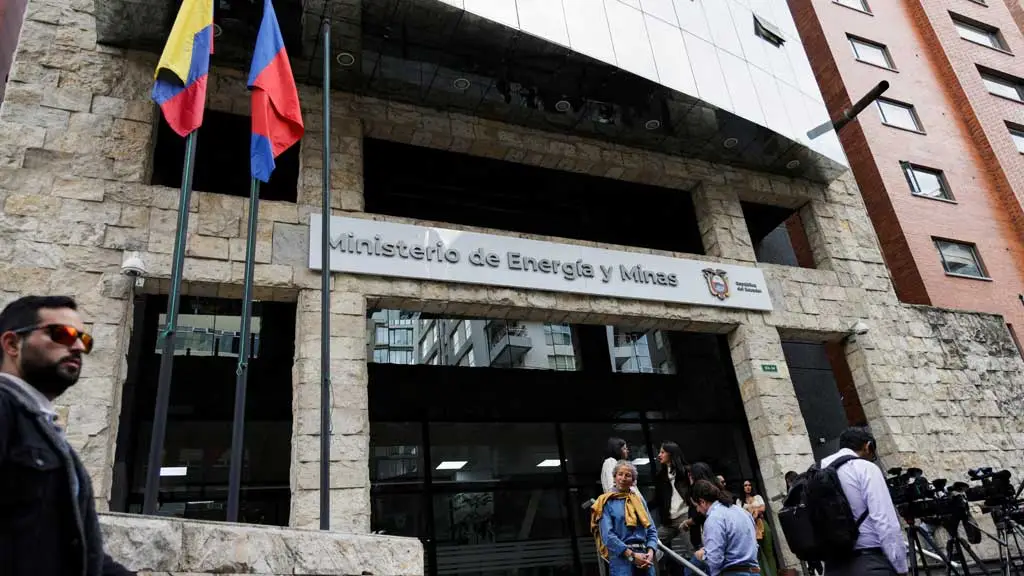
In a new development, the Ecuadorian government has extended the power cuts to four days next week, from Monday, September 23, to Thursday, September 26.
This decision reflects the country’s ongoing energy crisis, driven by drought conditions that have worsened since 1961.
In addition to curfews during the outages, the government implemented telework for public employees and is exploring further energy-saving measures.
Addressing Ecuador’s Energy Crisis
President Daniel Noboa outlined several steps taken to address the crisis, including activating power-generating ships and land-based generators, streamlining natural gas imports, and enhancing energy infrastructure.
He also stressed that long-term energy security remains a priority. According to international analyst Luis Alberto Villamarín, the current crisis stems from multiple issues.
However, these issues are affecting Ecuador’s hydroelectric production, which serves as the country’s primary energy source.
Villamarín cited the El Nio phenomenon and administrative mismanagement, tracing back to the Rafael Correa era, as contributing factors. He argued that Ecuador’s prolonged political polarization diverted attention from key strategic goals, worsening the situation.
Villamarín also noted that Ecuador’s reliance on imported electricity from Colombia has been interrupted due to Colombia’s own energy shortages.
He pointed out that better resource management could have mitigated the crisis had political coherence been prioritized over the country’s internal divisions.
To restore energy stability, Ecuador needs an additional 1,000 megawatts of power to meet national demand. Authorities are focusing on maintaining existing dams and securing new energy contracts to provide a long-term solution.
In response to the crisis, Ecuador‘s military has stepped in to support the operation of key hydroelectric plants, such as the Mazar plant, which generates 170 megawatts.
Fifty soldiers will undergo training to help operate the plant. 46,000 police officers will secure high-risk areas, such as highways and prisons, nationwide during nighttime power outages.
More: Ecuador news in English, every day from The Rio Times.
This article was produced by The Rio Times’ automated newsroom system. How we use AI · Report an error · Editorial responsibility: Matthias Camenzind, Editor-in-Chief