Shaky Alliance: Europe’s Doubts Loom Over Ambitious U.S.-E.U. Deals
(Analysis) A recent high-profile trade and defense agreement between the United States and the European Union (EU) exposes significant underlying tensions despite official optimism.
Although both sides praised the deal as groundbreaking, internal European skepticism and the complexities of implementation raise substantial doubts about its viability.
Central to the agreement is Europe’s extraordinary commitment to purchasing $750 billion of American energy—mainly liquefied natural gas (LNG), oil, and nuclear fuel—over three years.
This amounts to roughly $250 billion annually, dramatically exceeding Europe’s previous annual imports from the U.S., which totaled approximately $70 billion in 2024.
This ambitious goal notably surpasses the entire global LNG market, valued at roughly $200 billion annually, triggering immediate skepticism among market experts who see a mismatch between political pledges and market reality.

Europe’s Dependency on Market Forces
Privately, EU officials acknowledge that meeting this energy commitment relies entirely on market-based decisions by European companies rather than government mandates.
They clarify the $750 billion figure as aspirational, lacking any binding obligation. U.S. energy firms sell their commodities globally, typically prioritizing buyers in Asia, meaning Europe’s intended pivot toward American energy faces stiff international competition.
Moreover, Europe’s infrastructure constraints significantly complicate the promise of increased energy imports. Countries like Germany, Spain, and Italy have expanded LNG terminals since drastically cutting Russian gas imports from 45% to under 20% after 2022.
However, tripling U.S. energy imports requires extensive additional infrastructure investments, including terminals, pipelines, and shipping capabilities—developments unlikely to be completed within the promised timeline.
The trade deal also includes a significant U.S. tariff of 15% on most European goods, replacing earlier threats of a harsher 30% rate.
In return, the EU committed to investing $600 billion in the American economy, aggregated from pre-existing private investment plans rather than new public funds.
This major financial promise is more symbolic than substantive, reflecting Europe’s effort to appease Washington rather than signifying guaranteed outcomes.
NATO’s New Defense Spending Target
Parallel to economic promises, NATO members agreed to elevate defense spending dramatically, targeting 5% of GDP by 2032, a sharp rise from the previous 2% goal.
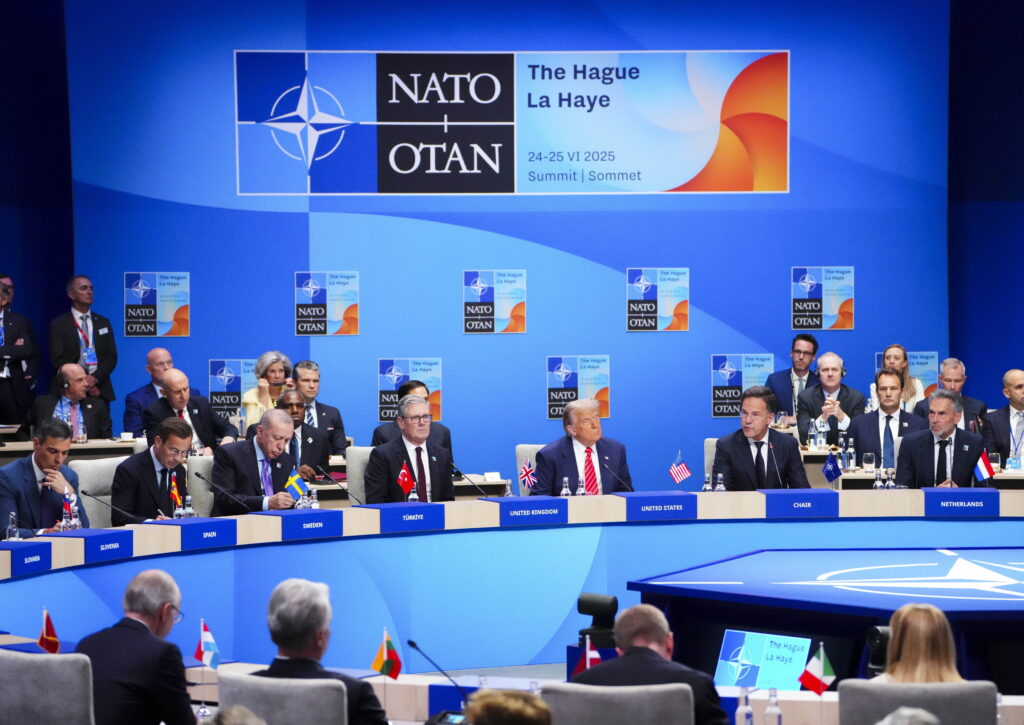
While Eastern European nations strongly support increased military expenditure, driven by the immediate threat from Russia’s actions in Ukraine, Western European nations express considerable reluctance.
Spain notably opposes the target, emphasizing domestic social needs over defense budgets. Germany accepts the increase cautiously, viewing higher defense spending as a reluctant but necessary step to preserve American military engagement in Europe.
Behind official statements lies considerable private discomfort among European leaders regarding former U.S. President Donald Trump, who heavily influenced these negotiations.
European political elites, especially in France and Germany, privately express unease over Trump’s transactional and unpredictable diplomacy. France explicitly criticized the trade agreement as humiliating, reflecting deep resentment across the EU.
Greenland and Geopolitical Uncertainty
Furthermore, Trump’s administration maintains internal interest in increasing the U.S. presence in Greenland, highlighting continued unpredictability in American geopolitical strategy.

This quietly persistent ambition underscores Europe’s broader concern about unexpected unilateral U.S. actions potentially disrupting regional stability.
Ultimately, European leaders accepted stringent U.S. conditions primarily to prevent catastrophic economic and political fallout from potential trade conflicts.
This uneasy compliance demonstrates Europe’s current reliance on transatlantic stability despite significant internal misgivings.
The coming months and years will rigorously test these politically ambitious agreements against market realities, geopolitical unpredictability, and deep-seated internal divisions within Europe.
This article was produced by The Rio Times’ automated AI newsroom. Editorial responsibility: Matthias Camenzind, Publisher and Editor-in-Chief. The Rio Times also runs Ask Rio Times, which answers from 100,000+ of our own articles, the daily Latin America Power Map, and prediction-market odds on elections and markets.. How we use AI · Report an error