Sara Flores: The Amazonian Artist Carrying Peru to the Venice Biennale
Peru · Art
Key Facts
—The honor. Sara Flores, an Indigenous artist from the Peruvian Amazon, represents Peru at the 2026 Venice Biennale.
—The event. The Biennale is the art world’s most prestigious gathering, running through November 2026.
—The work. Her pavilion centers on the largest painting of her career, made over four months.
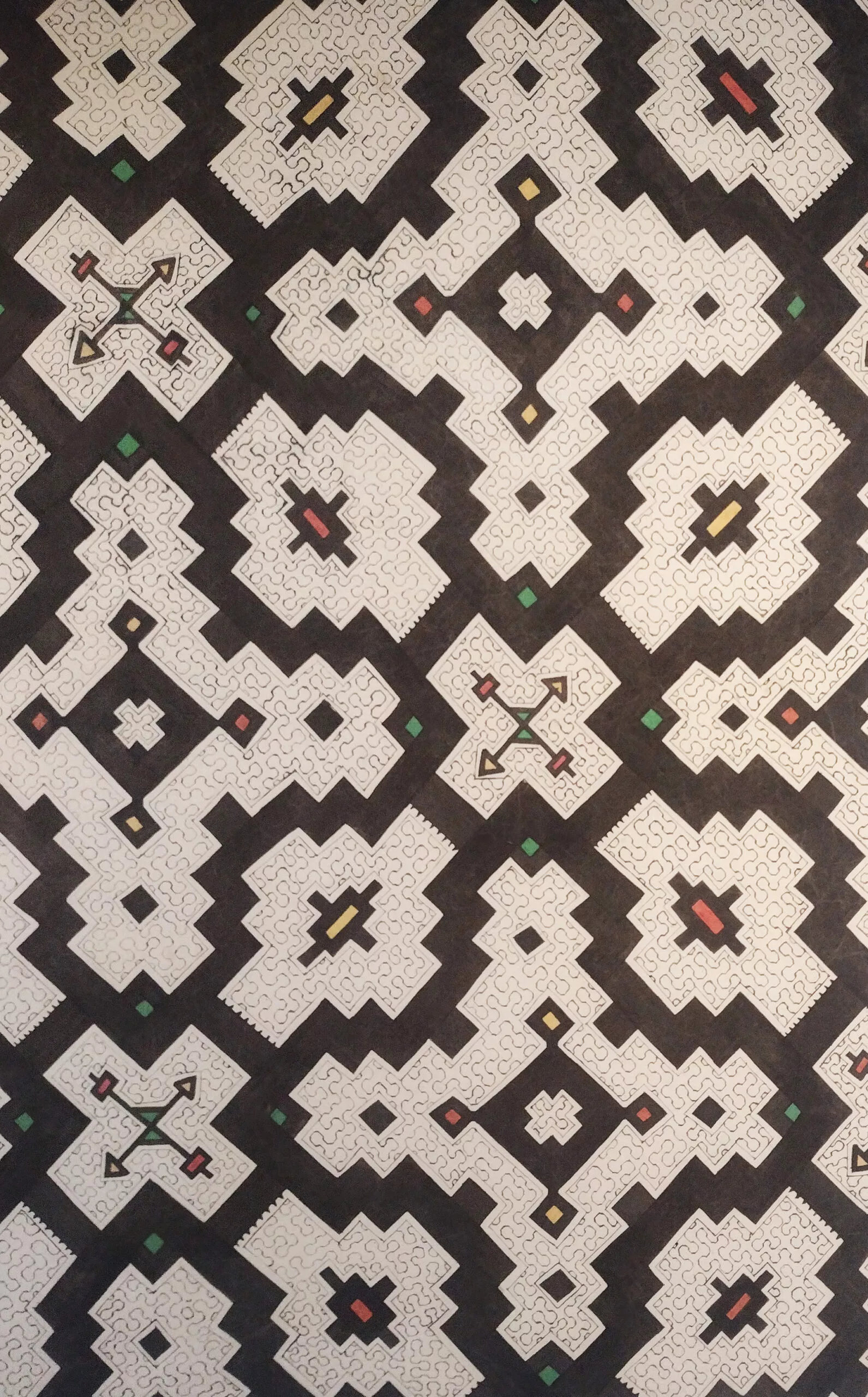
—The art. She paints geometric patterns called kené on cloth dyed with natural pigments.
—The people. Flores belongs to the Shipibo-Conibo, an Amazonian people with a deep visual tradition.
—The title. Her project is called From Other Worlds.
Sara Flores, a major painter from the Peruvian Amazon, is carrying her people’s ancient visual language onto the world’s grandest art stage, the Venice Biennale.
One of the most striking voices in contemporary art right now comes not from a big-city studio but from the Peruvian Amazon. Sara Flores, an Indigenous painter, has been chosen to represent Peru at the 2026 Venice Biennale.
For an artist from a small Amazonian community, it is an extraordinary platform. The Biennale is the most prestigious event in the art world, a kind of Olympics of contemporary art held in Venice.
Who Sara Flores is
Flores belongs to the Shipibo-Conibo, an Indigenous people of the Peruvian Amazon with a rich visual culture. Her art grows directly out of that heritage.
She works on cloth dyed with natural pigments, covering it in intricate geometric patterns known as kené. The designs are far more than decoration.
In Shipibo-Conibo tradition, these patterns are something closer to maps of knowledge. They express a spiritual relationship with the forest, with memory, and with life itself.
Her standing has been building for years. The Museum of Art of Lima recently gave her the first solo show by a Shipibo-Conibo artist in a Peruvian museum, and a major London gallery now represents her.
That mix of local roots and global reach is rare. It is what makes her selection for Venice feel less like a surprise than a natural next step.
The work at the heart of the pavilion
Her project for Venice is titled From Other Worlds. At its center sits the largest painting Flores has ever made.
The canvas took more than four months to complete. She worked on it daily, resting only on Saturdays, following the designs wherever they seemed to lead.
The pavilion pairs the painting with a film. Its soundtrack is a whistled melody, blown into a small bottle at the start of a traditional ceremony, filling the space with an almost ritual hush.
Flores has said the strength of the work lies in staying faithful to where it comes from. She frames the project as a dream of self-determination for her people.
Why this moment matters
For decades, the great museums of Europe and North America largely shut out Indigenous artists. To see one representing a whole nation in Venice is a sign of how much that is changing.
It is part of a wider shift across Latin American art. Curators and institutions are increasingly placing Indigenous and Amazonian voices at the center rather than the margins.
That change has powerful champions. The Brazilian curator who led the last Venice Biennale built his program around outsiders and Indigenous makers, helping open doors that had long been shut.
Peru has good reason to be proud. The country is sending not a familiar export but a living tradition, carried by an artist deeply rooted in it.
How to see it
The Biennale runs in Venice through late November 2026, so there is ample time to visit. The Peruvian pavilion sits among scores of national shows spread across the city.
For travelers, it is a chance to encounter a culture rarely seen on such a stage. For the art world, it is a reminder that some of the most original work today is coming from the rainforest, not the metropolis.
Up close, the appeal is immediate. The patterns pull the eye into their rhythm, and you do not need to know the tradition to feel their precision and calm.
That accessibility is the point. A visitor with no background in Amazonian culture can still stand before the work and sense that they are looking at something carefully made and deeply meant.
Background: Amazon deforestation.
More: Latin America news in English, every day from The Rio Times.
Who is Sara Flores?
She is an Indigenous artist from the Peruvian Amazon, a member of the Shipibo-Conibo people. She is known for paintings covered in geometric patterns called kené, made on cloth dyed with natural pigments.
What is she showing at the Venice Biennale?
Her project, From Other Worlds, fills the Peruvian pavilion and centers on the largest painting of her career, made over four months. It is paired with a film rooted in Shipibo-Conibo ceremony.
When can people see the pavilion?
The 2026 Venice Biennale runs through late November, leaving plenty of time to visit. The Peruvian pavilion is one of many national presentations across the city.
Connected Coverage
MASP Devotes Its 2026 Program to Latin American Histories
Peru Heads to a Knife-Edge Runoff With Fujimori and Sanchez Tied
This article was produced by The Rio Times’ automated newsroom system. How we use AI · Report an error · Editorial responsibility: Matthias Camenzind, Editor-in-Chief