Peru Heads to a Knife-Edge Runoff: Fujimori, Sanchez Tie
Peru · Election Watch
Key Facts
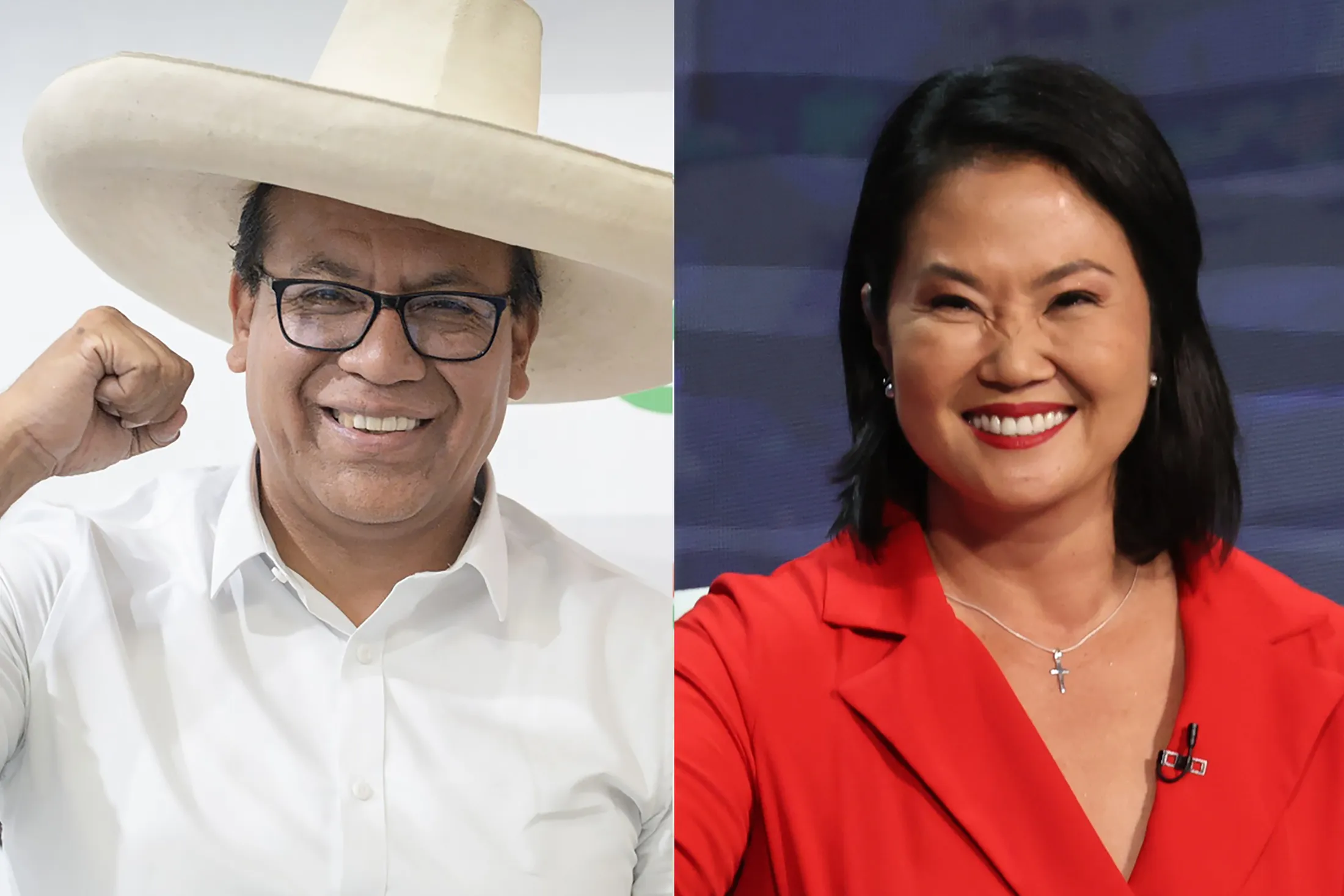
—The vote. Peru holds its presidential runoff on Sunday June 7, pitting the right’s Keiko Fujimori (Fuerza Popular) against the left’s Roberto Sanchez (Juntos por el Peru).
—The polls. The final surveys put the race inside the margin of error — Ipsos’s vote simulation had Fujimori 51.4% to Sanchez 48.6% of valid votes, while CPI earlier called it a technical tie.
—The divide. Fujimori dominates Lima and the coast; Sanchez leads heavily across the southern Andes, reprising Peru’s recurring city-versus-highlands split.
—The markets. Peru produces roughly 10% of the world’s copper; the sol and local bonds have lagged regional peers as investors price runoff uncertainty.
—The stake. Sanchez has sought to reassure markets by pledging to keep central-bank chief Julio Velarde, while Fujimori runs on private investment and a hard line on security.
With two days to go, Peru’s presidential runoff is too close to call — and the world’s third-largest copper producer is heading into the vote with its currency and its mining pipeline waiting on the result.
Peru runoff polls point to a dead heat
The final round of polling before Sunday’s vote leaves the contest between Keiko Fujimori and Roberto Sanchez inside the statistical margin of error. The most closely watched instrument, the Ipsos vote simulation conducted on May 29 and 30 — a secret mock ballot using a replica of the official voting slip — put Fujimori at 51.4% of valid votes against 48.6% for Sanchez, a 2.8-point gap that pollsters treat as a coin toss. Ipsos’s companion intention-to-vote survey showed a similar 38% to 35% edge for Fujimori, again within the margin.
Earlier readings told the same story of a race tightening to the wire. A CPI survey taken across 19 departments had Fujimori at 32.5% and Sanchez at 29.1% nationally, a gap its own director described as a technical tie, with a striking 22.6% of respondents intending to spoil or cast blank ballots. A Datum poll from mid-May had given Fujimori a wider 39.5% to 36.1% lead. The consistent thread across all three firms is a narrow Fujimori advantage that sits within or close to the margin of error, leaving the outcome genuinely uncertain heading into election day.
Both candidates carry unusually high rejection numbers, the legacy of the most fragmented first round in Peruvian history: the two finalists together drew just over 29% of the April vote. That leaves the large bloc of blank, spoiled and undecided voters as the single biggest variable in how the runoff breaks.
A familiar city-versus-highlands map
The regional breakdown reproduces a divide that has shaped Peruvian elections for a generation. Fujimori, the daughter of late former president Alberto Fujimori and a candidate in her fourth consecutive runoff, draws her strength from Lima and Callao — where one survey put her above 45% — along with the northern coast and the Amazon east. Sanchez, who served as a minister under jailed former president Pedro Castillo and has said he would pardon Castillo if elected, dominates the southern and central Andes, where one poll showed him above 53%, and leads on the southern coast.
The two met in a final televised debate in Lima on May 31, organised by the National Jury of Elections, trading proposals and accusations across blocks on security, human rights, education, health and the economy. The contest revives the fujimorismo-versus-antifujimorismo cleavage that has defined the country’s politics for three decades, though analysts note the anti-Fujimori street mobilisation that proved decisive in her three previous runoff defeats has been comparatively muted this time.
More: Latin America news in English, every day from The Rio Times.
What the result means for copper and the sol
For international investors, the stakes run through the mining sector. Peru produces roughly 10% of the world’s copper and holds a project pipeline that analysts have valued at roughly $64bn, making the country a structural supplier to a market central to the global energy transition. The central bank’s short-term expectations gauge turned negative for the first time in nearly two years after the first round, and the sol and local bonds have trailed regional peers in recent weeks as markets price the uncertainty. Ratings agencies have flagged that prolonged policy ambiguity could lead companies to defer capital decisions until the picture clears.
Each candidate has tried to manage that anxiety in different ways. Fujimori campaigns on private investment, market continuity and a hard line on crime, a platform markets read as broadly predictable. Sanchez, whose earlier platform included higher mining taxes and stronger community-consultation requirements, has moderated his economic message in the closing stretch and signalled he would retain Julio Velarde at the head of the Banco Central de Reserva del Peru — a reassurance aimed squarely at the financial sector. He has also said he would pardon Castillo if elected, a commitment that anchors his support in the southern highlands.
Whichever candidate prevails will inherit a fragmented Congress — Peru returned to a two-chamber legislature for the first time in 34 years at the April vote — and a state that has cycled through repeated presidential crises. With polls this close, market participants across the region are likely to wait for the official ONPE count rather than exit polls before drawing conclusions on Sunday night.
Frequently Asked Questions
When is Peru’s presidential runoff?
The runoff is on June 7, 2026, with polls open from 07:00 to 17:00 local time. It is the second round between first-round leader Keiko Fujimori and runner-up Roberto Sanchez.
Who is ahead in the polls?
The final surveys give Fujimori a narrow lead inside the margin of error. Ipsos’s vote simulation had her at 51.4% to Sanchez’s 48.6% of valid votes; other firms called it a technical tie.
Why does the result matter for markets?
Peru produces close to 12% of global copper and has a mining pipeline valued at about $64bn. The sol and local bonds have lagged regional peers as investors await the outcome.
What are the candidates’ economic positions?
Fujimori runs on private investment and security. Sanchez has moderated his economic message and pledged to keep central-bank chief Julio Velarde, while maintaining his support base in the southern Andes.
Connected Coverage
The runoff lands as the OECD trims Peru’s 2026 growth to 2.9% despite a metals windfall, underscoring the economic backdrop the next president inherits. Our earlier deep analysis of the Fujimori-Sanchez contest sets out the institutional stakes beyond election day.
This article was produced by The Rio Times’ automated newsroom system. How we use AI · Report an error · Editorial responsibility: Matthias Camenzind, Editor-in-Chief
In depth