São Paulo Police Break Up PCC Laundering and Tax Fraud Rings
Brazil · ORGANIZED CRIME
Key Facts
- —What happened Police in São Paulo state opened two separate fraud investigations that both became public on September 3, 2026.
- —How big Investigators say a PCC-linked group laundered close to R$1 billion (about US$196 million) through coastal businesses.
- —What it means Prosecutors say the group tried to buy influence inside Praia Grande’s city hall and its city council.
- —The catch Prosecutors publicly label retailers Casas Bahia, Assaí and Dia as fraud beneficiaries rather than criminal defendants.
- —Who it affects The laundering case centers on Praia Grande and Guarujá, two cities on São Paulo’s Atlantic coast.
- —What comes next Police arrested two suspects in the tax case and sought four more in the laundering case.
Runoff · Sunday, 25 October
Brazil Runoff 2026: Lula vs Flávio
Date, polls, debates, odds and how the runoff works, updated every day.
Brazil runoff polls · Polymarket and Kalshi odds · When results come
Prediction markets · who wins the runoff
Implied chance of winning Brazil’s presidency on 25 October, from traders’ prices.
Polymarket
Flávio Bolsonaro 78.8% · Lula 20.5% (US$188 million traded)
Kalshi (regulated in the US by the CFTC)
Flávio Bolsonaro 81% · Lula 21%
As of 18 October, 9:00 pm ET (02:00 Lisbon), updated every 20 minutes. Prices are bets, not polls, and can move fast.
Why we show this: prediction markets turn real-money bets into a live probability that moves within minutes of the news, which is why investors, campaigns and newsrooms in the United States now follow them closely. We show them next to polls and official results, never instead of them.
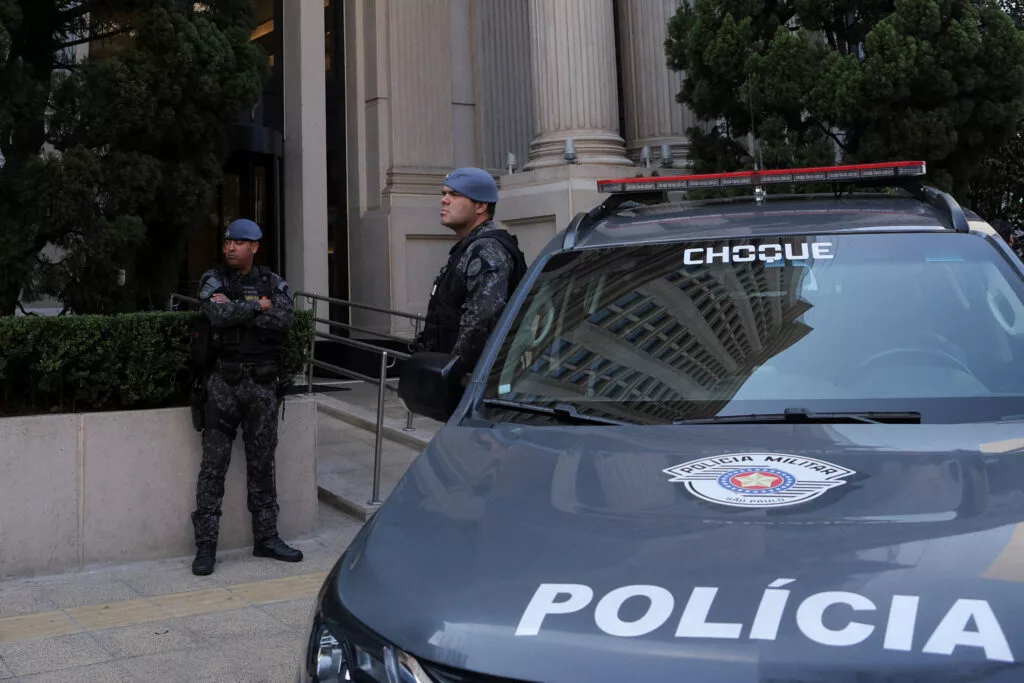
Brazilian police this week broke up two separate fraud schemes in São Paulo state, one violent and one white-collar.
Police in São Paulo state opened a major fraud investigation on September 3, 2026. They say the case involves the PCC, Brazil’s largest and most powerful crime group.
The PCC formally is the Primeiro Comando da Capital, founded inside a São Paulo prison in 1993. It now runs drug trafficking and money laundering across dozens of countries, researchers say.
On the same day, a second police operation hit a different target entirely. That case involves an alleged tax-fraud ring known as the “ICMS mafia.”
A Coastal Laundering Ring Tied to the PCC
Prosecutors say the PCC-linked group laundered close to R$1 billion (about US$196 million at R$5.09 to the dollar). The alleged laundering ran through ordinary businesses on the state’s coast.
Police call the case Operação Helmintos, named for parasites that drain their hosts. The name reflects how the group allegedly fed off the local economy for years.
Investigators focused on Praia Grande and Guarujá, two beach towns near the port of Santos. They also searched sites in Santo André and Santana de Parnaíba, well inland from the coast.
Courts issued four temporary arrest warrants and several search warrants in the operation. Police seized 29 properties tied to the suspects, including high-end real estate.
The group allegedly used real estate deals, shops and beachfront kiosks to move cash. Investigators say it built its wealth through everyday local businesses, not obvious crime fronts.
The operation was carried out by Deinter 6, a regional arm of São Paulo’s Civil Police. Praia Grande and Guarujá sit in the Baixada Santista, a coastal region anchored by the port of Santos.
City Hall and Council in the Crosshairs
Investigators say the group tried to buy influence inside Praia Grande’s government. That reportedly touched both the mayor’s office and the elected city council.
Detectives searched the city hall’s purchasing office over a waterfront kiosk contract. Prosecutors say the deal may have favored people tied to the criminal group.
Police also found signs of payments made to elected local politicians. Investigators say the goal was influence over future licensing and contracts.
Praia Grande’s government pushed back on that account. It said officers only asked about one kiosk permit, not a full search of city hall.
A Separate Tax-Fraud Case
The tax case is unrelated to the coastal laundering probe. Investigators call it the “ICMS mafia,” after Brazil’s state sales tax on goods and services.
Police arrested former senior tax official André Weiss on September 3. They also arrested João Buttini, a lawyer accused of running the scheme.
Investigators say corrupt tax auditors approved inflated ICMS refunds in exchange for bribes. Companies could then use or resell those inflated tax credits, prosecutors allege.
Prosecutors say Weiss took about R$4.5 million (roughly US$880,000) in bribes. He allegedly kept friendly staff in key tax posts in exchange.
Weiss held senior tax posts under Governor Tarcísio de Freitas’ administration, starting in 2023. He left his post in May 2026, months before his arrest.
The case builds on a wider investigation called Operação Ícaro. That probe has run for more than a year.
It has already led to other arrests. Together, the cases point to more than R$3 billion (about US$589 million) in disputed tax credits and penalties.
Retailers Named as Beneficiaries, Not Suspects
Prosecutors say several large retailers benefited from the alleged fraud. Casas Bahia, Assaí and Dia are named in case documents reviewed by reporters.
None of the three companies is listed as a defendant, prosecutors say. Investigators describe them instead as clients who received improper tax refunds.
Assaí allegedly received about R$800 million (about US$157 million) in suspect refunds. Dia is linked to R$97.7 million (about US$19.2 million) across two separate cases.
Casas Bahia allegedly paid millions to the lawyer’s office for help with tax claims. Records cited by prosecutors show R$27.6 million (about US$5.4 million) paid in 2023 alone.
Carrefour and Ipiranga were also named as beneficiaries in press reports. Neither retailer faces criminal charges, based on reporting so far.
Two Cases, One Week
The laundering case and the tax case are legally separate. They were reported within hours of each other in São Paulo state.
Together, they point to two different threats facing Brazil’s institutions. One is a violent crime group.
The other is white-collar tax fraud.
São Paulo state has pushed harder on both fronts this year. Governor Tarcísio de Freitas has named organized crime and tax fraud as enforcement priorities.
Neither case has gone to trial yet. Brazilian prosecutors often take months to file formal charges after arrests like these.
Both investigations remain open as of September 3, 2026. Prosecutors say more arrests or formal charges could still follow.
More: Brazil news in English, every day from The Rio Times.
Frequently Asked Questions
What is Operação Helmintos?
Operação Helmintos is a police operation against a PCC-linked group in São Paulo state. Investigators say the group laundered close to R$1 billion (about US$196 million) through coastal businesses.
What is the “ICMS mafia” case?
The “ICMS mafia” is a separate investigation into fraudulent refunds of ICMS, Brazil’s state sales tax. Prosecutors say it involves more than R$3 billion (about US$589 million) in disputed tax credits.
Are Casas Bahia, Assaí and Dia facing criminal charges?
No. Prosecutors describe the three retailers as beneficiaries of the alleged fraud, not as defendants.
Which cities are involved in the PCC laundering case?
The main sites are Praia Grande and Guarujá on São Paulo’s coast. Investigators also searched Santo André and Santana de Parnaíba, further inland.
What is the PCC?
The PCC is Brazil’s largest and most powerful crime group, formally called the Primeiro Comando da Capital. It was founded inside a São Paulo prison in 1993.
Sources: Metrópoles, Gazeta do Povo, Revista Oeste, Costa Norte, BNews São Paulo, and São Paulo’s Civil Police (Polícia Civil).
This article was drafted with automated assistance and reviewed before publication. How we use AI · Report an error · Editorial responsibility: Matthias Camenzind, Editor-in-Chief
Living in or visiting São Paulo? See this month's events and our São Paulo city guide with rents, safety and upcoming concerts.