Qatar Highlights Conflict Risk in U.S., UK Red Sea Operations
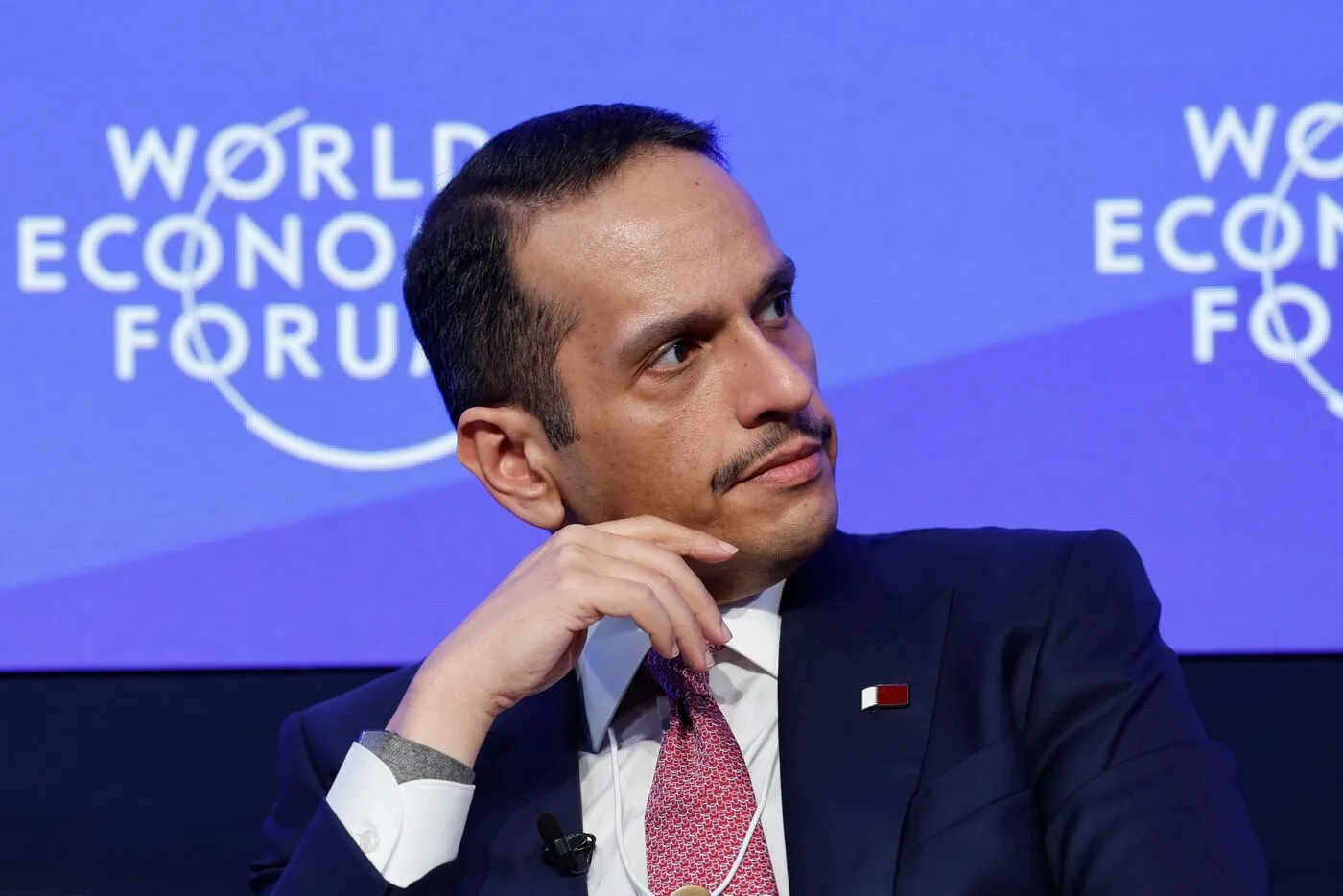
Qatar’s Prime Minister, Mohamed bin Abdulrahman Al Thani, in Davos, voiced concerns about U.S. and UK strikes on Houthi rebels in the Red Sea.
Al Thani believes these actions could escalate tensions, not stop the rebels. He highlighted a preference for diplomacy over military means at the Swiss Alps WEF forum.
He warned that responses to rebels might expand the conflict beyond the ongoing Israel-Hamas war in Gaza.
He pointed out a recent example: after U.S. and UK attacks, the Houthis targeted a U.S.-owned ship.
Al Thani suggested focusing on solving the core Gaza conflict. He recalled a six-day ceasefire in late November, which paused other battles.
This shows the effect of addressing the main issue. Al Thani warned of a general escalation risk in the region.
The Prime Minister described the Red Sea situation, where Houthis have attacked Israel-linked ships since last November, as particularly dangerous.
He emphasized that Middle Eastern events impact the whole world.
Al Thani also spoke about natural gas transport issues. He noted that alternative routes to the Red Sea are less efficient.
This statement follows reports that QatarEnergy might have stopped using the Red Sea route due to attacks.
Many shipping companies are now avoiding the Red Sea, a key Asia-Europe trade path.
They are taking a longer route around Africa, which is costlier and adds up to twelve days to their journey.
Background
Sheikh Mohammed bin Abdulrahman Al Thani was appointed Prime Minister of Qatar in March 2023 while retaining his role as Foreign Minister.
His key diplomatic roles included navigating LNG negotiations with Europe and managing a diplomatic crisis with Saudi Arabia, the UAE, Bahrain, and Egypt.
Under his leadership, Qatar strengthened its international relations, particularly with the U.S., and played a vital role in the 2022 football World Cup.
Reflecting Emir Tamim bin Hamad Al Thani’s leadership style, Sheikh Mohammed’s appointment signals a focus on a strong, proactive governance approach post-World Cup.
This article was produced by The Rio Times’ automated newsroom system. How we use AI · Report an error
Read More from The Rio Times