Keiko Fujimori Wins Peru by Fewer Than 50,000 Votes
Markets
Key Facts
—The result. The count closed on June 29 with Keiko Fujimori on 50.135 percent against Roberto Sánchez on 49.865 percent.
—The margin. A gap of 49,641 votes out of more than eighteen million cast, under three tenths of a point.
—A first. Fujimori becomes the first woman elected president of Peru, on her fourth attempt.
—The protest. Sánchez rejects the result and alleges fraud in the overseas vote, without presenting evidence.
—Next steps. The electoral jury is expected to proclaim her by July 3, with credentials handed over on July 15.
—The backdrop. Peru has had eight presidents in a decade, and mining accounts for around two thirds of its exports.
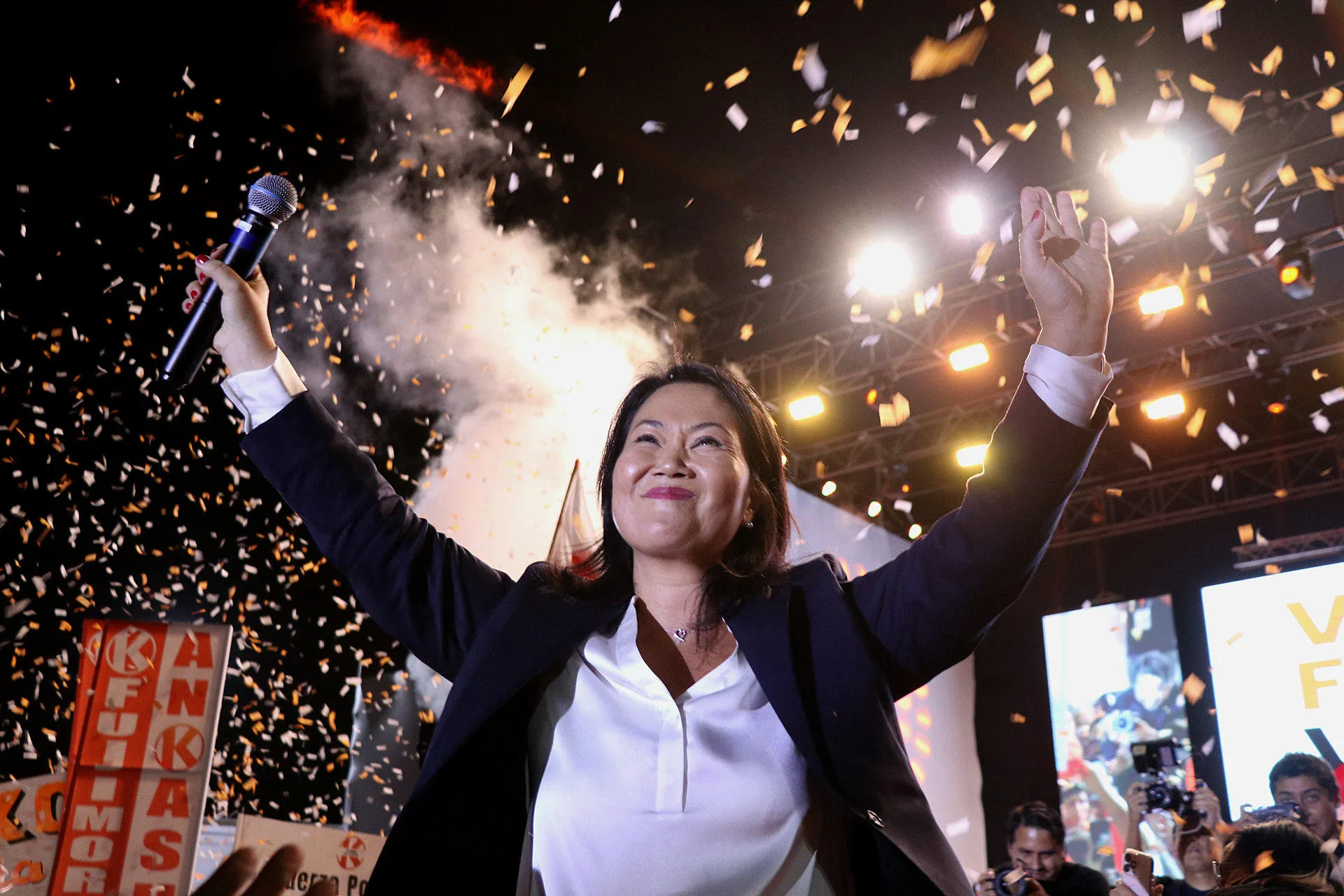
Keiko Fujimori has won the Peruvian presidency at the fourth attempt, by a margin so thin it would fit inside a single Lima district, and her defeated rival has already refused to accept it.
After three weeks of counting, Peru finally has a president-elect. The electoral office finished tallying the June 7 runoff on Monday, and the numbers settled an extraordinary race.
Keiko Fujimori took 50.135 percent of the valid vote to Roberto Sánchez’s 49.865 percent. The difference was 49,641 ballots, a sliver in an election where more than eighteen million people voted.
A margin that keeps repeating
The closeness is not a one-off. This is now the third Peruvian presidential election in a row decided by fewer than fifty thousand votes, a pattern that says as much about the country as any single candidate.
In 2021 Fujimori herself lost to Pedro Castillo by a margin of about 44,000 votes, with Castillo on 50.12% and Fujimori on 49.87%. Five years later she has crossed the line by a similar hair, according to the figures published by the national electoral office.
For a country on its eighth president in ten years, the message is stark. Whoever wins inherits roughly half a nation that voted the other way.
The vote abroad decided it
There is a sharp irony buried in the result. Sánchez actually won more votes inside Peru, and it was the ballots cast abroad, in cities such as those in the United States and Argentina, that tipped the balance to Fujimori.
That is precisely the vote Sánchez had tried to have annulled. He alleged irregularities in the overseas count and asked for those ballots to be thrown out, a request the authorities rejected.
Now he refuses to recognise the outcome. Standing in for the jailed former president Pedro Castillo, Sánchez has alleged fraud without presenting evidence and vowed not to accept a Fujimori government—a posture critics note mirrors the strategy Keiko Fujimori herself deployed after her 2021 loss to Castillo, when her party spent weeks pressing unproven fraud claims before the electoral jury rejected them for lack of evidence.
What Keiko Fujimori inherits
The win marks the return of fujimorismo to the presidency, more than two decades after her father resigned by fax from Japan amid a corruption scandal that later sent him to prison. Keiko Fujimori, fifty, ran on a promise to restore order against a surge in extortion and violent crime.
For foreign investors, the headline is continuity rather than rupture. Peru is one of the world’s top copper producers, and mining makes up close to two thirds of its exports, so the market read on a right-leaning win is steadier policy and faster permitting.
Lima’s Chamber of Commerce was quick to congratulate her, a signal of where business sentiment sits. For residents and expatriates the practical point is timing, as our guide for foreigners in Peru sets out, since no visa, tax or residency rule changes before the handover.
The fight is not over
The count is finished, but the formalities are not. The electoral jury is expected to proclaim Fujimori the winner by July 3, with the official handover of credentials set for the middle of the month.
The deeper test is whether she can govern. With the opposition disputing her legitimacy from day one, and a Congress that has toppled president after president, the real contest may only now be starting, a theme explored in our deeper analysis of the race.
Fujimori, for her part, struck a careful note. She said she would await the formal proclamation with humility and responsibility, and promised a path of order and hope for all Peruvians.
Frequently Asked Questions
By how much did Keiko Fujimori win?
She won the runoff with 50.135 percent of the valid vote against 49.865 percent for Roberto Sánchez, a margin of 49,641 votes. It is the third consecutive Peruvian presidential election decided by fewer than fifty thousand votes.
Why does Sánchez reject the result?
Sánchez alleges fraud in the overseas vote and has refused to recognise a Fujimori government, though he has presented no evidence. He won more votes inside Peru, and it was the ballots cast abroad, which he had tried to annul, that decided the contest.
What does the result mean for markets?
Investors read a right-leaning win as continuity for Peru’s mining-heavy economy, which depends on copper for close to two thirds of its exports. The main risk is political, namely whether a contested president can hold a stable government in a Congress that has removed several recent leaders.
When does Keiko Fujimori take office?
The electoral jury is expected to formally proclaim her the winner by July 3, with credentials handed over around the middle of July. She will govern for a five-year term running to 2031.
Connected Coverage links to related Rio Times reporting on Peru.
This article was produced by The Rio Times’ automated newsroom system. How we use AI · Report an error · Editorial responsibility: Matthias Camenzind, Editor-in-Chief