On October 5, Peru’s National Police arrested the leader and 30 suspects from a subgroup of the “Aragua Train” gang.
Officials reported the operation took place in Lima and other regions.
The police announced the bust on social media, saying they had struck a blow to this international criminal ring.
During the night, officers raided 42 establishments and buildings. Authorities suggest the suspects were involved in organized crime, kidnapping, and human trafficking.
Most victims are foreign women from Venezuela and Colombia.
The Public Prosecutor identified the alleged leader as Yomar José Delgado Palacios, or “Nino.” Police caught him in the district of San Juan de Lurigancho.
This area is under a state of emergency due to high crime rates. Prosecutor Jorge Chávez Cotrina stated Nino tried to escape but got injured.
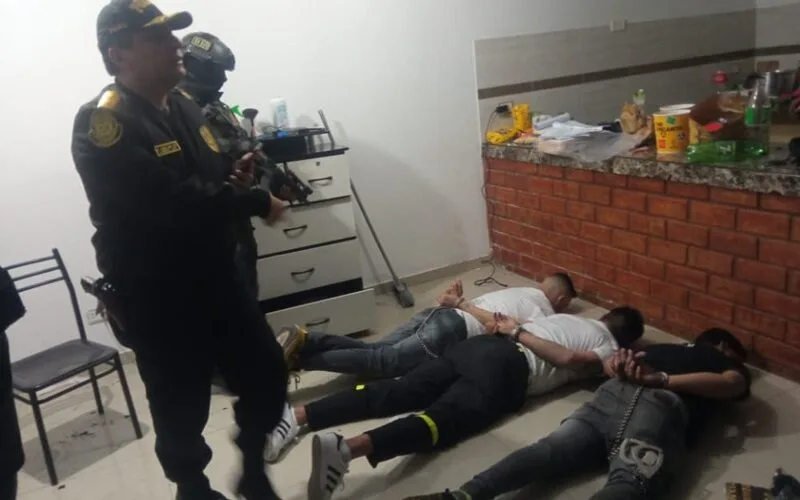
Consequently, he was taken to the hospital.
Interestingly, the operation was widespread. It covered various districts in Lima and stretched to the regions of San Martin, Cajamarca, and Arequipa.
Additionally, raids took place in Lurigancho and Ancón I prisons in Lima, as well as Challapalca in Tacna. A total of 68 prosecutors were involved.
This operation came after the identification of “Dinastía de Alayón” as a subgroup of the “Aragua Train.”
This subgroup has been operating in Peru since October 2022, also having networks in Colombia and Chile.
Previously, Hector Prieto, alias “Mamut,” was known to direct this group from Challapalca prison.
Moreover, the police are keeping a watchful eye on the northern border.
Their aim is to prevent the entry of “Niño Guerrero,” the top leader of the “Aragua Train,” who is also active in other countries.
Days after the arrest, the government announced a hefty reward for information on Guerrero, should he enter Peru after escaping a Venezuelan jail.
Background ‘Aragua Train’ Gang Leader and Members
This arrest has broad implications for Peru, struggling with rising crime rates. Specifically, the capture disrupts the operations of a significant criminal group.
It may also give law enforcement valuable insights into transnational criminal networks. This will likely boost public morale and trust in the system, which has been waning.
More: Peru news in English, every day from The Rio Times.
This article was produced by The Rio Times’ automated newsroom system. How we use AI · Report an error · Editorial responsibility: Matthias Camenzind, Editor-in-Chief