Panama · Infrastructure
Key Facts
—Model. A single private company will manage both airports under an initial five-year operation-and-maintenance (O&M) contract.
—Timeline. The international tender is expected to launch in late 2025, with private operation targeted for early 2027.
—Investment. Under the O&M deal, Panama’s state-owned Tocumen S.A. keeps responsibility for major capital upgrades.
—Cost. Running the regional airports currently costs Tocumen about US$10 million annually, a burden the concession aims to reduce.
—Scope. The winning bidder will also take over Enrique Adolfo Jiménez airport in Colón as part of the same package.
*Panama City is moving to hand the day-to-day running of its two key regional gateways to a private operator, aiming to stem losses and unlock tourism growth beyond the capital’s hub.*
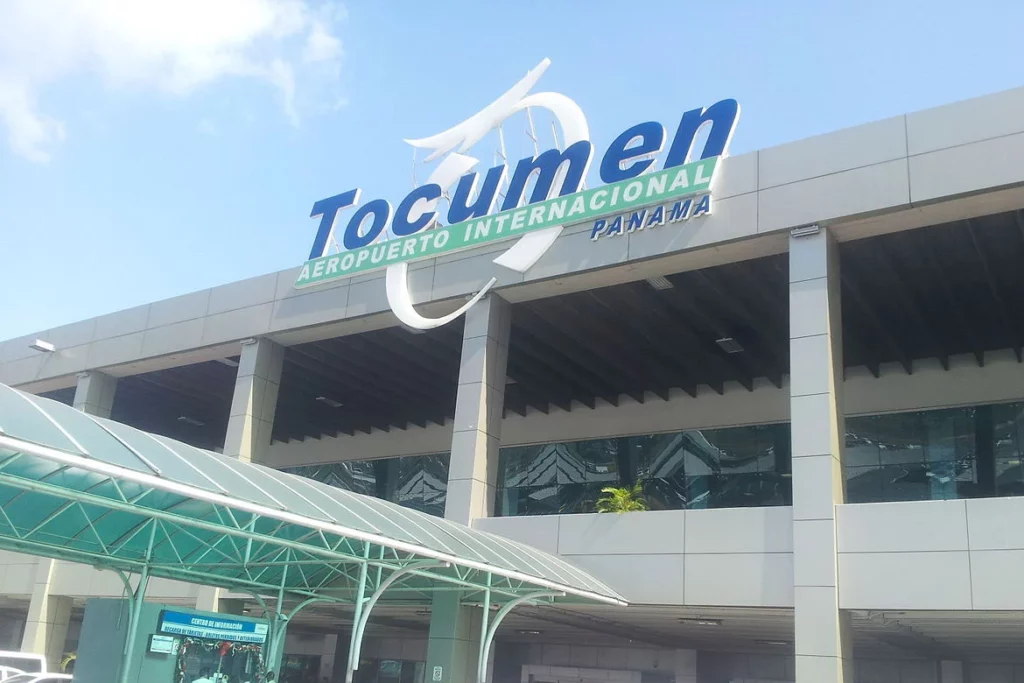
What the two airports serve
Enrique Malek International Airport serves David, the capital of Chiriquí province near the Costa Rican border, a hub for highland tourism and agribusiness. Scarlett Martínez International Airport in Río Hato, on the Pacific coast of Coclé province, is a gateway to beach resorts and charter flights.
Both are currently run by Aeropuerto Internacional de Tocumen S.A. (AITSA), the state-owned company that also operates Panama City’s main hub. The government now wants a private operator to take over their daily management.
For a foreign reader, it helps to understand that Panama’s geography makes these airports strategically distinct. David sits in the fertile western highlands, a region known for coffee, cattle and cool-weather escapes that draw both Panamanians and international visitors.
Río Hato, by contrast, lies along the sun-soaked Pacific arc often called the “dry arc,” where all-inclusive beach resorts cluster. Neither airport currently handles the volume or aircraft size seen at Tocumen, but each serves a slice of the economy that the government believes is underperforming.
Why Panama wants a concession now
The regional airports lose money and depend entirely on Tocumen’s finances, draining roughly US$10 million a year from the state company. A private O&M contract is designed to improve operational efficiency and relieve that fiscal pressure.
Authorities also see untapped tourism potential, especially at Scarlett Martínez, where they want to extend seasonal routes year-round and attract private and maintenance flights. The move fits a broader rethink of Panama’s airport infrastructure, with a possible parallel process for Tocumen itself.
This push is not happening in a vacuum. Across Latin America, governments have increasingly turned to public-private partnerships to run secondary airports, arguing that state operators often lack the commercial agility to court airlines and negotiate route incentives. By bundling three airports into one package, Panama is trying to create a concession large enough to attract serious international bidders, rather than offering each airport separately and risking tepid interest.
The concession terms taking shape
Panama will bundle Enrique Malek, Scarlett Martínez and the smaller Enrique Adolfo Jiménez airport in Colón into a single concession awarded through an international tender. The initial contract is structured as a five-year O&M deal, with the state retaining responsibility for major capital investments.
The private operator will manage passenger services, terminal maintenance and tourist attention under performance standards set by AITSA and the Civil Aeronautical Authority. A longer public-private partnership of 10 or 20 years, where the concessionaire would finance expansions, remains a future option under Law 93 of 2019.
Economic terms are still being drafted, but the model is expected to combine a fixed concession fee with variable payments tied to traffic or commercial revenue. Any contract must win approval from the Comptroller General’s office to take effect.
That final checkpoint is worth noting. In Panama, the Comptroller General acts as a fiscal watchdog, reviewing public contracts for legality and value for money.
Its sign-off is not a rubber stamp; it can delay or reject deals that do not meet strict procurement rules, which adds a layer of scrutiny that bidders will factor into their timelines.
What it means for travellers
For passengers, the immediate change should be largely behind the scenes, with a professional airport operator running check-in, gates and terminal services. The government hopes private management will bring cleaner facilities, smoother operations and better tourist attention at both airports.
The bigger prize is route development. Scarlett Martínez has already attracted new direct flights, such as a weekly Quito service, and Wingo recently launched a Bogotá–Río Hato route that signals growing low-cost interest in bypassing Panama City.
A private operator with global airline relationships could accelerate that trend.
Still, the passenger experience hinges on more than a new manager. Terminal infrastructure, runway condition and ground-handling equipment all remain the state’s responsibility under the O&M model.
Travellers may notice fresher paint and faster queues before they see new destinations on the departure board, because route expansion depends on airline negotiations that can take years.
The Copa network question
Copa Airlines’ hub-and-spoke model is built entirely around Tocumen International in Panama City, and the carrier does not currently serve David or Río Hato with mainline jets. The concession does not directly touch Copa’s network, but a revitalized Scarlett Martínez could draw point-to-point leisure carriers that compete indirectly on some Caribbean and northern South America leisure routes.
If Río Hato matures as a low-cost beach gateway, it may siphon a sliver of connecting traffic that would otherwise transit Tocumen. For now, the risk to Copa is marginal, but the concession signals that Panama is serious about developing secondary airports as standalone destinations.
What remains unanswered is whether Copa itself might eventually see value in feeding those regional airports with smaller aircraft, or whether it will stick exclusively to its Tocumen fortress. The concession structure does not force that decision, but a successful private operator could create conditions that make the question harder to ignore.
More: Panama news in English, every day from The Rio Times.
Frequently Asked Questions
Which airports are being concessioned?
Enrique Malek International Airport in David, Scarlett Martínez International Airport in Río Hato, and Enrique Adolfo Jiménez Airport in Colón are bundled into one contract.
Will the private operator own the airports?
No. The initial contract is an operation-and-maintenance concession for about five years. The state, through Tocumen S.A., retains ownership and funds major capital investments.
When will private management begin?
The tender is expected to launch in the second half of 2025, with evaluation during 2026 and operational handover targeted around January 2027.
Does this affect flights at Tocumen in Panama City?
Not directly. The concession covers only the regional airports. However, the government is studying a separate process that could eventually involve Tocumen International.
Connected Coverage
Panama City’s Casco Peatonal Festival Draws 800K, $14.5M Boost
Sources: Aeropuerto Internacional de Tocumen S.A. (AITSA).
This article was produced by The Rio Times’ automated newsroom system. How we use AI · Report an error
Read More from The Rio Times