A US Helicopter Disabled a Panama-Flagged Ship Off Pakistan
Key Facts
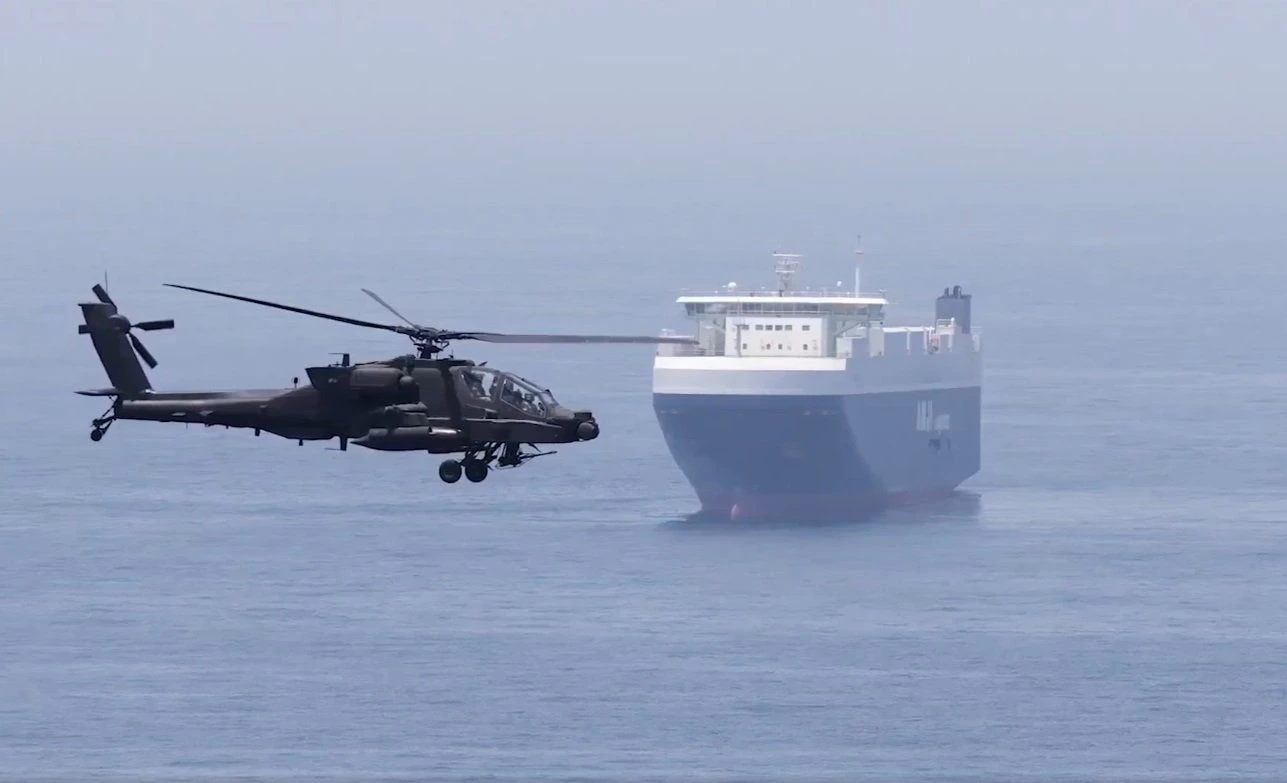
- Ship disabled A US military helicopter strike knocked out the steering gear of the Panama-flagged Vela Nova in the Gulf of Oman.
- Location The incident occurred about 71 nautical miles off Pakistan’s coast, per CENTCOM.
- Crew safe All 17 crew members were reported safe, and a fire caused by the impact was extinguished.
- Warnings ignored CENTCOM said the vessel ignored repeated warnings before the strike, which it called a defensive measure.
- Iran link The ship allegedly tried to reach an Iranian port in violation of a US naval blockade, though no sanctioned cargo was confirmed.
- Context The episode fits a wider US campaign of pressure on Iran-linked shipping, but the vessel’s actual cargo remains unverified.
The strike shows how quickly a routine voyage can turn into a geopolitical flashpoint. It also shows why flag states like Panama are caught in the middle of a maritime squeeze.
That squeeze affects insurers, charterers, and crews far beyond the Gulf.
A ship’s AIS track looks ordinary on a live map. It is just a dot moving along a line.
But the Panama-flagged Vela Nova became something else in the Gulf of Oman. A US military helicopter disabled its steering gear.
The ship allegedly tried to reach an Iranian port, defying a US naval blockade. You don’t need to be a maritime lawyer to feel the weight of that.
A commercial vessel, 17 crew members, and a fire onboard. All because someone decided the ship was part of a larger game.
CENTCOM confirmed the strike, saying the ship ignored repeated warnings. The crew was safe, and the fire was put out.
The Vela Nova was left drifting. But questions about its cargo and destination remain unanswered.
What We Know About the Vela Nova Incident
The strike happened roughly 71 nautical miles off Pakistan. These waters are busy with commercial traffic and naval patrols.
CENTCOM’s statement was blunt. The ship had been warned, it kept going, and a helicopter took out its steering gear.
Reuters, citing maritime security sources, initially reported a missile hit near Pakistan. The UKMTO described it as an incident involving a container ship and military forces.
None of those details contradict each other. But they also don’t fully align.
That’s typical for incidents like this. Official statements and on-the-water reports often diverge.
The ship’s flag is Panama, a detail that matters more than you might think. Panama is one of the world’s largest flag states.
Its registry includes thousands of vessels with no real connection to the country. So a Panama-flagged ship in trouble is not just a Panamanian problem.
It’s a global shipping problem. The crew was reported safe, which is the one piece of good news here.
But the ship itself was left unable to steer. That is a serious hazard in a busy waterway.
A disabled container ship is not just a static object. It’s a drifting risk to other traffic, the environment, and the crew still onboard.
The Broader US Campaign Against Iran-Linked Shipping
This strike didn’t happen in a vacuum. The US has been ramping up pressure on shipping it believes is connected to Iran.
It targets vessels trying to move cargo to or from Iranian ports. The naval blockade is part of that campaign.
It is not a formal, UN-sanctioned blockade. Rather, it is a US-led enforcement effort.
The Vela Nova was allegedly trying to reach an Iranian port. That would put it squarely in the crosshairs of that policy.
But here’s the catch. The reporting notes it was not yet clear whether the vessel was actually carrying sanctioned cargo.
The allegation is about the destination, not the cargo.
That distinction matters. A ship can be headed to an Iranian port for any number of reasons.
Some are legitimate, and some are not. The US has been treating the intent to reach Iran as enough to justify interdiction.
That is a significant escalation from previous policies focused on specific cargoes. For shipping companies, this creates a new layer of risk.
Even if your cargo is clean, if your destination is Iran, you could be targeted. That uncertainty is already rippling through the industry.
It affects insurance rates, charter decisions, and route planning. It’s not just about the Vela Nova.
It’s about every vessel that might be considering a similar route.
Why This Matters for Latin America
You might be reading this from São Paulo, Mexico City, or Buenos Aires. You might wonder what a ship in the Gulf of Oman has to do with you.
The answer is more direct than you’d expect. Panama’s flag registry is a cornerstone of the global shipping industry.
Latin America is deeply tied to that system. Brazilian soy, Chilean copper, Colombian coffee — all of it moves on ships.
Many of those ships fly flags of convenience from Panama, Liberia, or the Marshall Islands. When a Panama-flagged vessel is disabled by a military strike, it sends a signal.
Every insurer, charterer, and port authority sees that the rules of the game have changed.
For investors and expats in Latin America, the practical effect is in cost and reliability. If the US continues to interdict vessels headed to Iran, shipping lanes become more volatile.
Insurance premiums go up, and rerouting becomes more common. That translates into higher costs for imported goods.
It also means longer wait times for exports. It raises the risk profile for any company with exposure to maritime logistics.
The Vela Nova is a single incident. But it’s a preview of what a broader blockade could mean for trade flows.
Latin America depends on those trade flows. You don’t need to be a shipping magnate to feel that.
You just need to buy something that arrived by sea.
What’s Unclear — and Why It Matters
The biggest unknown is the cargo. Was the Vela Nova carrying sanctioned goods?
Or was it just heading to an Iranian port with a legitimate load? The reporting doesn’t answer that.
It’s possible we may never get a full answer. CENTCOM’s statement focused on the ship’s behavior.
It mentioned ignoring warnings and attempting to reach Iran. It did not focus on what was onboard.
That’s a telling detail. It suggests the US is enforcing a policy based on destination, not cargo.
That’s a much broader net. It’s one that could catch innocent vessels.
There’s also the question of proportionality. Disabling a ship’s steering gear is a serious act, even if the crew is safe.
It leaves the vessel vulnerable to further incidents. It could have caused a far worse outcome if the fire had spread.
The ship could have drifted into a collision course. The fact that the crew was safe is a relief.
But it doesn’t erase the risk that was taken. For anyone who follows maritime law, this incident raises questions.
What is the legal basis for such strikes? What are the rules of engagement for military forces with commercial vessels?
What is the accountability of flag states like Panama? Those questions won’t be resolved quickly.
But they’ll shape how shipping operates in the region for years to come.
More: Latin America news in English, every day from The Rio Times.
Frequently Asked Questions
Was the Vela Nova carrying sanctioned cargo?
It is not confirmed. Reporting notes that it was unclear whether the vessel was carrying sanctioned cargo to or from Iranian ports.
The US strike was based on the ship’s alleged attempt to reach an Iranian port. It was not based on a confirmed cargo inspection.
What exactly did the US military do to the ship?
According to CENTCOM, a US military helicopter fired on the vessel. It disabled the ship’s steering gear.
The ship had ignored repeated warnings. A fire started by the impact was later extinguished.
All 17 crew members were reported safe.
Is there a formal US naval blockade of Iran?
No formal, UN-sanctioned blockade exists. The US has been enforcing an informal naval blockade or interdiction campaign.
It targets shipping it believes is linked to Iran. This incident is part of that broader pressure campaign.
The legal basis for such actions remains contested.
Connected Coverage
Sources: Reuters, US Central Command, UKMTO, gCaptain, TradeWinds
This article was produced by The Rio Times’ automated newsroom system. How we use AI · Report an error
Read More from The Rio Times