The American Trucking Associations (ATA) warns of a looming crisis as a proposed 25% tariff on Mexican goods, announced by President Trump on February 1, 2025, threatens to disrupt the heavy truck market.
Delayed until March after talks with Mexico’s President Sheinbaum, the tariff could hike truck prices by $35,000 to $42,000 per unit. This estimate comes from Mexico’s ANPACT.
A Freightliner Cascadia 2025, now $175,000, could hit $218,750, squeezing U.S. carriers already battered by a freight recession. Mexico dominates, exporting over 80% of its 162,096 heavy trucks produced in 2024 to the U.S., supporting a $421 billion trade network.
Texas and Michigan thrive on this flow, with 123,857 units shipped globally, mostly northward. But what happens if this supply chain snaps? Could U.S. suppliers step in?
The U.S. has capacity—Freightliner builds Cascadias in North Carolina and Oregon, alongside Navistar and Paccar plants. Yet, scaling up faces hurdles. Mexico’s edge lies in lower labor costs and a mature supplier base, producing 76% of its output for export.
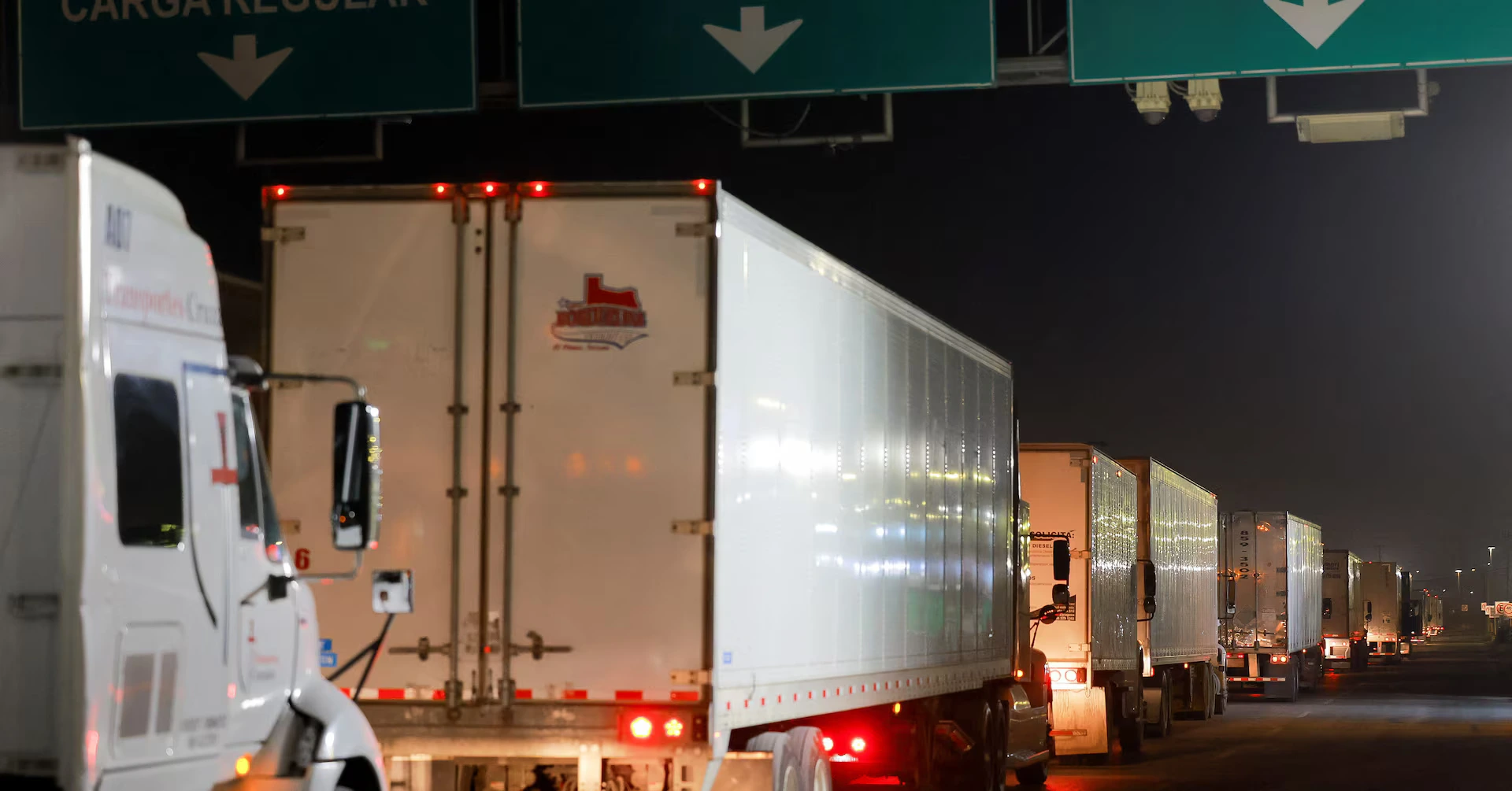
Truck Industry Faces Strains
U.S. plants would need years to retool and hire, with labor costs 3-4 times higher, per industry estimates. Suppliers like Bendix exist stateside, but many parts still cross borders multiple times under the USMCA.
If Mexico’s chain breaks, experts estimate U.S. production costs could push truck prices $50,000 to $60,000 higher per unit, not $42,000. S&P Global predicts a 12-15% price surge, factoring in domestic inefficiencies.
Small carriers might fold under a $5 million fleet upgrade cost, while big fleets pass millions onto shippers, spiking consumer goods prices. ANPACT’s Rogelio Arzate vows manufacturers won’t ditch Mexico’s skilled workforce. ATA’s Chris Spear fears freight volume drops, worsening the driver shortage.
Talks resume in March, but a U.S. takeover looks unrealistic short-term—capacity lags, costs balloon, and integration unravels. By February 20, 2025, trucking teeters on a costly edge, with no easy fix in sight if Mexico’s lifeline cuts out.
More: Mexico news in English, every day from The Rio Times.
This article was produced by The Rio Times’ automated newsroom system. How we use AI · Report an error · Editorial responsibility: Matthias Camenzind, Editor-in-Chief