Messi and Ronaldo Break Two World Cup Records in a Day
World Cup 2026
Key Facts
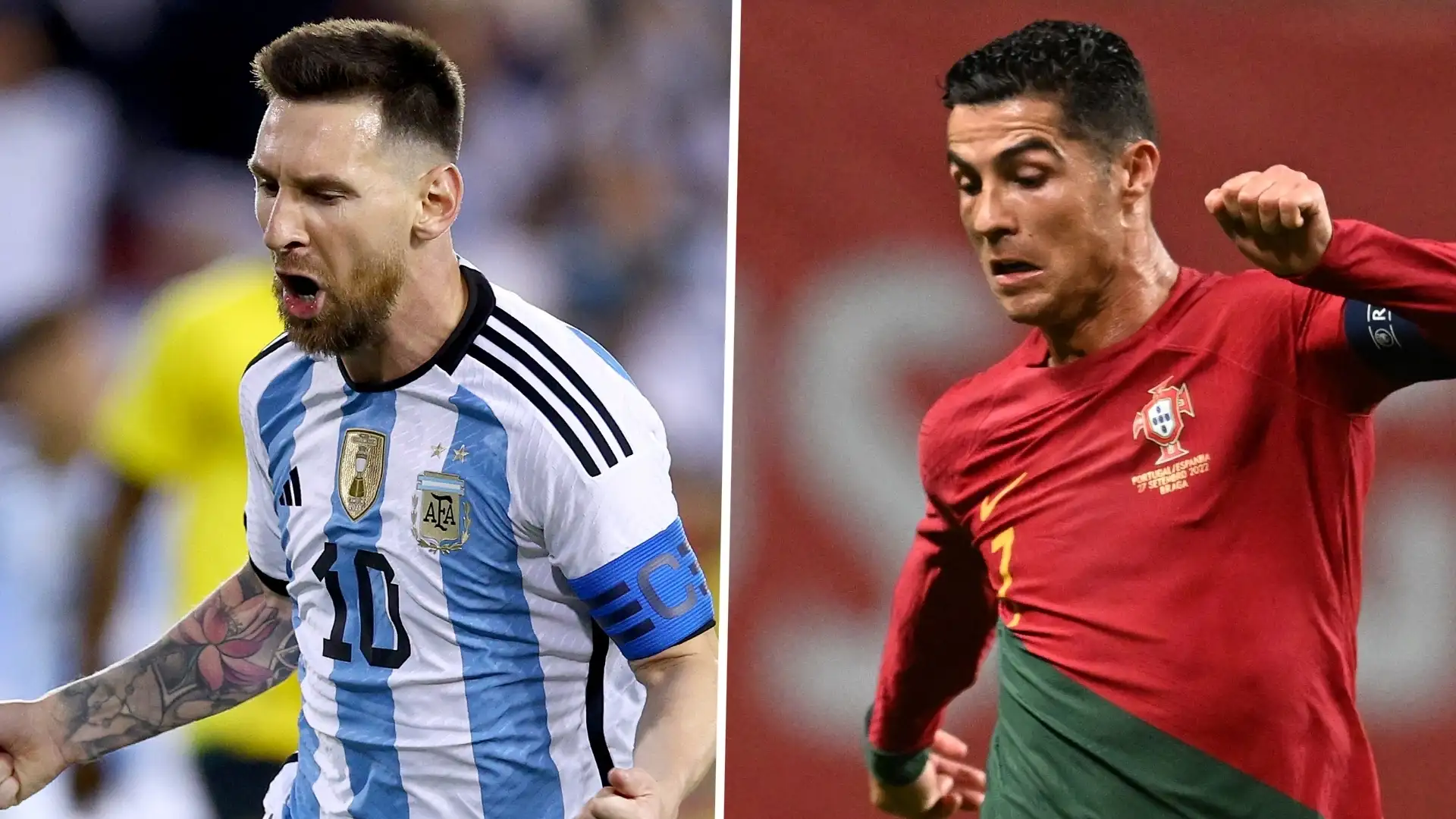
Two of the greatest careers in football produced two different World Cup records on two consecutive days, and the Messi Ronaldo World Cup records tell two entirely separate stories.
It is tempting to read this as another round of the old argument about who is the better player. It is not.
The two milestones set a day apart measure different things, and neither takes anything away from the other.
On the Monday, Lionel Messi scored twice against Austria to reach eighteen World Cup goals. That is the most anyone has ever scored at the tournament, passing the German Miroslav Klose on sixteen and the Brazilian Marta on seventeen.
The next day, Cristiano Ronaldo scored against Uzbekistan and made a different kind of history. He became the first footballer ever to score at six separate World Cups, stretching back two decades.
What the Messi Ronaldo World Cup records actually measure
Messi’s record is about volume. Eighteen goals is simply more than any other player has managed, and at thirty-eight he has spread them across a career that began with a single goal on his debut twenty years ago.
His tally builds across five tournaments: one goal in 2006, four in 2014, one in 2018, seven in the 2022 triumph and five more in 2026. The gap in that list is the giveaway, with no entry for 2010.
Ronaldo’s record is about breadth. According to football’s governing body, FIFA, his ten goals break down as one in 2006, one in 2010, one in 2014, four in 2018, one in 2022 and two in 2026, scoring in every edition he has played.
That is the heart of it. Messi has scored more goals, but in fewer editions, because he drew a blank at the 2010 World Cup in South Africa.
That one quiet tournament is why Ronaldo holds the six-editions record and Messi never can. The two marks reward opposite qualities, sheer scoring against unbroken consistency.
A calculation that captures both careers
Here is the figure no wire service has put at the centre of the story. Both men made their World Cup debuts in 2006, so their careers span the seven editions from then to now.
Across those seven tournaments, between the two of them, they have scored in all seven. There is no World Cup since 2006 at which neither man found the net.
The single edition that separates them is 2010. That is the one tournament in which only one of the pair scored, and it was Ronaldo, not Messi.
Strip away the rivalry and that is the whole story in one line. The same gap that gives Ronaldo his record is the gap that keeps it out of Messi’s reach.
Why this matters beyond the numbers
For the tournament’s hosts, broadcasters and sponsors, the timing is a gift. Two of the most recognisable athletes on earth broke records in the same news cycle, keeping global audiences locked in during the group stage.
There is also a sense of an ending. Both players have said this is almost certainly their final World Cup, which lends every appearance the weight of a goodbye and a reason for even neutral fans to watch.
What are the two Messi Ronaldo World Cup records?
Messi is the all-time top scorer in World Cup history with eighteen goals, set on June twenty-second. Ronaldo became the first player to score at six different World Cups, set on June twenty-third.
They are separate records measuring different things.
Why can Messi not also hold the six-editions record?
Because he failed to score at the 2010 World Cup. Although Messi has played in six tournaments, the same number as Ronaldo, he only found the net in five of them, so he cannot match the record of scoring in six.
How many goals does each player have?
Messi has eighteen World Cup goals, the most in history. Ronaldo has ten.
Messi therefore leads clearly on total goals, while Ronaldo leads on the number of editions in which he has scored.
Connected Coverage
For the full story of Messi’s scoring record, see our report on how Messi broke the World Cup goal record at thirty-eight. For where the two men stood at the start of the tournament, read our piece on Messi and Ronaldo reaching a sixth World Cup on two different nights.
Frequently Asked Questions
What World Cup record did Lionel Messi set on June 22, 2026?
Lionel Messi scored twice against Austria to reach eighteen World Cup goals, the most ever scored by anyone, man or woman. This surpassed the previous records held by Germany's Miroslav Klose on sixteen goals and Brazil's Marta on seventeen.
What historic milestone did Cristiano Ronaldo achieve on June 23, 2026?
Cristiano Ronaldo became the first player ever to score at six different World Cups, scoring against Uzbekistan to make that history. His achievement stretches back two decades, though he has scored ten World Cup goals in total compared to Messi's eighteen.
Why can't Messi match Ronaldo's record of scoring at six different World Cups?
Messi failed to score at the 2010 World Cup, which prevents him from matching Ronaldo's six-editions milestone. The two records therefore measure entirely different things, with Messi's reflecting volume and Ronaldo's reflecting longevity across editions.
This article was produced by The Rio Times’ automated newsroom system. How we use AI · Report an error · Editorial responsibility: Matthias Camenzind, Editor-in-Chief