Libya’s El-Feel Oil Production Halted Indefinitely: Understanding the Impact
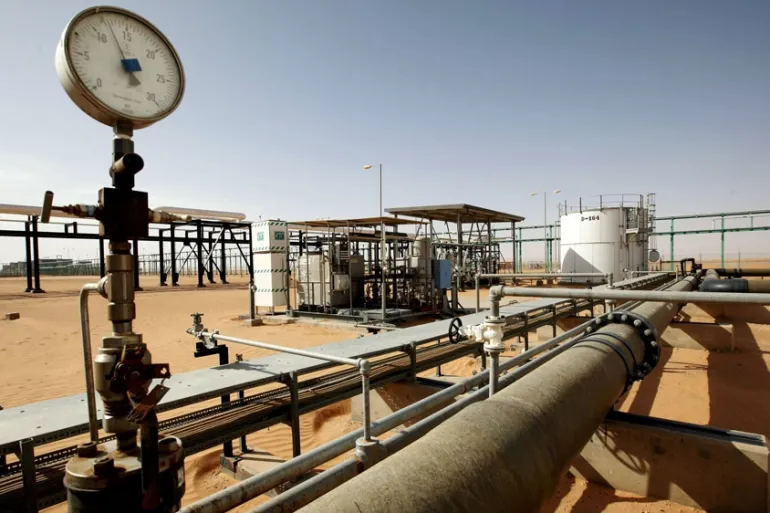
Libya’s state-run National Oil Corporation (NOC) has announced an indefinite suspension of operations at the El-Feel oil field, citing severe disruptions due to the country’s ongoing political turmoil.
This decision, effective from September 2nd, marks a significant interruption in Libya’s oil production, which is a critical component of its economy.
The El-Feel oil field alone contributed significantly to the national output. It produced around 70,000 barrels of oil per day, according to data from S&P Global.
The halt will specifically affect oil production, sparing other hydrocarbon processes, which continue unaffected.
This operational shutdown stems directly from a declaration of “force majeure,” a legal acknowledgment of unforeseeable circumstances that obstruct contractual obligations.
The announcement followed recent escalations in a power struggle between Eastern and Western-based Libyan governments, intensifying after the sudden departure of the Libyan Central Bank‘s head, Sadiq al-Kabir, last Friday.
The prime minister of the Eastern government, Osama Hammad, further declared a state of ‘force majeure’ last week. This declaration affects all oil fields, terminals, and associated infrastructure.
This move underscores the gravity of the political deadlock and its repercussions on Libya’s economic stability and global oil markets.
This ongoing crisis not only underscores the fragility of Libya‘s political landscape but also highlights the broader implications for global oil supply chains.
As Libya stands as a significant oil producer, disruptions in its oil output could potentially ripple through the market. This could affect global oil prices and economic stability in regions dependent on its exports.
The situation in Libya serves as a stark reminder of how political instability can directly impact economic outputs. It emphasizes the critical need for stability in oil-rich nations for both local and global economic health.
This article was produced by The Rio Times’ automated newsroom system. How we use AI · Report an error · Editorial responsibility: Matthias Camenzind, Editor-in-Chief
Part of our ongoing coverage
Africa: The New Scramble — the great-power contest over the continent.
LatAm Markets: Live Signals → — real-time movers, turnover leaders and FX across Latin America.