Latin American Leaders Push for Unity Amid U.S. Trade Disputes
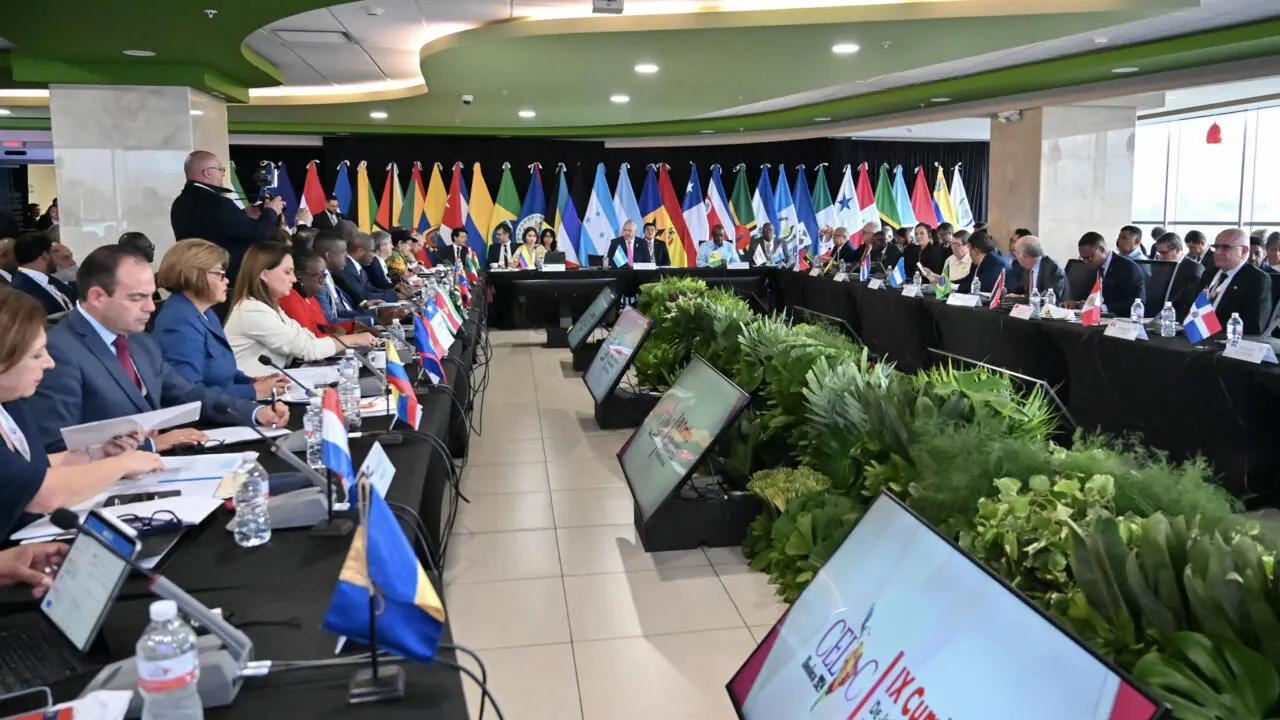
Latin American and Caribbean leaders called for regional solidarity to address the economic challenges posed by U.S. trade policies during the recent CELAC summit in Honduras. \
Eleven heads of state, including Brazil’s Luiz Inácio Lula da Silva, Mexico’s Claudia Sheinbaum, and Colombia’s Gustavo Petro, criticized Washington’s tariffs and emphasized the need for closer cooperation to navigate shifting global trade dynamics.
Brazilian President Lula described U.S. tariffs as arbitrary measures that disrupt international markets and drive up prices. He stressed that economic conflicts of this nature harm all parties involved.
Honduran President Xiomara Castro criticized the United States for reshaping its economic priorities without considering the impact on Latin America, while Sheinbaum highlighted the urgency of strengthening regional integration to reduce external vulnerabilities.
Colombian President Gustavo Petro assumed CELAC’s rotating presidency with a focus on fostering regional resilience. He proposed initiatives to support Haiti, Cuba, and Venezuela, including working groups to address democratic challenges in Haiti and efforts to lift economic blockades on Cuba and Venezuela.
Petro also announced plans for environmental preservation in the Amazon, advancements in artificial intelligence, a continental electrical grid, and a regional fiber-optic network to boost connectivity.
Latin America’s Response to Global Trade Tensions
The summit occurred against the backdrop of U.S. President Donald Trump’s recent tariff hikes. These included a 10% levy on imports from several Latin American countries, such as Brazil, Colombia, and Argentina.
While Trump announced a temporary 90-day pause on tariffs for certain nations, he excluded China from this reprieve, raising tariffs on Chinese goods to 125%.
Latin American leaders expressed concern over the broader implications of these measures and sought strategies to diversify their trade partnerships. China’s engagement with CELAC emerged as a significant development during the summit.
A Chinese delegation led by Qu Yuhui held bilateral meetings with representatives from 15 countries and proposed hosting a ministerial conference between China and CELAC in May.
This initiative received widespread support from CELAC leaders, reflecting Beijing’s growing role as an alternative economic partner for the region amid tensions with the United States.
The summit also highlighted CELAC’s ambitions to influence global governance. Brazil proposed that a Latin American or Caribbean woman should lead the United Nations as Secretary-General for the first time in history.
This proposal underscored CELAC’s efforts to amplify its voice on international issues while promoting gender representation at the highest levels of global leadership. The summit concluded with a declaration signed by 30 member states reaffirming their commitment to unity and cooperation.
Leaders emphasized that only through collective action could Latin America address shared challenges such as trade imbalances, economic inequality, and environmental threats while securing its place in an evolving global economy.
More: Argentina news in English, every day from The Rio Times.
This article was produced by The Rio Times’ automated newsroom system. How we use AI · Report an error · Editorial responsibility: Matthias Camenzind, Editor-in-Chief