Soybean, Lithium and Bitcoin Mining Converge in Latin America’s 2026 Commodity-Crypto Crossover
Markets: Latin America
Key Facts
—Commodity base. Latin America holds roughly 60% of the world’s lithium reserves, dominates global copper and soybean exports, and supplies a growing share of the rare earths used in batteries and data centers.
—Crypto futures. In May 2026, CME Group launched regulated crypto-index futures combining Bitcoin, Ether, Solana and XRP, a milestone that deepens institutional access to digital assets traded alongside commodities.
—Tokenization. Platforms such as Hyperliquid and Kraken now offer perpetual contracts for tokenized commodities, giving Latin American producers and traders 24/7 hedging tools priced in digital assets.
—S&P index. S&P Dow Jones Indices launched a blockchain-fundamentals benchmark in July 2026, combining 15 cryptocurrencies with 35 public companies, several with major Latin American mining or energy exposure.
—Regional link. Brazil’s B3 and Colombia’s BVC have both listed commodity-backed ETFs and crypto-exposed funds in 2025–2026, creating a regional bridge between physical production and digital finance.
Latin America sits on the commodities that power the global economy and is increasingly plugged into the crypto markets that are reshaping how those commodities are traded, hedged and financed.
The Commodity Foundation
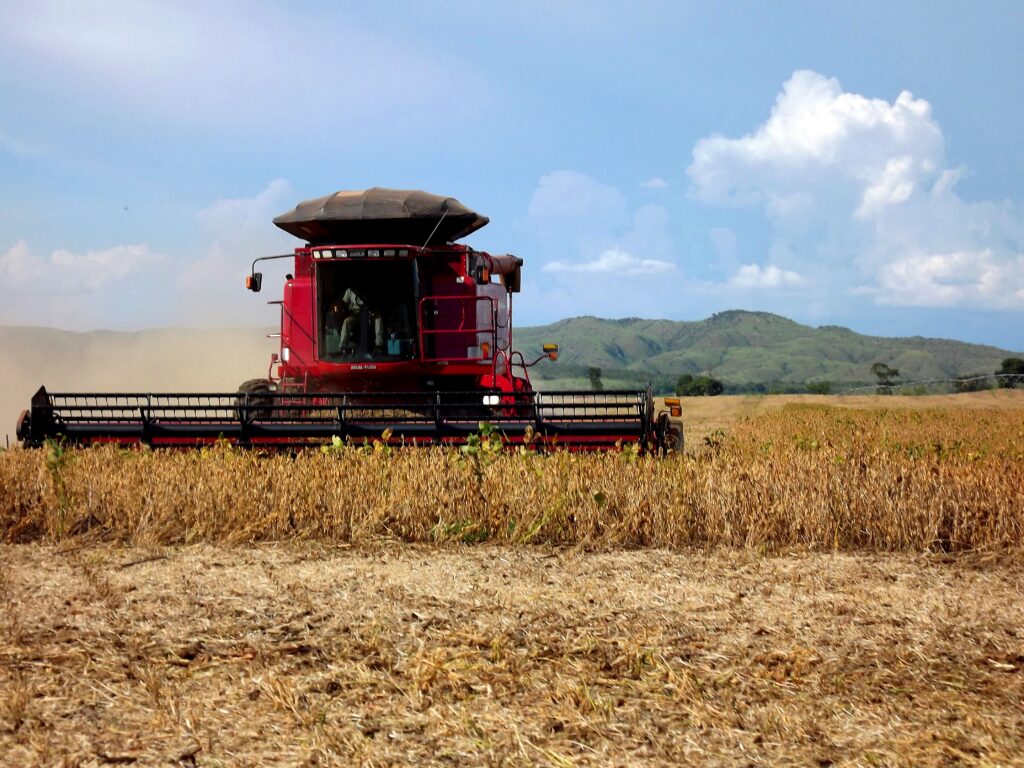
Latin America’s economic weight in global commodities is undisputed. Chile and Argentina hold the majority of the world’s proven lithium reserves, a resource critical to electric-vehicle batteries and energy storage. Peru and Chile together dominate copper production, a metal essential to power grids, data centers and the energy transition. Brazil is the world’s largest exporter of soybeans and a top producer of iron ore, corn and sugar.
These are not static endowments. Demand is accelerating. The International Energy Agency projects that clean-energy technologies will drive copper demand to 40 million tonnes annually by 2035, up from roughly 25 million tonnes in 2024. Lithium demand is expected to grow tenfold by 2040. Latin American governments and mining firms are expanding capacity, but the financing models are changing.
Traditional project finance — syndicated loans, sovereign guarantees, multilateral lending — is being supplemented by tokenized investment vehicles. While still nascent, the trend points to a future where a lithium project in Argentina or a copper mine in Peru raises capital via blockchain-based instruments traded on global exchanges rather than solely through New York or London banks.
How Crypto Markets Are Merging With Commodities
In May 2026, CME Group launched regulated crypto-index futures tracking a basket of Bitcoin, Ether, Solana and XRP, according to a Cointelegraph report dated 14 May 2026. The move followed earlier expansions into Avalanche and Sui contracts and marked a step toward treating digital assets as a mainstream institutional asset class alongside oil, metals and agriculture.
The convergence is not limited to Chicago. In February 2026, Kraken began offering perpetual contracts for tokenized stocks and commodities, giving international users leveraged exposure to traditional markets on a 24/7 basis. Coinbase followed in March with perpetual futures for US stocks and indexes. Hyperliquid, a decentralized exchange, has expanded into spot commodities and prediction markets, with roughly half its volume now in conventional assets such as oil and silver.
For Latin American traders and commodity exporters, these platforms offer something new: the ability to hedge production or lock in prices outside traditional banking hours and without the friction of cross-border settlement. A Brazilian soybean exporter or a Chilean copper miner can, in theory, manage price risk using tokenized instruments collateralized in Bitcoin or stablecoins.
Live Market IntelligenceCrypto — Live Market Board
Rio Times · Live Market Intelligence
Crypto — Live Market Board
-0.26%
| Instrument | Last | Change | YoY | Prev. | High | Low | Volume |
|---|---|---|---|---|---|---|---|
| BTC | 63,384 | -0.26% | -47.24% | 63,552 | 64,346 | 63,305 | 22,774,743,040 |
| ETH | 1,886 | +0.26% | -58.90% | 1,881 | 1,920 | 1,879 | 7,916,475,392 |
| SOL | 75.89 | -0.40% | -60.44% | 76.20 | 76.99 | 75.39 | 1,473,821,056 |
| XRP | 1.01 | -1.15% | -69.07% | 1.02 | 1.02 | 1.01 | 1,144,044,416 |
| BNB | 609.60 | -1.12% | -26.81% | 616.50 | 619.30 | 609.23 | 1,266,706,432 |
| ADA | 0.18 | -1.98% | -78.22% | 0.19 | 0.19 | 0.18 | 238,085,632 |
| DOGE | 0.07 | -1.56% | -70.00% | 0.07 | 0.07 | 0.07 | 553,256,192 |
| AVAX | 6.38 | +1.04% | -74.11% | 6.32 | 6.42 | 6.21 | 248,470,560 |
| LINK | 8.77 | -0.06% | -62.73% | 8.77 | 8.87 | 8.68 | 317,054,880 |
| DOT | 0.78 | -0.75% | -81.11% | 0.79 | 0.80 | 0.78 | 43,490,492 |
| LTC | 45.08 | -0.85% | -65.45% | 45.47 | 45.59 | 44.98 | 143,727,712 |
| BCH | 213.85 | +0.10% | -65.44% | 213.64 | 215.69 | 212.54 | 137,956,688 |
| TRX | 0.34 | +0.28% | -4.73% | 0.33 | 0.34 | 0.33 | 436,576,064 |
| XLM | 0.16 | -1.33% | -64.46% | 0.16 | 0.16 | 0.16 | 89,559,864 |
| HBAR | 0.07 | -0.53% | -74.67% | 0.07 | 0.07 | 0.07 | 22,546,186 |
| NEAR | 1.65 | +2.42% | -40.55% | 1.62 | 1.68 | 1.61 | 187,591,264 |
| ATOM | 1.40 | -2.36% | -70.15% | 1.44 | 1.44 | 1.40 | 18,626,964 |
| AAVE | 89.06 | +0.93% | -72.33% | 88.24 | 90.20 | 88.19 | 129,099,704 |
What Regional Exchanges Are Doing
The institutional bridge is being built locally as well. Brazil’s B3 has listed commodity-backed ETFs for years and has expanded into crypto-exposed products through partnerships with global asset managers. Colombia’s Bolsa de Valores de Colombia has seen financials dominate its index, but the exchange has also approved listings for commodity and foreign-exchange derivatives that serve as hedging tools for exporters.
In July 2026, S&P Dow Jones Indices launched a blockchain-fundamentals benchmark that combines 15 cryptocurrencies with 35 publicly traded companies tied to the digital-asset ecosystem, according to Cointelegraph. Several of those companies — notably mining firms and energy infrastructure plays — have significant Latin American operations, linking the index to regional physical production.
The bottom line is that the boundary between “commodities” and “crypto” is blurring. Latin America, as the world’s commodity pantry, is positioned at the center of that convergence. Whether the region captures the upside — through better financing terms, faster settlement, and more direct access to global capital — depends on regulatory clarity and the willingness of local exchanges to integrate digital infrastructure.
Frequently Asked Questions
Which Latin American countries dominate key commodities?
Chile and Argentina lead in lithium; Peru and Chile dominate copper; Brazil is the world’s largest soybean exporter. These resources are critical to electric vehicles, renewable energy and global food security.
How are crypto and commodity markets converging?
Platforms such as CME, Kraken, Coinbase and Hyperliquid now offer crypto-collateralized futures and tokenized commodity contracts. This allows producers and traders to hedge physical exposure using digital assets on a 24/7 basis.
Are Latin American exchanges listing crypto products?
Brazil’s B3 has listed commodity ETFs and crypto-exposed funds. Colombia’s BVC has approved commodity and FX derivatives. Regulatory frameworks vary, but the directional trend is toward integration of digital and traditional asset markets.
Connected Coverage
Brazil’s commodity and financial markets are central to the region’s economic outlook.
Sources: Cointelegraph; CME Group; S&P Dow Jones Indices; International Energy Agency; Bitwise.
This article was produced by The Rio Times’ automated newsroom system. How we use AI · Report an error
Read More from The Rio Times