Latin America China Ties Survived the Region’s Right Turn
LATIN AMERICA · ECONOMY
Key Facts
- —The expectation Milei, Kast, Fujimori and de la Espriella were all read as a turn away from Beijing.
- —Argentina Milei renewed the central bank swap with China in August and extended it from three years to five.
- —The catch The clearest rollbacks of Chinese positions were done by left governments and by courts.
- —Colombia President de la Espriella rode the Chinese-built Bogota metro in September and confirmed lines two and three.
- —Peru President Fujimori’s government has said nothing about Chancay or Chinese investment since taking office.
- —The real shift Chinese direct investment in the region fell to US$8.66 billion in 2025, around 55 percent below its 2019 peak.
The Latin America China relationship was supposed to shrink under the region’s new right. The record of the past year says something stranger.
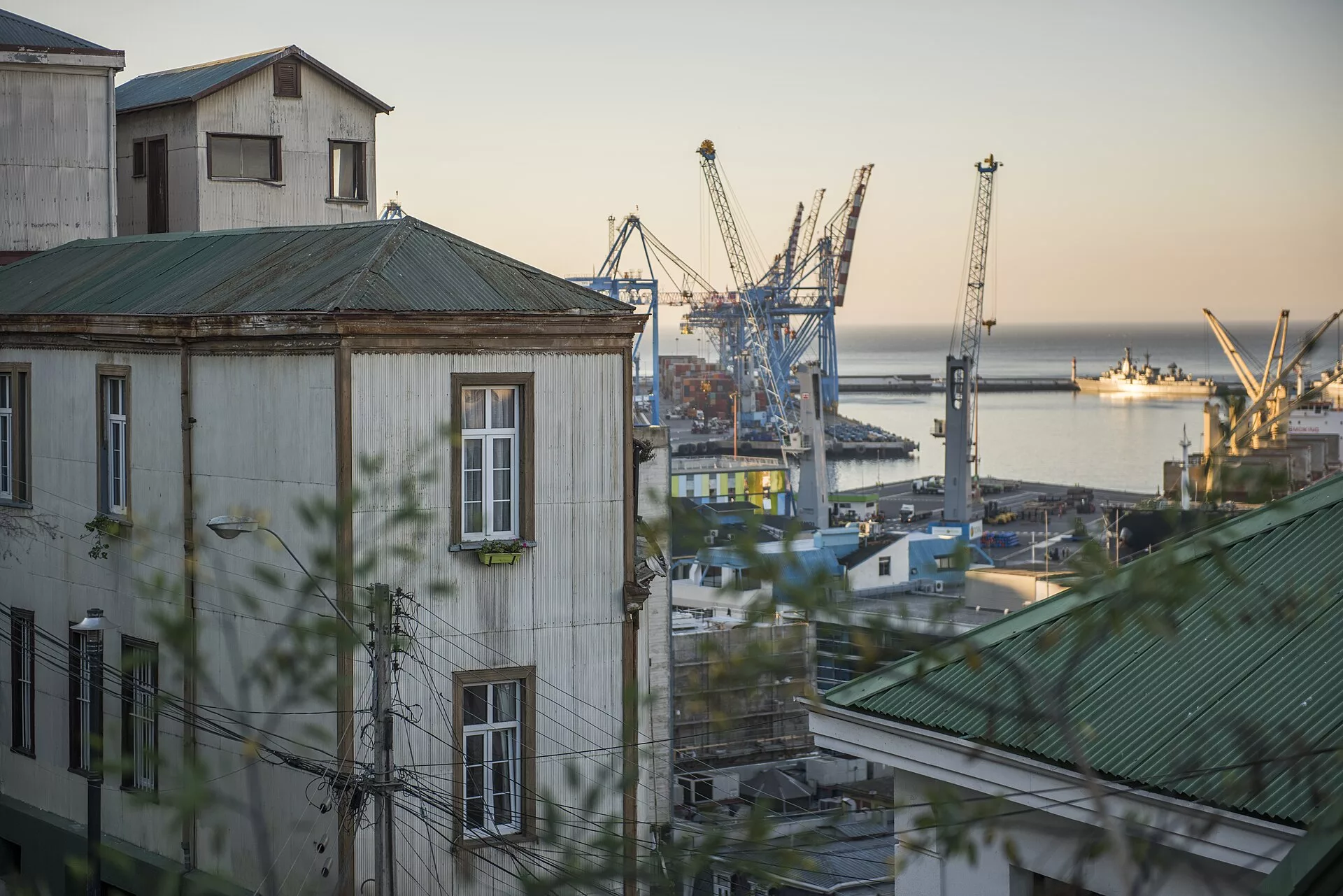
The story writes itself. Argentina, Chile, Peru and Colombia all elected right-wing governments aligned with Washington.
Chinese influence should therefore be in retreat. The Latin America China relationship has instead been remarkably steady.
Where it has shrunk, the cause is usually not the new governments. It is Chinese balance sheets, Latin American courts, and in one case a left-wing president.
Argentina Renewed the Swap and Made It Longer
Javier Milei campaigned on refusing to trade with communists. In office he has been considerably more practical.
On 5 August 2026 the central bank renewed its currency swap with the People’s Bank of China. The facility is 130 billion renminbi, around US$19.3 billion.
The term was extended from three years to five, running to 2031. That is longer than any previous renewal.
It was agreed over sustained objections from the United States Treasury, which had offered a competing facility. Both simple readings of this are wrong.
Argentina did wind down the money it had actually drawn, from about US$5 billion to US$675 million by mid-January. It repaid the drawn portion and lengthened the facility.
In May the government admitted a lithium project led by China’s Ganfeng into its flagship investment incentive regime. The project is worth about US$1.24 billion.
The economy ministry announced the approval without naming the companies. A government aligned with Washington gave its best tax terms to a Chinese lithium major, quietly.
Colombia’s President Rode the Chinese Metro
Abelardo de la Espriella has reversed his predecessor on almost everything. Israel, the Golan Heights, Western Sahara, Venezuela and United States military access have all moved.
China is the exception. He has said he will maintain strategically important infrastructure regardless of ideological differences.
In early September he rode Bogota’s metro line one, built by a Chinese consortium and more than eighty percent complete. He confirmed the viaduct finishes in January 2027 and committed to lines two and three.
Reports that Colombia will leave China’s Belt and Road Initiative come from the incoming United States ambassador. No Colombian official has said it.
Peru Has Simply Gone Quiet
Keiko Fujimori took office on 28 July 2026. Her inaugural address promised significant space for cooperation with Washington.
It said nothing about China, and nothing about Chancay. Her prime minister’s eighteen-page policy programme in August did not mention mainland China either.
It did promise to bring a Hong Kong trade agreement into force this year. Silence plus continuity is not the same as a reversal.
The threat to the port is legal rather than political. Its operator is fighting at the Constitutional Tribunal over whether Peru’s regulator may supervise it at all.
The Latin America China Rollbacks Came From Elsewhere
Two Chinese positions in the region were genuinely cut back this year. Neither was cut back by a right-wing government.
In Chile, the state lithium deal that diluted Tianqi’s position at SQM was struck under Gabriel Boric. The Supreme Court rejected Tianqi’s final appeal in January, before Jose Antonio Kast took office.
In Panama, the Chinese-linked port operator lost its concession because the Supreme Court ruled it unconstitutional. The much-discussed sale of that portfolio to a Western consortium has still not closed.
The one telecommunications casualty was the China Mobile submarine cable to Chile. Approval was rescinded under Boric after Washington revoked the visas of three Chilean officials.
Kast’s government has since said the project continues to be assessed. The pattern is consistent and counter-intuitive.
What Has Actually Changed Is the Money
Chinese direct investment in Latin America was US$8.66 billion in 2025, across 46 transactions. That is down from US$9.8 billion in 2024 and about 55 percent below the 2019 peak.
The number of deals held up. Average deal size fell from US$427 million in 2019 to US$188 million last year.
Policy bank lending effectively stopped. The main academic database recorded nothing new in 2021 and US$1.3 billion in 2023, and has published no figure since.
But infrastructure engagement went the other way. Chinese infrastructure investment in the region reached US$19.8 billion in 2024, its strongest year of the decade.
So the accurate summary is not retreat. China is lending less and building more, in smaller and greenfield-heavy pieces.
Washington Has Rhetoric and Few Instruments
The State Department warned in February that cheap Chinese money costs sovereignty. No sanctions, financing offer or alternative port investment accompanied it.
A hemispheric summit in Miami in March drew twelve heads of state. Only one concrete economic deliverable is documented, a minerals agreement with Chile whose value was not disclosed.
A widely cited fifty-billion-dollar infrastructure compact is a think tank proposal, not announced policy. Marco Rubio’s regional tour this week is built around narcoterrorism and migration.
China and infrastructure do not appear on its published agenda. Trade is where the asymmetry shows most clearly.
China took 31.6 percent of Brazil’s exports in the first half of 2026. The United States took 9.4 percent.
What to Watch
The first marker is Peru’s Constitutional Tribunal. Whether a Peruvian regulator can supervise the country’s newest port is a sovereignty question with no electoral component.
The second is deal size. If average Chinese ticket sizes recover, the retreat thesis fails outright.
The third is whether Washington produces an instrument rather than a warning. So far the carrots have been proposals and the sticks have been visas.
More: Latin America news in English, every day from The Rio Times.
Frequently Asked Questions
Has Latin America’s right turn reduced Chinese influence?
Not so far. Argentina renewed and lengthened its currency swap with China, Colombia’s president publicly backed the Chinese-built Bogota metro, and Peru’s government has made no statement on Chinese investment.
What has actually changed in the Latin America China relationship?
The money. Chinese direct investment fell to US$8.66 billion in 2025, about 55 percent below the 2019 peak, with average deal size dropping from US$427 million to US$188 million. Infrastructure investment rose to US$19.8 billion in 2024.
Who has rolled back Chinese positions in the region?
Courts and left-wing governments. Chile’s Supreme Court and the Boric government diluted Tianqi’s lithium position, and Panama’s Supreme Court voided a Chinese-linked port concession.
Sources: Red ALC-China and UNAM Cechimex Monitor de la OFDI china, Boston University Global Development Policy Center, Inter-American Dialogue, CEBC, Central Banking, SCMP, Caixin, La Republica, Wilson Center, Rio Times.
This article was produced by The Rio Times’ automated newsroom system. How we use AI · Report an error
LatAm Markets: Live Signals → — real-time movers, turnover leaders and FX across Latin America.
Read More from The Rio Times