Gunfire Near Venezuela’s Seat Of Power Signals A Deepening Vacuum After Maduro Seizure
Key Points
- Reports of gunfire and detonations broke out near the presidential complex where Venezuela’s top leadership operates.
- The U.S. operation that seized Nicolás Maduro left disputed casualty figures and an unresolved legality debate.
- Journalist detentions and manipulated social media videos are making verification harder as tensions rise.
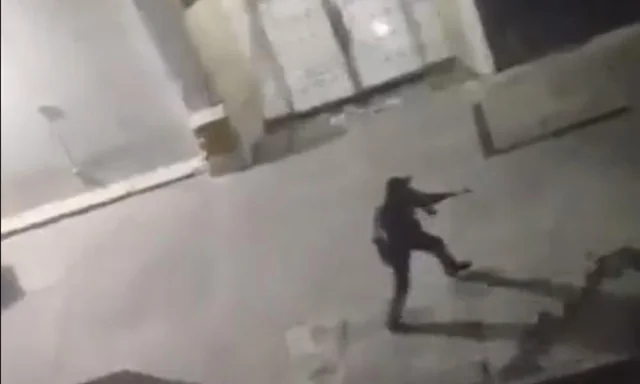
Reports of gunfire and detonations near Venezuela’s main presidential complex this week offered a blunt reminder that the country is operating without clear lines of authority.
The area is where the president’s offices are based and where key state decisions are made, so any security incident there immediately raises fears of internal conflict, attempted attacks, or factional moves.
Local witnesses and regional broadcasters described short, intense shooting near the perimeter, alongside heavy security movement in surrounding streets.
Subsequent reporting suggested the shots may have been triggered by a drone incident rather than a sustained ground battle. Several accounts said unidentified drones were seen near the complex, followed by warning fire and a rapid lockdown.
The tension comes days after the United States carried out a high-risk operation in Caracas that captured Nicolás Maduro and flew him to New York to face U.S. criminal charges.
Casualty Counts Disputed as Information War Intensifies
President Donald Trump said there were no U.S. fatalities, while acknowledging injuries. Separate reporting said aircraft involved in the extraction took fire during the mission.
What remains most contested is the human cost inside Venezuela. There is still no official, comprehensive casualty count from either Washington or Caracas.
Media reports citing a Venezuelan official speaking anonymously have put the toll at at least 40 dead, including civilians and military personnel, with the possibility of more.
Cuba, meanwhile, publicly stated that 32 Cuban security officers were killed. Venezuela’s defense minister has also said a large part of Maduro’s security team died, without giving a number.
Reports also described strikes hitting areas beyond central Caracas, including La Guaira, Aragua, and Miranda, with damaged homes and civilian deaths.
One widely reported case involved an 80-year-old woman killed after a strike hit a residential building in a low-income coastal area, exposing apartments and leaving debris and shrapnel.
The information battle is now nearly as important as the security one. Journalists’ groups reported that 14 media workers were detained while covering events around the National Assembly and later released.
At the same time, investigators have warned that AI-generated or recycled videos are spreading quickly on major platforms, complicating verification.
Related coverage: Brazil’s Morning Call | Trump Assigns Rubio to Run Venezuela Transition, With Oil Re This is part of The Rio Times’ daily coverage of Venezuela affairs and Latin American financial news.
This article was produced by The Rio Times’ automated newsroom system. How we use AI · Report an error · Editorial responsibility: Matthias Camenzind, Editor-in-Chief
In depth
Read More from The Rio Times