Guinea-Bissau Freezes Ties With Cape Verde Over Arrest
Africa · Western
Key Facts
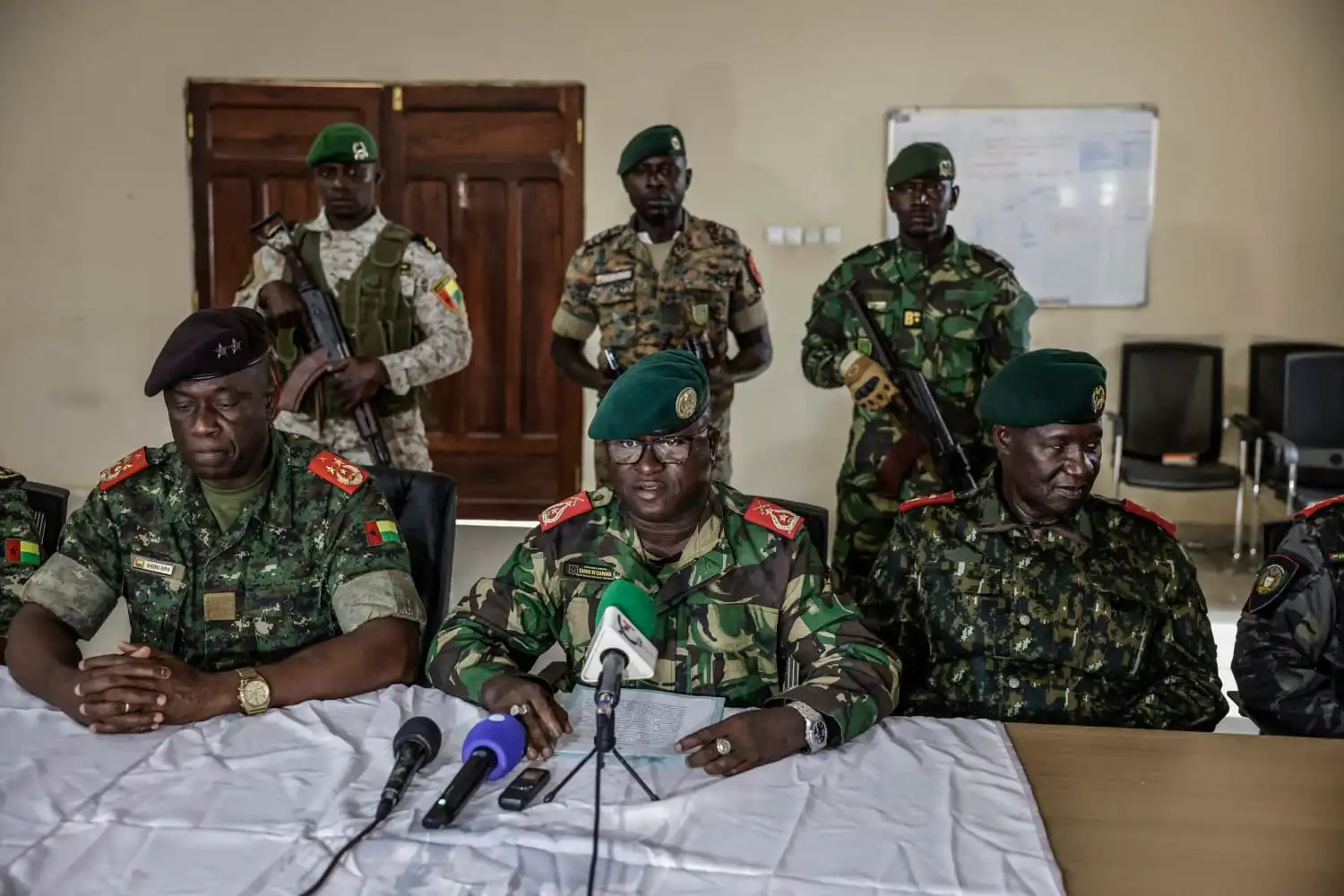
—The freeze. Guinea-Bissau’s National Transition Council announced a “practical freezing” of political relations with Cape Verde in mid-July 2026, without closing embassies or expelling diplomats.
—The trigger. Cape Verde publicly called for the swift release of opposition leader Domingos Simões Pereira, who was placed in pre-trial military detention on 10 July 2026.
—The charge. Bissau accused Praia of interference, violating national sovereignty, and aligning foreign policy with European interests rather than an African regional agenda.
—The money trail. Pereira stands accused of financing an alleged October 2025 coup attempt with about 300 million CFA francs (roughly $490,000), a case the junta insists is a strictly internal judicial matter.
—Broader context. Guinea-Bissau has been under military-led transitional rule since a November 2025 coup, and its ECOWAS and African Union memberships remain suspended.
Guinea-Bissau freezes ties with Cape Verde after Praia demanded the release of a jailed opposition leader, exposing a widening rift between Lusophone Africa’s military-ruled states and neighbours aligned with European normative diplomacy.
A diplomatic freeze, not a full rupture
On 15 July 2026, Guinea-Bissau’s National Transition Council (CNT) announced it had “practically frozen” political relations with what it called “the current ideological government of Cape Verde.” The move stopped short of expelling ambassadors, closing embassies, or cancelling flights and consular services, signalling a calibrated warning rather than a total break.
CNT spokesperson Fernando Vaz described Cape Verde’s behaviour as “unprecedented shamelessness,” arguing that no foreign government has the right to “dictate rules to Guinean justice.” The council framed the freeze as a defence of national sovereignty against external meddling, leaving the door open for future normalisation if Praia changes course.
The Domingos Simões Pereira case at the centre of the storm
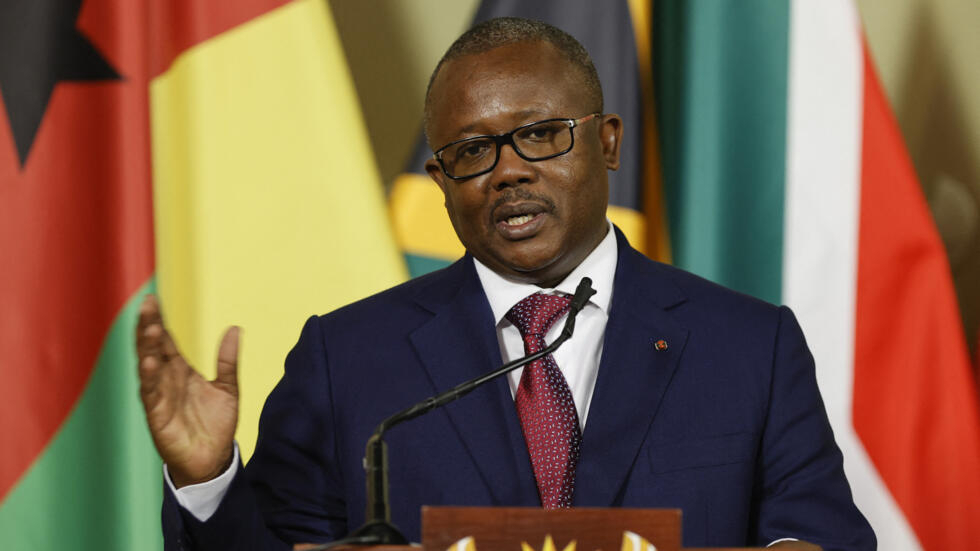
Domingos Simões Pereira, a former prime minister and president of the historic PAIGC party, has been the most prominent civilian opponent of Guinea-Bissau’s military-led authorities since the 26 November 2025 coup. He was placed under house arrest immediately after the takeover and later transferred to a military court, which ordered his pre-trial detention on 10 July 2026.
The charges centre on an alleged coup attempt in October 2025, with court documents citing about 300 million CFA francs (roughly $490,000) reportedly made available for logistics and planning meetings at Pereira’s residence. Cape Verde’s government responded by calling for his “swift release,” expressing concern about due process and offering to mediate a peaceful solution to Guinea-Bissau’s political crisis.
The “European interference” accusation and Lusophone fault lines
Bissau’s transitional authorities did not merely reject Cape Verde’s diplomatic démarche; they framed it as evidence that Praia acts as a proxy for European interests. Vaz accused Cape Verde’s government of “confusing partisan positions with the state’s diplomatic action” and of being “communists of half a bowl who sold sovereignty to European powers in exchange for cheap geopolitical relevance.”
The accusation draws on a real structural asymmetry: Cape Verde is a small island state deeply integrated with Europe through tourism, remittances, and trade, while Guinea-Bissau has chafed under European Union conditionality for years. A past EU aid freeze of €120 million under the 10th European Development Fund, a current €82 million cooperation package under review after Bissau expelled Portuguese media, and a fisheries agreement renewed in July 2024 all feed the junta’s narrative that European use is being deployed through Lusophone channels.
From shared liberation struggle to cracked brotherhood
The rupture carries particular weight because Guinea-Bissau and Cape Verde share a unique history. Both were Portuguese colonies that fought a combined liberation war under the PAIGC from 1961 to 1974, with backing from the Soviet Union, China, Cuba, and Algeria, and originally envisaged forming a single post-colonial state.
Guinea-Bissau gained independence on 10 September 1974 and Cape Verde on 5 July 1975, and while the unification project faded, party-to-party ties endured. The CNT now condemns those very ties as partisan interference masquerading as diplomacy, marking a sharp break in a fraternal relationship that had been warming since the early 2000s with embassy openings, reciprocal state visits, and a double taxation agreement signed in 2015.
Regional power politics and the ECOWAS dimension
Guinea-Bissau’s membership in both ECOWAS and the African Union has been suspended since the November 2025 coup, and the CNT has explicitly contested Cape Verde’s authority within ECOWAS to speak on the “Guinean process.” This places the bilateral spat within a broader pattern of West African military regimes pushing back against regional and Western oversight, alongside Mali, Burkina Faso, Niger, and Guinea.
The CNT’s call for an “African regional agenda” rather than policies dictated by European interests echoes rhetoric heard across the Sahel, where juntas have increasingly turned toward non-Western partners. For readers following the great-power contest in Africa, this episode fits squarely into the dynamics covered in our pillar series Africa: The New Scramble, where sovereignty claims and external pressure collide over governance, resources, and strategic alignment.
What investors and frontier-market watchers should track
The immediate economic impact is limited because trade and consular functions remain operational, but the freeze adds a layer of governance risk for anyone exposed to Guinea-Bissau. The country depends heavily on foreign aid, cashew exports, and fisheries licences, and the current confrontation complicates negotiations over the €82 million EU cooperation package already under review.
Cape Verde’s own macro-stability is not threatened, yet the dispute highlights how Lusophone diplomatic channels are becoming politicised. For Brazilian, Portuguese, and other Lusophone-facing businesses, the rift signals that Cape Verde’s traditional role as a mediator and gateway for engagement with Guinea-Bissau may be narrowing, just as China’s infrastructure and health-sector footprint in the region continues to expand.
Connected Coverage
Frequently Asked Questions
Why did Guinea-Bissau freeze political ties with Cape Verde?
Guinea-Bissau’s National Transition Council froze political relations after Cape Verde’s government publicly called for the swift release of opposition leader Domingos Simões Pereira, who is detained on coup-related charges. Bissau views the demand as interference in its internal judicial affairs and an unacceptable violation of national sovereignty, and it accuses Cape Verde of acting as a proxy for European interests rather than pursuing an African regional agenda.
Does the freeze mean Guinea-Bissau has cut all ties with Cape Verde?
No The measure is a “practical freezing” of political relations only. Embassies remain open, ambassadors have not been expelled, and consular services, trade, and air links continue to function.
The move is deliberately open-ended and serves as a warning rather than a total diplomatic rupture.
What are the wider implications for business and investment in the region?
The freeze increases governance risk in Guinea-Bissau at a time when an €82 million EU cooperation package is under review and the country remains suspended from ECOWAS and the African Union. For investors, the politicisation of Lusophone diplomatic channels and the junta’s combative stance toward European-aligned neighbours add uncertainty to project pipelines, while Cape Verde’s role as a regional mediator and gateway may be constrained.
Sources
Sources: Guinea-Bissau’s National Transition Council.
This article was produced by The Rio Times’ automated newsroom system. How we use AI · Report an error · Editorial responsibility: Matthias Camenzind, Editor-in-Chief
LatAm Markets: Live Signals → — real-time movers, turnover leaders and FX across Latin America.