Greece to Create Europe’s Largest Smart City with A.I. and Luxury Homes
Athens will transform urban living with its ambitious Ellinikon project, that aims to become Europe’s largest smart city.
Situated on the site of the former international airport, it marks a significant leap for the city.
Led by Lamda Development, the project includes residential areas, hotels, a sports marina, and extensive green spaces.
This initiative will increase Athens’ green space by 44%, spanning 6,200 acres.
Despite delays due to the economic crisis, COVID-19, and the war in Ukraine, the project is now on track.
The first residents are expected by the end of 2026, with full completion by 2037.
Ellinikon aims to be a ’15-minute city’ with essential services a short walk away. Residents will easily access schools, parks, offices, shops, and the beach.
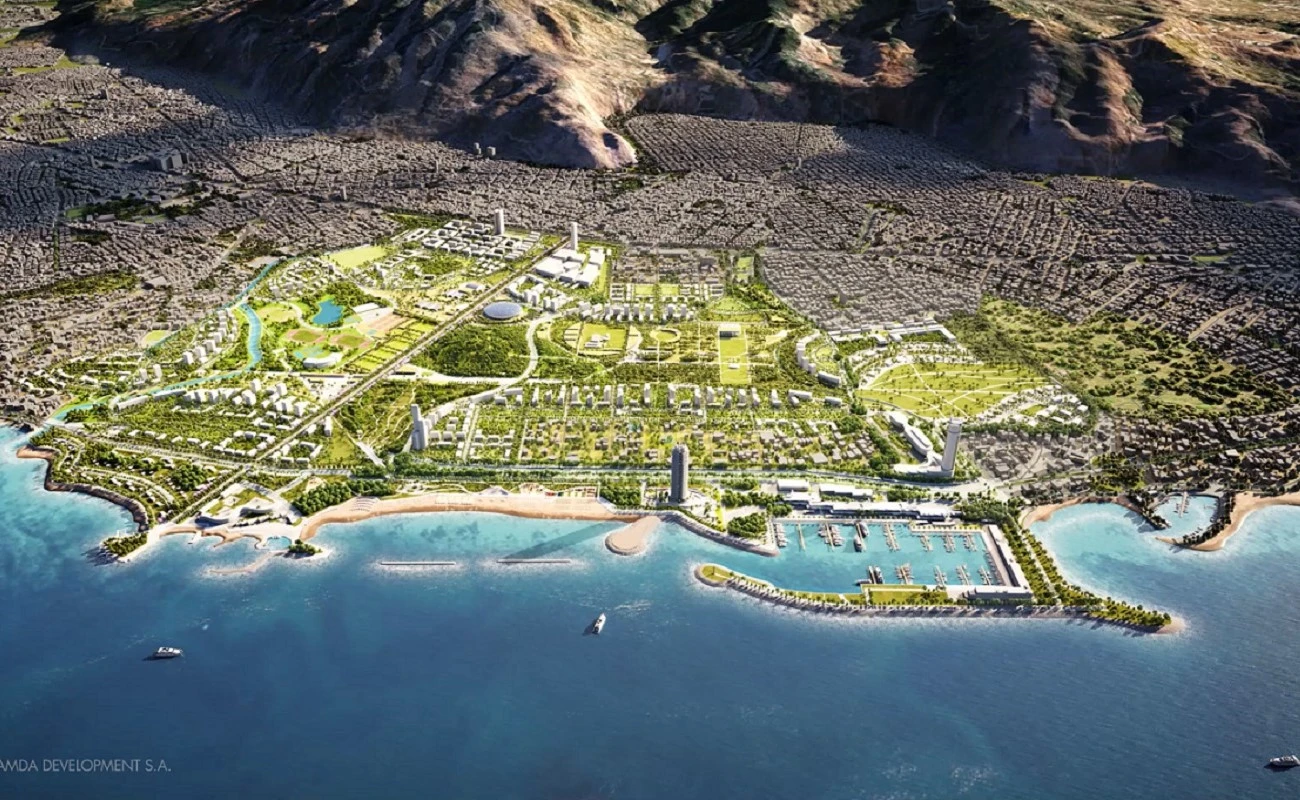
The project includes the Marina Tower, Europe’s tallest coastal skyscraper, and a luxurious hotel and casino by Mandarin Oriental Group.
Additionally, it will feature two large shopping centers and a 1.5 million square meter coastal park, the largest in Europe.
Ellinikon will integrate advanced technologies to manage water, energy, and waste efficiently.
AI will play a crucial role, enhancing sustainability and operational efficiency.
The development will significantly boost the Greek economy, potentially adding 25 billion euros to the GDP.
It will also create 80,000 jobs and attract an additional one million tourists annually.
Greece to Create Europe’s Largest Smart City with A.I. and Luxury Homes
The project has already seen substantial interest in its luxury residences.
The ‘Little Athens’ neighborhood, part of Ellinikon, has sold 140 out of its 243 planned homes.
Prices hit 15,000 euros per square meter, with the project expected to yield over 10 billion euros in tax revenue for Greece.
They expect to construct the first 15 residences and reach 100 meters on the Marina Tower by the end of this year.
Ellinikon is a burgeoning reality, not just a vision. This smart city marks a pivotal shift toward sustainable, intelligent urban living.
Background on Smart Cities
Critics argue that smart cities prioritize control and monitoring over personal freedoms.
Surveillance cameras and data collection spark privacy worries, with concerns about authorities constantly tracking movements.
“15-minute cities” could restrict freedom of movement, confining residents to smaller urban areas.
In addition, during lockdowns, these cities might enforce more localized restrictions. Automated systems in smart cities may lack transparency.
Facial recognition technology raises concerns about mass surveillance. These systems could be exploited for political control.
Efficiency emphasis might overshadow community relationships. Critics urge robust safeguards for individual freedoms.
This article was produced by The Rio Times’ automated newsroom system. How we use AI · Report an error · Editorial responsibility: Matthias Camenzind, Editor-in-Chief