Key Facts
- Soybeans firmed modestly with soybeans closing at 25.71 $ after a 0.47% daily gain.
- Corn outperformed the complex as corn settled at 18.08 $ with a 0.95% rise on the day.
- Wheat followed higher in sympathy with wheat ending the session at 24.62 $, up 0.41% from the prior close.
- Brazil and Argentina remain the export engine jointly dominating global shipments of soybeans, corn and wheat to Asia and beyond.
- Chinese demand still anchors price expectations because China is the largest buyer of Brazilian and Argentine soybeans and a key importer of corn and wheat from the region.
- Currency swings shape local returns with moves in the Brazilian real and Argentine peso against the US dollar directly affecting farmers’ incentives and export competitiveness.
Today’s Focus
Soybeans, corn and wheat all closed higher in the latest session, with corn leading the move and wheat and soybeans following in a more measured way.
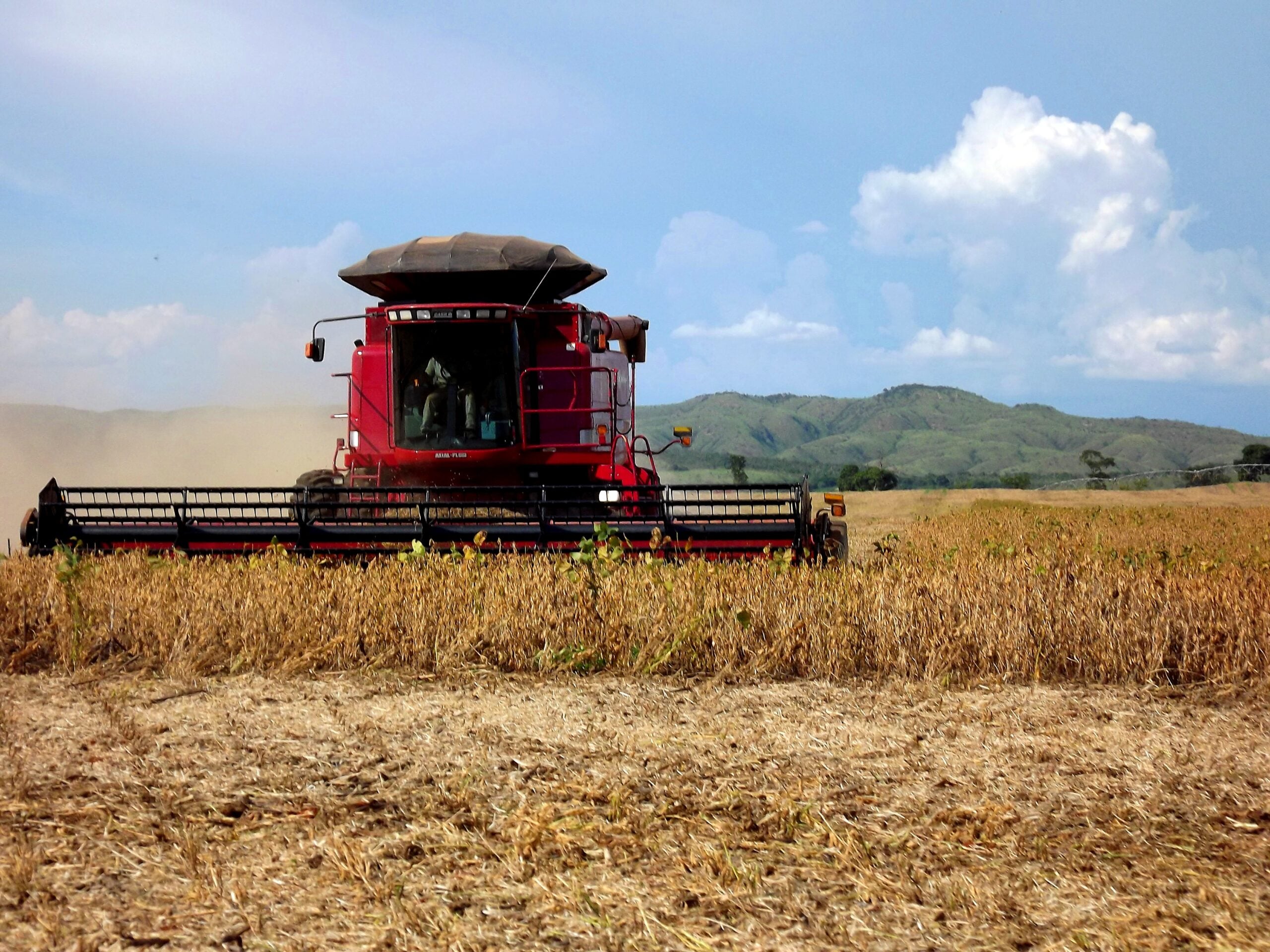
The key backdrop is Latin America’s role as the world’s grain export engine, where Brazil and Argentina feed Chinese crushers, global livestock herds and food processors from their vast harvests.
Prices are being steered by a mix of factors: evolving Chinese buying plans, weather over Brazilian and Argentine fields, and the way local currencies move against the US dollar, which together set the mood for exporters and foreign investors.
What matters today. What matters now is whether Chinese demand and Latin American currency moves stay supportive enough to keep this gentle grain rally intact.
01 The session in one read
The grain board closed with a modestly positive tone, as soybeans, corn and wheat each ended the day higher, suggesting a gentle recovery rather than a break-out move.
Corn led the complex in percentage terms, while soybeans and wheat moved more softly, a pattern that reflects both shifting demand for animal feed and investors’ preference for liquid, benchmark contracts tied to Latin American export flows.
The latest grain session points to a cautious, fundamentally driven bid rather than a speculative surge, with corn seeing the strongest percentage rise and soybeans and wheat higher but still hostage to China’s buying rhythm and the health of the Brazilian and Argentine harvests. For foreign investors, the story is less about today’s small moves and more about whether Chinese demand holds up and local currency swings in Brazil and Argentina continue to support exporters, making the currency link the variable to watch.
02 The board
Soybeans, tracked by SOYB, settled at 25.71 $, marking a 0.47% gain on the day and signaling steady buying interest in the key oilseed that underpins Brazil and Argentina’s export earnings.
Corn, via CORN, finished at 18.08 $, up 0.95%, and wheat, via WEAT, closed at 24.62 $ with a 0.41% rise, rounding out a session where all three benchmark grains edged higher in tandem.
| Asset | Level | Change |
|---|---|---|
| Soybeans (SOYB) | 25.71 $ | +0.47% |
| Corn (CORN) | 18.08 $ | +0.95% |
| Wheat (WEAT) | 24.62 $ | +0.41% |
Source: RT close, 2026-07-28. Where a commodity has no spot feed, an exchange-traded tracker or leading producer is shown as a labelled proxy.
Live Market IntelligenceThe live market board
Rio Times · Live Market Intelligence
Latin America — Cross-Market Board
| Instrument | Last | Change | YoY | Prev. | High | Low | Volume |
|---|---|---|---|---|---|---|---|
| IBOV | 187,206.89 | -0.56% | +21.85% | 188,268.59 | 168,310 | 167,142 | — |
| IPSA | 11,220.60 | -0.16% | — | 11,238.58 | 11,210 | 10,984 | 1,513,213,483 |
| IPC MEX | 63,924.77 | -0.28% | +12.17% | 64,106.82 | 66,121 | 65,405 | 108,886,187 |
| MERVAL | 3,098,898 | -1.87% | +30.51% | 3,022,485 | 3,042,365 | 2,991,150 | — |
| COLCAP | 2,589.69 | -1.41% | — | 9.04 | 9.05 | 9.02 | 4,133 |
| BVL PERÚ | 59,373.28 | -0.32% | — | — | — | — | — |
| USD/BRL | 5.16 | +0.01% | -5.13% | 5.16 | 5.18 | 5.14 | — |
| EUR/BRL | 5.95 | +1.01% | -5.83% | 5.89 | 5.98 | 5.94 | — |
| USD/MXN | 17.06 | -0.24% | -8.58% | 17.10 | 17.08 | 17.01 | — |
| USD/CLP | 913.98 | +0.04% | -5.67% | 913.65 | 915.11 | 906.68 | — |
| USD/COP | 3,140 | +0.03% | -22.04% | 3,139 | 3,141 | 3,105 | — |
| USD/PEN | 3.36 | -0.66% | -4.82% | 3.38 | 3.38 | 3.35 | — |
| USD/ARS | 1,493 | +0.10% | +12.96% | 1,491 | 1,494 | 1,480 | — |
| USD/UYU | 40.27 | +1.24% | +1.80% | 39.77 | 40.27 | 40.23 | — |
| USD/PYG | 5,939 | +1.68% | -19.54% | 5,841 | 5,939 | 5,925 | — |
| USD/BOB | 11.64 | -0.76% | +72.04% | 11.73 | 11.72 | 11.64 | — |
| USD/DOP | 58.34 | +1.25% | -3.44% | 57.62 | 58.34 | 58.04 | — |
| USD/CRC | 445.92 | +0.89% | -9.71% | 441.97 | 448.50 | 445.92 | — |
03 What moved it
The moves in soybeans, corn and wheat reflect a balance between supportive demand from China, still the dominant importer of Latin American soybeans and an important buyer of corn and wheat, and lingering uncertainty over the outlook for the region’s harvests.
Weather across Brazilian and Argentine growing regions, together with freight costs and storage decisions on the ground, is quietly steering expectations, while investors abroad read these price changes as signals about future supply from the Southern Hemisphere export engine.
04 The Latin American read
For Brazil and Argentina, higher grain prices filter straight into the external accounts, because soybeans, corn and wheat are core export earners that bring in dollars and help offset outflows from energy and manufactured imports.
Movements in the Brazilian real and the Argentine peso against the US dollar adjust the local-currency value of these dollar-denominated prices, influencing farmers’ willingness to sell, traders’ hedging strategies and the competitiveness of exports into Asia and other regions.
05 The names to watch
Foreign readers should keep an eye on the big, internationally active grain traders and local champions that dominate Brazilian and Argentine export channels, from multinational houses that run port terminals to regional logistics firms that move soy, corn and wheat from inland collection points to coastal loading berths.
On the demand side, the crucial names sit in China and other Asian buyers, including large oilseed crushers that turn soybeans into meal and oil, feed producers that buy corn and wheat for livestock, and food companies whose forward purchasing decisions ripple back into Latin American fields and the grain board.
06 What to watch
- Chinese soybean bookings: watch for fresh cargo purchases from Brazil and Argentina that confirm or weaken the current demand floor.
- Brazilian real trajectory: watch whether a weaker real lifts farmer selling and export margins, or a stronger real chokes off the recent bid.
- Argentine peso policy shifts: watch for any official exchange-rate adjustments that could suddenly change wheat and corn export competitiveness.
- Southern Hemisphere weather: watch rainfall and temperature maps across Brazil and Argentina as the harvest window approaches.
Frequently Asked Questions
Why did corn rise more than soybeans and wheat?
Corn led with a 0.95% gain as animal-feed demand signals improved, while soybeans and wheat drew steadier, less aggressive buying tied to their own supply outlooks.
How do Brazil and Argentina move global grain prices?
As the world’s dominant soybean exporters and major corn and wheat shippers, their harvest size, farmer selling and shipping costs directly set the pace for international benchmarks.
What role does China play in Latin American grain markets?
China is the largest buyer of Brazilian and Argentine soybeans and a key importer of corn and wheat from the region, so its purchasing rhythm anchors price expectations.
Why does the Brazilian real matter for grain investors?
A weaker real makes dollar-priced grain exports more valuable in local terms, encouraging farmers to sell, while a stronger real can discourage sales and tighten the flow of crops to market.
This article was produced by The Rio Times’ automated newsroom system. How we use AI · Report an error
LatAm Markets: Live Signals → — real-time movers, turnover leaders and FX across Latin America.
Read More from The Rio Times