Germany’s Dilemma: Can Europe Survive Without America’s Security Guarantee?
(Analysis) Germany and Europe at large face a moment of reckoning as the United States signals its retreat from traditional alliances.
The fallout from a dramatic February 28 exchange at the White House, where President Donald Trump publicly rebuked Ukrainian President Volodymyr Zelensky and withdrew U.S. solidarity with Ukraine, has sent shockwaves through European capitals.
Analysts now warn that Europe’s reliance on the U.S. for security has become a dangerous liability. Geopolitical shifts are unmistakable. Political scientist Carlo Masala of the Bundeswehr University told Deutschlandfunk that Europe must prepare for a future without the U.S. as a reliable partner.
Meanwhile, George Friedman, a prominent geopolitical analyst, argues that NATO is now “obsolete,” with Europe reverting to fractured nation-states as unity dissolves under pressure.
Germany, long Europe’s economic engine, now finds itself at a crossroads, struggling to define its role in a rapidly changing global order. The economic toll of this geopolitical realignment is staggering.
Germany faces recession as growth lags below 2%, and the continent bleeds economically from severed trade ties with Russia. Economist Jeffrey Sachs recently warned the European Parliament that Europe’s current trajectory amounts to “suicide.”
His stark assessment highlights the cost of subservience to an ally that increasingly prioritizes its own strategic interests over Europe’s stability. Germany’s internal political turmoil adds another layer of complexity.
Germany’s Political Gridlock
Following inconclusive elections on February 23, conservative CDU/CSU parties and the Social Democrats (SPD) are locked in negotiations. They are working to form a government under CDU leader Friedrich Merz.
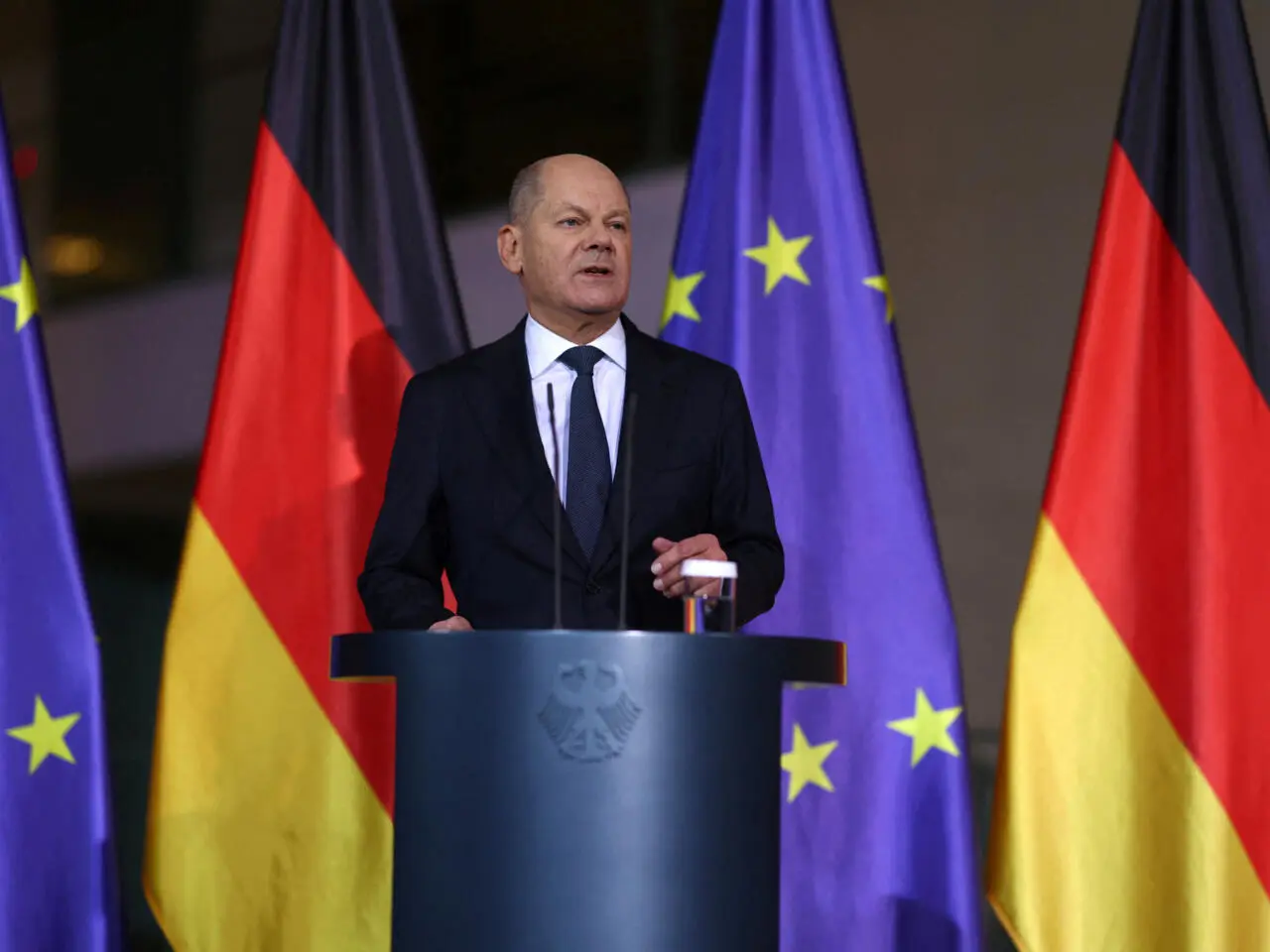
Outgoing Chancellor Olaf Scholz leads a caretaker government but avoids long-term decisions as his influence wanes. Meanwhile, European leaders like France’s Emmanuel Macron and Britain’s Keir Starmer are taking center stage in shaping Ukraine policy. This has left Germany on the sidelines.
The debate over defense funding underscores Germany’s predicament. Modernizing the Bundeswehr could require up to €400 billion ($420 billion), funds Germany does not currently possess.
Options include constitutional amendments to relax debt limits or special funding mechanisms, both requiring significant political consensus. Yet time is running out—Germany’s current legislature ends soon, and key votes could occur as early as March 10.
As Washington pivots toward new alignments with Russia and Saudi Arabia, Europe clings to a faltering strategy in Ukraine. This approach has already cost an estimated million lives.
Critics argue that European leaders remain trapped in Cold War-era thinking, unwilling to confront a reality where America no longer guarantees their security. The irony is stark: while the U.S. demands more European defense spending, it simultaneously pulls back militarily.
Observers see this moment as Europe’s crossroads—abandoned by an ally yet unable or unwilling to forge its own path. Germany must now decide whether to double down on its dependence or embrace sovereignty in an increasingly multipolar world.
The stakes are existential; failure to adapt risks relegating Europe to irrelevance in global affairs. As war drums echo across Brussels and Berlin, the question remains whether Europe can break free from its fatal embrace with outdated alliances—or march blindly toward its own undoing.
Read More from The Rio Times