Eurozone Unemployment Holds at Record Low 6.2% While Economic Risks Loom
Eurostat released data showing eurozone unemployment remained at 6.2% in March 2025, maintaining the historic low first reached in December 2024.
The broader European Union rate held steady at 5.8%, down from 6.0% in March 2024. The total count of jobless people reached 10.8 million in the eurozone and 12.9 million across the EU.
Monthly figures show unemployment grew by 83,000 in the eurozone compared to February. Year-over-year numbers reveal a decrease of 288,000 unemployed people in the eurozone.
Youth unemployment stands significantly higher at 14.2% in the eurozone and 14.5% across the EU. These rates represent 2.26 million unemployed young people in the eurozone and 2.82 million EU-wide.
Both figures showed slight improvement from February. Spain continues to lead with the highest unemployment rate at 10.9%, followed by Finland at 9.1% and Greece at 9%.
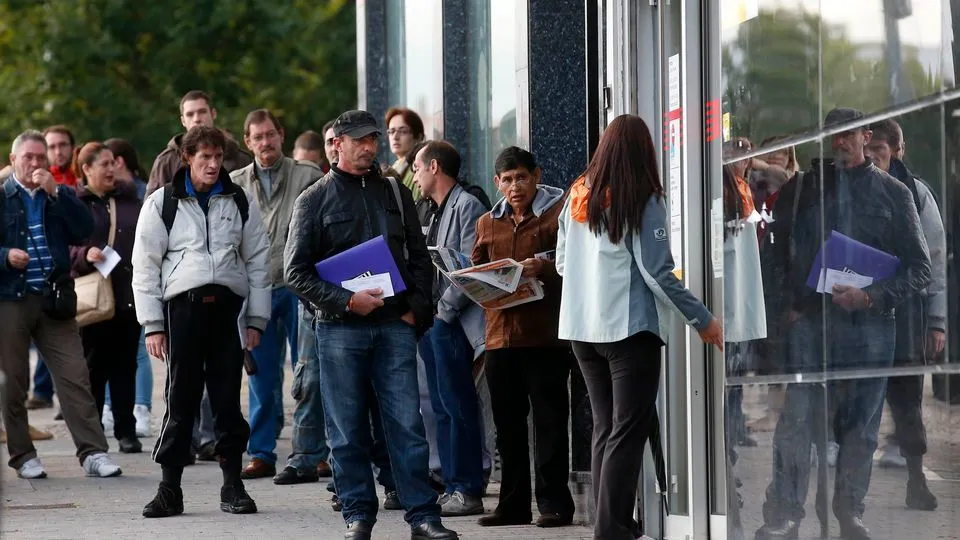
European Labor Market Holds Steady Amid Global Trade Tensions
The Czech Republic maintains the lowest rate at 2.6%, with Poland (2.7%) and Malta (2.8%) close behind. Germany performs strongly with a 3.5% overall rate and the EU’s lowest youth unemployment at 6.5%.
This contrasts sharply with Spain’s troubling 26.6% youth jobless rate. Gender disparities persist in European labor markets. Women face higher unemployment rates than men, though female unemployment reached a record low of 6.6% in December 2024.
The labor market stability comes despite mounting economic headwinds. Economists warn that President Trump’s tariff policies threaten European economic growth.
The eurozone economy expanded better than expected in early 2025, but trade tensions create uncertainty for businesses. Monthly job losses signal potential weakness despite the historically low headline rate.
Major companies already report tariff impacts. General Motors revised profit projections downward, anticipating $4-5 billion in tariff-related costs.
The data reveals resilience in European labor markets while highlighting vulnerabilities to external economic pressures and trade disputes.
This article was produced by The Rio Times’ automated newsroom system. How we use AI · Report an error
Read More from The Rio Times