Europe Bows to Trump: Progressivism’s Decline and Global Implications for Brazil
(Op-Ed Analysis) In just half a year since President Donald Trump returned to the White House (January 20, 2025), Europe’s strategic vulnerabilities have been laid bare.
Trump’s hardball tactics forced European leaders into unprecedented concessions not seen since the post-WWII era.
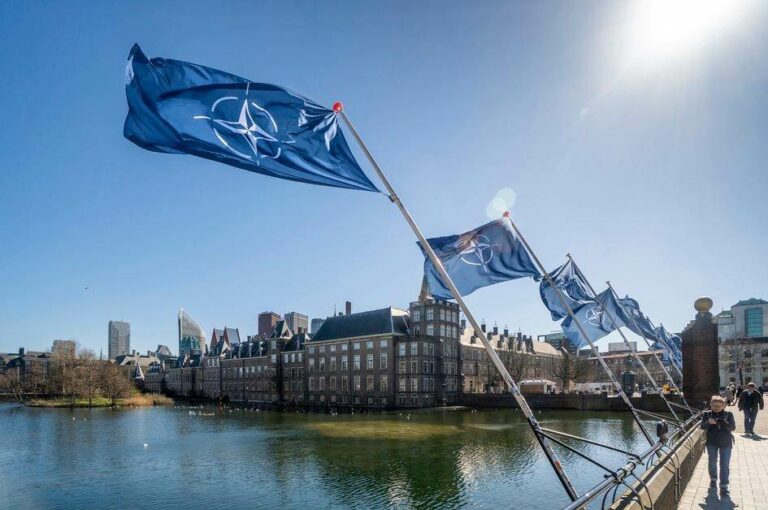
For example, a NATO summit in June 2025 saw allied countries abruptly agree to boost defense spending to 5% of GDP, meeting Trump’s steep demand.
This is over double the previous 2% target and represents a massive increase in military budgets across Europe.
European officials admitted this concession was driven by fear of losing U.S. security guarantees amid Russia’s threats, underscoring how dependent Europe remains on American protection.
Trump himself hailed the NATO outcome as a “great victory,” pointedly urging that the extra funds be spent on U.S.-made weapons.
Just weeks later, European Commission President Ursula von der Leyen flew to Trump’s private golf resort in Turnberry, Scotland, to clinch a last-minute trade deal on July 27, 2025.
The imagery was striking: Von der Leyen’s forced smile and thumbs-up gesture stood in stark contrast to Trump’s triumphant grin as they announced a deal that heavily favored Washington.
Under this U.S.–EU agreement, most European exports to the U.S. now face a 15% tariff, a steep baseline far above pre-Trump levels (theguardian.com). In return, Europe received essentially no new benefits – the deal was largely one-sided.
European negotiators agreed to vast financial commitments, including $750 billion worth of U.S. energy purchases over three years and about $600 billion of investments (and arms orders) in the American economy.

These “telephone-number-sized” obligations, as one report described them, amount to over €1 trillion in buying American liquefied gas, oil, nuclear fuel, and military hardware.
Von der Leyen conceded that 15% tariffs were “the best we could get,” given Trump had threatened to impose a crushing 30% tariff on all EU goods if no deal was reached by August 1.
In effect, Europe was maneuvered into an unequal trade pact to avert an all-out trade war.
European officials tried to put a positive spin on it – noting that some sectors got exceptions (zero tariffs on select items like aircraft, certain machinery, and raw materials), and that a 15% tariff is better than 30%.
Yet the outcome still marks a dramatic loss of competitiveness for Europe. Prior to Trump, average U.S. duties on EU products were only ~4.8%, so 15% across-the-board is a huge jump.
European automakers, for instance, will still face a 15% import tax in the U.S., making their cars pricier for Americans.
During Trump’s standoff, U.S. tariffs on imported EU cars had even spiked to 27.5%, hammering German brands. The new deal lowers that to 15%, but it remains a significant burden.
The agreement also allows Washington to raise tariffs again if Europe fails to fulfill its promised investments – effectively keeping the EU on a short leash (reuters).
European observers openly described these outcomes as a humiliation. Even figures within Europe’s establishment lamented that the continent “acted like a vassal” to Washington (elpais.com).
Josep Borrell, the EU’s former foreign policy chief, noted the symbolic imbalance.
A deal of such importance sealed not in Brussels or a neutral venue, but on Trump’s personal property, something “inimaginable in reverse” (no U.S. president would ever travel to an EU leader’s private estate to sign away U.S. interests).
Spanish analyst Ignacio Molina summarized: “We’ve been somewhat vassals since 1945, but it was never this blatant” (elpais.com).
In short, Trump openly exploited Europe’s fear of economic pain and security abandonment – leverage previous U.S. presidents only used more subtly.
By doing so, he stripped Europe of any pretense of “strategic autonomy”, exposing that EU leaders, for all their talk of independence, felt compelled to yield to U.S. demands on both trade and defense.
Decline of Progressive Influence in the West
These events highlight a broader geopolitical trend: progressive, multilateralist ideology is in retreat in much of the Western world, while populist nationalism is surging.
Trump’s return to power in the U.S. – driven by his “America First” base – effectively ended the progressive policy agenda in Washington. His administration immediately reversed many of the previous administration’s globalist initiatives and norms.
Beyond the trade and NATO maneuvers, Trump has stacked his cabinet with outspoken nationalist figures who disdain the liberal international order.
For instance, Vice President J.D. Vance used his first major speech (at the Munich Security Conference) to pointedly attack core European values, signaling a U.S. ideological divorce from Europe’s progressive ideals.
Trump’s Defense Secretary, Pete Hegseth, was embroiled in “Signalgate” – a leaked chat where he derided European allies as “freeloaders” and “pathetic”.
Such rhetoric, once unthinkable from top U.S. officials, is now out in the open. It underlines the new U.S. view that alliances and multilateral cooperation are transactions, not based on shared principles.
In Europe, too, electoral winds have shifted to the right, undermining the progressive camp.
The June 2024 European Parliament elections saw unprecedented success for populist nationalist parties across the EU.
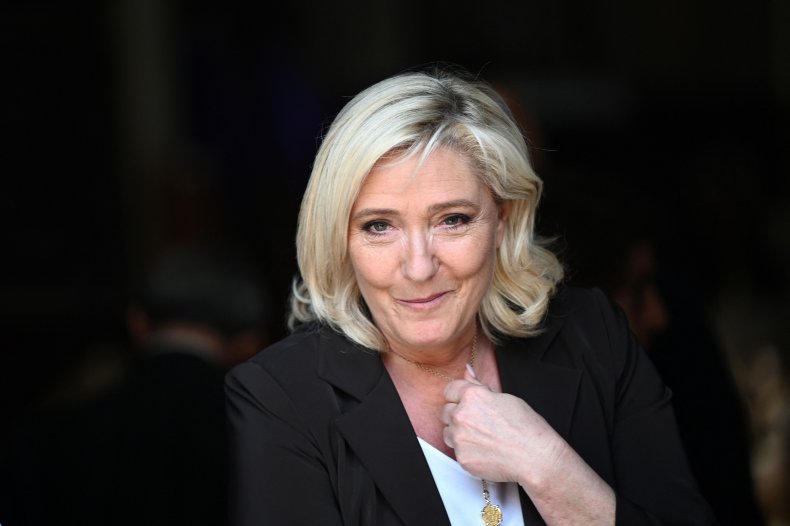
In France, Marine Le Pen’s National Rally stunned observers by winning 31.5% of the popular vote, coming in first place and forcing President Macron to dissolve the National Assembly amid the political shock (politico.eu).
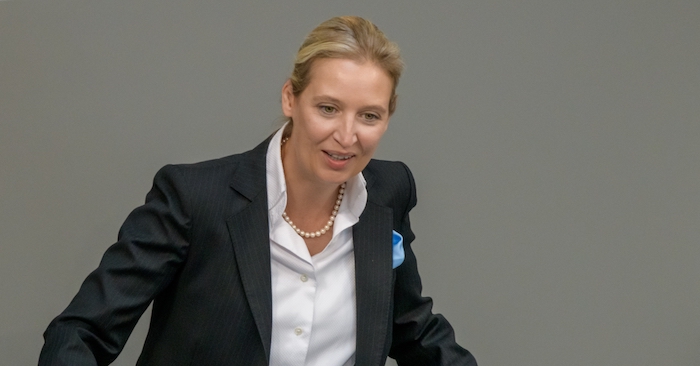
In Germany, the right-wing Alternative für Deutschland (AfD) achieved a historic second place in the EU elections, eclipsing the ruling center-left SPD for the first time.
These outcomes “humiliated” the moderate governing coalitions in Paris and Berlin and emboldened nationalist opposition forces.
As a result, Europe’s once-dominant centrist and left-leaning parties are losing ground. Populist nationalist parties now share power in at least seven EU countries, including Italy (under Prime Minister Giorgia Meloni), Poland, Hungary, and others.
Even where progressives still hold office, they often face strong conservative opposition pulling policies rightward (for example, Sweden and Finland now have coalitions reliant on nationalist parties).
Crucially, these shifts mean European policy is becoming less idealistic and more “realist.” For years, EU leaders championed progressive causes – climate change action, human rights, multilateral diplomacy – with the EU often acting as a “moral superpower.”
Progressive ideals have lost momentum in the U.S. and are “dying” in the EU as well, with leaders increasingly unwilling or unable to defend those principles when they clash with hard interests or U.S. pressure.
For example, faced with humanitarian crises like the Gaza war in 2025, Europe’s voice proved impotent: EU governments could not persuade Israel (or the U.S.) to pause hostilities for a ceasefire.
Likewise, in the Ukraine conflict, Trump’s Washington sidelined European input in any negotiations, despite Europe bearing much of the war’s economic burden.
When Israel launched airstrikes on Iranian targets (escalating a regional confrontation), Europe had “no say whatsoever,” illustrating how little influence its diplomacy carries in high-stakes geopolitical crises.
Such examples underscore that the EU’s soft-power, rules-based approach – a hallmark of progressive internationalism – has been pushed aside by a resurgence of raw power politics.
Even internally, the EU’s commitment to its values wavers under pressure. Borrell admitted Europe has “little influence” over allies when it refuses to use leverage (elpais.com).
He cited how the EU deplored Israel’s actions in Gaza but would not use legal tools at its disposal (like suspending parts of the EU–Israel association agreement or sanctioning Israeli officials). Why?
Because key member states (e.g. Germany) opposed any tough measures, prioritizing strategic relationships over human-rights principles.
This “timidity and disunity” in defense of professed values is a stark change from the more assertive stance progressives might desire.
It reflects the influence of more conservative, interest-focused currents in Europe’s capitals.
In sum, the liberal progressive order that once guided Western policy is crumbling, giving way to a more nationalist and transactional era.
Trump’s bold unilateralism has both capitalized on this trend and accelerated it.
As one European geopolitical expert put it: Trump isn’t the root cause of Europe’s weakness – he’s just exploiting it in ways previous U.S. presidents didn’t.
The EU’s longstanding problems (insufficient defense, tech dependence, internal divisions) made it vulnerable.
Now, populists on both sides of the Atlantic are unabashedly leveraging those weaknesses to advance their vision of a world defined by national power rather than shared ideals.
A New World Order: Global Fallout
This dramatic power shift in the West carries far-reaching implications for the world at large.
The submission of Europe – the globe’s second-largest economic bloc – to Washington’s will signals that the post-WWII system of relatively balanced alliances and multilateral governance is eroding.
U.S. unilateral dominance is reasserting itself, and other countries are taking note.
For one, America’s new trade stance is reshaping global commerce. Trump’s team has embarked on a flurry of bilateral deals demanding similar terms on other partners.
In fact, the EU deal mirrored an earlier framework struck with Japan (also setting 15% tariffs) and was followed by deals with the U.K., Indonesia, Vietnam, and others (reuters.com).
The White House even floated the ambition of “90 deals in 90 days” – an overstatement, but illustrative of their go-it-alone strategy.
The clear message to every nation: either accept U.S. trade terms or face steep tariffs. Multilateral institutions like the WTO have been essentially bypassed.
This could lead to a fragmented global trading system where countries scramble to avoid being targeted next.
Smaller economies, lacking clout, may feel compelled to bow as Europe did, lest they suffer crippling tariffs on their exports.
The result is a more polarized and U.S.-centric global economy, with supply chains shifting to favor American demands.
Countries that refuse U.S. terms might seek alternative markets or alliances (for example, strengthening ties with China’s bloc), potentially deepening the divide between U.S.-aligned and China-aligned spheres.
Geopolitically, Europe’s diminished voice means less check on U.S. or other great-power actions.
In previous years, the EU often acted as a moderating force – for instance, upholding the Iran nuclear deal or advocating climate agreements even when the U.S. balked.
Now, with Europe largely falling in line behind Washington (or preoccupied with its own unity problems), global diplomacy loses an independent champion of progressive causes.
This vacuum is being filled in some cases by more assertive moves from powers like Russia and China, who are eager to exploit Western divisions.
European officials themselves warn that the continent’s perceived subservience could lead to “international isolation”.
African nations, for example, have grown increasingly resistant to European influence – a trend exacerbated by Europe’s recent failures.
Borrell noted that Europe’s colonial legacy no longer guarantees any sway.
“We’re basically only still present in Africa in Somalia (peacekeeping), and nowhere else,” he observed, pointing out how France and other EU states have been edged out by local regimes or competitors.
This loss of influence in the Global South is partly because many see Europe as just following Washington’s lead rather than acting independently on issues like development or conflict resolution.
Moreover, a more nationalist West could mean reduced emphasis on global challenges that require cooperation, such as climate change, poverty alleviation, and pandemic preparedness.
Trump’s previous term saw the U.S. withdraw from the Paris climate accord and WHO; in this term, with Europe weakened, there may be even less momentum for collective action.
If “America First” and similar doctrines prevail, international agreements might stall or unravel, affecting everyone – for instance, slower climate action could harm vulnerable countries, and trade wars could raise consumer prices globally.
There are also security repercussions. NATO’s transformation from a cooperative alliance to one coerced by U.S. demands might strain unity in a real crisis.
While allies did reaffirm their mutual defense pledge under Trump’s pressure, the internal resentment could linger. If a conflict with Russia or another adversary escalates, will Europeans be as willing to trust U.S. leadership unquestioningly?
Indeed, when Israel carried out strikes against Iranian targets, analysts warned it pushed the world into “uncharted territory” – and Europe’s ability to mediate or restrain such escalation was essentially zero (elpais.com).
In summary, the current trajectory points toward a more volatile and polarized world order. International norms and cooperative frameworks – hallmarks of the progressive era – are giving way to an era of power politics reminiscent of the 19th century.
Big powers dictating terms to smaller ones. Understanding this context is crucial, because decisions made under this new paradigm (like tariff hikes or military moves) can reverberate globally, affecting economies and security far beyond those directly involved.
Brazil’s Dilemma: A Progressive Outlier in a Populist Era
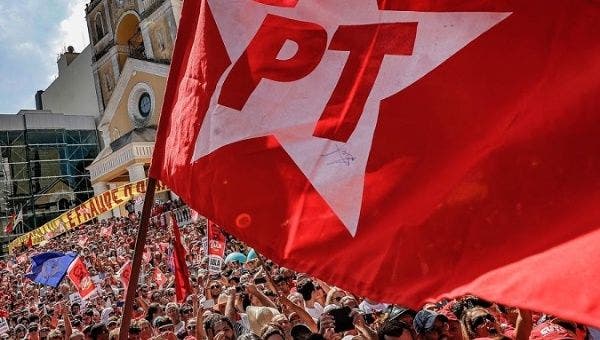
Perhaps nowhere is the clash between progressive ideals and the new populist order more evident than in Brazil under President Luiz Inácio “Lula” da Silva.
Lula, who returned to Brazil’s presidency in 2023, is a leftist leader known for his pro-environment, pro-social justice stance and emphasis on multilateral diplomacy. His vision is in many ways aligned with the old progressive global order.
However, the world around Brazil has shifted, and this is putting the country on a collision course with Trump’s America and the prevailing trend.
The starkest example came in July 2025, when Trump slapped a punitive 50% tariff on Brazilian imports – an astonishingly high sanction, far above normal tariff rates (dw.com).
This move was not about trade deficits or economics. It was political punishment for Brazil’s continued use of lawfare against its opposition.
Trump faced similar legal tactics when progressivism peaked in the U.S. He has vowed to root out judicial persecution everywhere.
Brazil adopted the American model of legal warfare and is not just any country to Trump.
It reminds him of his own ordeal.
That is why Trump explicitly tied the tariff to Brazil’s internal affairs, tweeting and “Truth Social”-posting that Brazil was “doing something terrible” by prosecuting former President Jair Bolsonaro.
Bolsonaro – a national populist and Trump ally – faces criminal trials in Brazil for allegedly masterminding an attempted coup (the January 8, 2023 attack on Brazil’s Congress and Supreme Court by his supporters).
Trump accused Lula’s government of a “witch hunt” against Bolsonaro and essentially demanded that Brazil drop the charges, saying “Leave Bolsonaro alone!”.
When Brazil refused to interfere with its independent judiciary, Trump hit the country with these crushing tariffs set to take effect in August.
Leonardo Paz Neves called it “a true affront” to Brazil’s sovereignty. But Brazilians should have seen it coming. The warning signs were everywhere.
But anyone who knows Brazil knows the country is deeply self-centered. Few nations rival its inward focus. Brazilians often notice threats only when they have already arrived.
This is not the first time. It happens time and again.
Genuinly surprised, Lula forcefully rejected Washington’s pressure. He took to social media (X/Twitter) to assert that “Brazil is a sovereign country, with independent institutions, that will not be tutored by anyone.”
He emphasized that Bolsonaro’s trial is being overseen by Brazil’s judiciary in accordance with the rule of law, not by presidential decree.
However, many observers dismiss this claim, arguing that it does not reflect the reality of the situation at all.
Lula’s administration initially pledged to respond to any unilateral U.S. tariff increases with equivalent reciprocal tariffs on American goods.
However, he later reconsidered this stance after observing how China and Canada—the only countries that dared to reciprocate—were subsequently treated.
Bolsonaro calls the judicial cases against him as “political persecution,” and Trump’s backing fuels that narrative. This could rally Bolsonaro’s base and complicate Brazil’s efforts to hold him accountable.
If Bolsonaro is eventually convicted (a verdict is expected by September and could carry a 40-year sentence), there’s a looming question: How will Trump’s America react if their ally is jailed?
U.S. retaliation could easily escalate—potentially extending beyond broader sanctions or diplomatic isolation to include harsh, Venezuela-style punitive measures that would further isolate Brazil under Lula’s leadership.
Brazil thus finds itself out of sync with the current world trend. While major powers swing nationalist, Lula’s Brazil is clinging to a progressive, multilateral approach – from reforestation efforts in the Amazon to pushing for dialogue in war conflicts.
This misalignment could leave Brazil increasingly isolated or pressured. For instance, on the Ukraine war, Lula tried to mediate and proposed a peace club of neutral nations, which irked Washington (Trump has his own plans and excluded Europe; he likely has little patience for Brazil’s ideas).
On climate change, Lula reinvigorated Brazil’s commitments, but if the U.S. and others deprioritize climate action, Brazil may lose crucial international support or funding for such initiatives.
Regionally, the political landscape is also shifting. Several Latin American countries that recently had leftist governments are seeing conservative or populist resurgences (e.g., Argentina elected a right-wing president in late 2023).
If Brazil’s neighbors tilt right and cozy up to Trump’s U.S., Lula could be further encircled by unfriendly administrations.
Already, Brazil’s refusal to align with U.S. positions (for example, maintaining relations with Venezuela’s leftist government or not condemning China) could reduce its influence in forums like the OAS or Inter-American development discussions, especially under a U.S. administration that rewards loyalists and punishes dissenters.
Ultimately, Brazil might face a stark choice if the populist-nationalist wave continues: adapt or suffer the consequences.
“Adaptation” could mean toning down progressive stances to avoid provoking the U.S. – but that would be a dramatic reversal for Lula’s principles and would alienate his support base.
The other path is to stay the course, weather the economic pain, and hope that internal resilience or alternative partnerships (perhaps with Europe, China, or fellow BRICS nations) can compensate.
However, given Europe’s current weakness and China’s careful stance, Brazil might not find a strong enough counterweight to U.S. pressure. This scenario could weaken Lula’s government over time.
If Brazilians perceive that Lula’s approach leads to geopolitical isolation, sanctions, lost jobs or stagnation while a Bolsonaro-aligned approach would bring U.S. favor, public opinion could shift.
In short, Brazil could face its own political whiplash, swinging back toward “Bolsonarism”—already dominant in most state governments—as it adapts to the new international reality.
Conclusion: Why This Matters
The rapid capitulation of Europe to Trump’s demands and the sidelining of progressive politics reveal a world undergoing profound change.
For decades, many countries (Brazil included) operated under assumptions of a stable, rules-based international system where alliances were steady and shared values mattered.
Now we see a return to raw power dynamics as it was the norm for centuries: the strongest nations imposing their will, and allies or smaller states pressured to fall in line.
It is also a cautionary tale about complacency. Europe’s leaders talked for years about reducing dependence on the U.S. (“strategic autonomy”) but made only slow, incremental progress.
That left them exposed when a determined U.S. leader called their bluff. For citizens and policymakers worldwide, the lesson is that global influence and safeguards cannot be taken for granted – they must be continually earned and reinforced.
Countries like Brazil, which still uphold progressive and cooperative ideals, must recognize the mounting headwinds they face—otherwise, they risk isolation and sanctions until they fade from relevance.
Ironically, the left now finds itself on the receiving end of tactics it once used against the right for decades, forced to contend with its own bitter medicine while issuing complaints that often ring hollow.
Editorial responsibility: Matthias Camenzind, Editor-in-Chief · Editorial standards · Report an error
Read More from The Rio Times