Ethiopia’s Major Currency Shift: Market-Based System to Boost Economy
Ethiopia is embarking on significant economic reforms by adopting a market-based foreign exchange system.
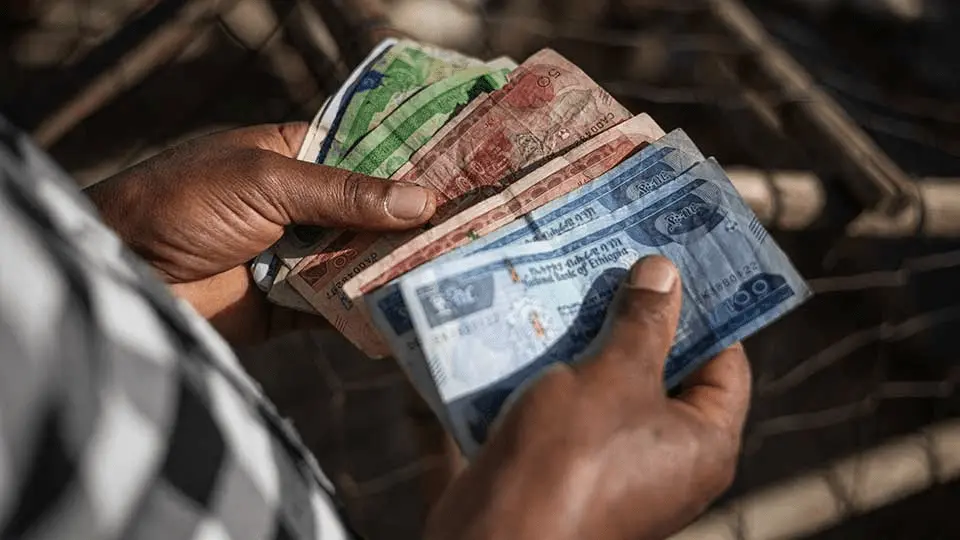
The National Bank of Ethiopia (NBE) has lifted restrictions, allowing market forces to determine the value of the birr, the national currency.
This move aims to increase the supply of dollars and stimulate economic activity amid rising inflation and severe currency shortages.
Prime Minister Abiy Ahmed’s administration faces pressure from the World Bank and the International Monetary Fund (IMF) to float the currency.
This step is essential for unlocking over $10 billion in new funding. The NBE’s statement outlined several measures to facilitate this transition.
Key reforms include allowing foreign investors to participate in the proposed stock market and introducing non-bank foreign exchange bureaus.
Additionally, restrictions on the amount of money travelers can carry in and out of Ethiopia are being removed.
The birr devalued by 30% against the dollar, falling to 74.73 per dollar on July 29 from 57.48 on July 26, following these changes.
These reforms are part of Ethiopia’s Home-Grown Economic Reform Plan (HGER 2.0). The plan aims to restore macroeconomic stability, boost private sector activity, and ensure inclusive growth.
Ethiopia’s Economic Challenges and Reforms
The NBE emphasized that the new market-based exchange regime would allow banks to freely negotiate rates and limit the central bank’s intervention to disorderly market conditions.
Exporters and commercial banks can now retain foreign exchange, significantly increasing its availability to the private sector.
Authorities have lifted import restrictions on 38 product categories, further liberalizing the market
Revised rules now allow exporters to retain 50% of their foreign exchange proceeds, up from the previous 40%, instead of surrendering them to the NBE.
The NBE has also simplified rules for foreign currency accounts, making it easier for residents and foreign institutions to hold and use foreign currency.
Interest rate ceilings on the private sector and bank borrowings from abroad have been removed.
Additionally, foreign investors can now participate in the Ethiopian securities market under future specified terms.
Special economic zones have been granted privileges, including the ability to retain 100% of their foreign exchange earnings.
The central bank acknowledges the challenges of this new system but emphasizes its necessity.
The previous system had led to an unregulated parallel market exchange rate and high inflation.
In December 2019, the IMF approved a three-year arrangement under the Extended Credit Facility (ECF) and the Extended Fund Facility (EFF) for Ethiopia, worth about $2.9 billion.
This was to support the Homegrown Economic Reform Plan and maintain macroeconomic stability.
However, this program was suspended due to the conflict in Tigray, resuming only after a peace deal in November 2022.
The COVID-19 pandemic and the Tigray conflict significantly impacted Ethiopia’s financial stability.
The country defaulted on a $33 million Eurobond payment, joining Zambia and Ghana in financial distress.
Ethiopia’s public debt reached $65.82 billion as of March 2024, with external debt slightly increasing to $28.38 billion.
More: Ethiopia news in English, every day from The Rio Times.
This article was produced by The Rio Times’ automated newsroom system. How we use AI · Report an error · Editorial responsibility: Matthias Camenzind, Editor-in-Chief
Part of our ongoing coverage
Africa: The New Scramble — the great-power contest over the continent.
Horn of Africa and the Red Sea
- Horn of Africa 2026: Why It Matters and Who Backs Whom
- Ethiopia’s Neighbors Explained, Ports, Eritrea, Somalia
- Eritrea Explained 2026, a Red Sea Country Guide
- Somalia Explained: Al-Shabaab, Somaliland, the Ports and the Fight Over a 2026 Vote