Ethiopia’s New Blue Nile Dams Rattle Egypt
EGYPT · GEOPOLITICS
Key Facts
—Three more dams: Ethiopia plans new Blue Nile dams — Karadobi, Mandaya and Beko Abo — at about $3.5 billion each.
—Added power: Together they would add 5,700 megawatts, on top of the 5,150 megawatts of the Grand Ethiopian Renaissance Dam.
—The GERD: Ethiopia’s flagship dam was inaugurated in September 2025 after more than a decade of building.
—Egypt’s lifeline: Egypt depends on the Nile for about 98% of its fresh water and calls upstream dams an existential risk.
—No deal: Years of talks among Ethiopia, Egypt and Sudan have produced no binding agreement on how the river is shared.
—Outside hands: Washington has offered to mediate, and the African Union has made water security its theme for 2026.
Ethiopia’s Blue Nile dams are about to multiply, and Egypt is alarmed. Addis Ababa plans three more dams above its already-completed Grand Ethiopian Renaissance Dam, a cascade that would give Ethiopia more control over the Blue Nile than any country downstream — on a river Egypt cannot live without.
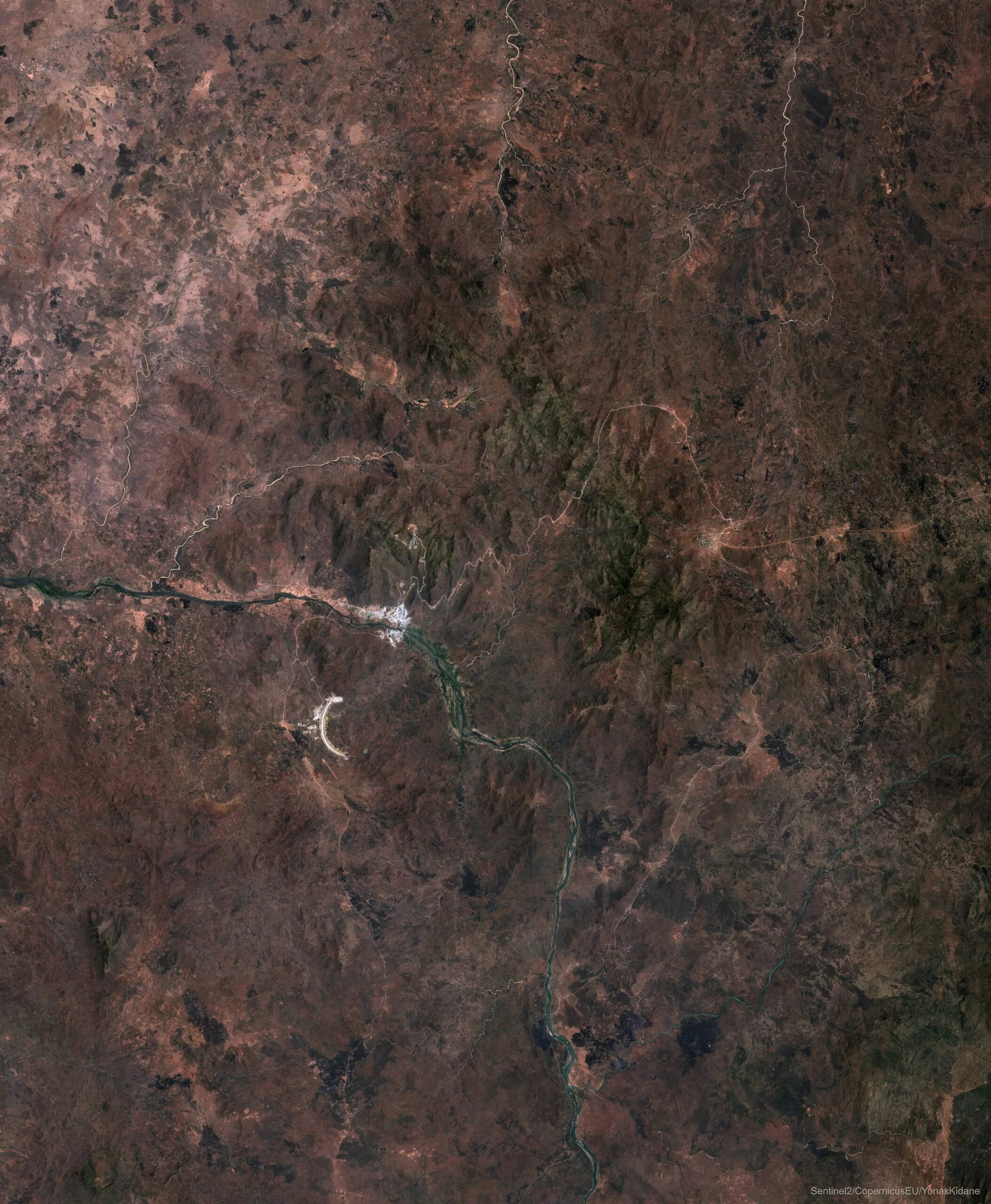
What Ethiopia is planning
In late March 2026, Ethiopia’s water and energy ministry announced three new dams on the Blue Nile: Karadobi, Mandaya and Beko Abo. Each carries an estimated price tag of about $3.5 billion.
Officials say they would be built over four to seven years and brought on line together. Combined, they would add some 5,700 megawatts of generating capacity.
That comes on top of the 5,150 megawatts of the Grand Ethiopian Renaissance Dam, or GERD, which Ethiopia inaugurated in September 2025 after more than a decade of construction.
Ethiopia argues the projects are about electricity, not water denial, and that the dams generate power without consuming the river. More than half its people still lack reliable access to power, a gap the cascade is meant to close.
How the new Blue Nile dams work together
The three are designed to operate as a cascade with the GERD, not as stand-alone projects. Engineers say Karadobi would trap upstream sediment and extend the GERD’s working life.
Mandaya would provide steady, year-round power, while Beko Abo would exploit a narrow gorge to maximise the pressure driving its turbines. Taken together, they would let Ethiopia manage the Blue Nile’s flow far more tightly than today.
Why Egypt is alarmed
Egypt draws about 98% of its fresh water from the Nile, most of it from the Blue Nile that rises in the Ethiopian highlands. For Cairo, anything that lets an upstream neighbour hold back water is a matter of national survival.
Egyptian officials say the country already lost around 38 billion cubic metres of water while the GERD’s reservoir was filled between 2020 and 2022. In early 2026, Cairo demanded compensation for that loss.
A Cairo University water expert warned that the new dams portend a radical change in how the Blue Nile is managed, deepening scarcity for Egypt.
The fear is less about any single year and more about control. A neighbour that can decide when to fill and when to release holds a lever over Egypt’s farms, cities and power stations.
A decade without a deal
More than ten years of negotiations among Ethiopia, Egypt and Sudan have produced no binding treaty on how the river is shared or how droughts are handled. Each filling season has reopened the dispute.
Ethiopia frames the dams as its sovereign right to develop, lifting millions out of darkness and turning power exports into income. Egypt frames the same projects as an existential threat.
Outsiders step in
The standoff has drawn outside attention. In January 2026, US President Donald Trump offered to mediate between Cairo and Addis Ababa over the river.
The African Union, for its part, chose water security and sanitation as its theme for 2026, an implicit nod to how combustible water has become across the continent. Whether either can broker a deal is far from clear.
Sudan, the third party
Egypt is not the only downstream country with a stake. Sudan sits between Ethiopia and Egypt on the Nile and has long held mixed feelings about the GERD.
The dam can steady the river’s flow and curb the floods that hit Sudanese towns, a genuine benefit. But Sudan, gripped by its own war, has little capacity to shape how the new dams are run.
That leaves the basin’s future largely in the hands of Addis Ababa and Cairo, two governments that do not trust each other.
What Egypt is doing about it
Unable to stop the dams, Egypt is trying to adapt. It is investing heavily in seawater desalination, recycling farm and sewage water, and rationing consumption.
These measures soften the blow but cannot replace the Nile. They also cost money Egypt can ill afford while it works through a wider economic squeeze.
Why it matters beyond the basin
The Nile dispute is a preview of a broader contest over water that will shape African politics for decades. Rivers ignore borders, and the infrastructure built on them locks in advantage for whoever moves first.
When the cascade is complete, Ethiopia will hold more Blue Nile water infrastructure than any downstream state. That shift in leverage, more than any single dam, is what keeps Cairo awake.
Similar disputes are brewing on other African rivers, from the Niger to the Zambezi, as governments race to dam them for power. The Nile is simply the largest and most visible test of who controls the continent’s water.
More: Ethiopia news in English, every day from The Rio Times.
Frequently Asked Questions
What are Ethiopia’s new Blue Nile dams?
Ethiopia plans three dams — Karadobi, Mandaya and Beko Abo — on the Blue Nile, at about $3.5 billion each. Together they would add 5,700 megawatts above the existing GERD.
Why does the GERD worry Egypt?
Egypt relies on the Nile for about 98% of its fresh water, so any upstream control over the river threatens its supply. Cairo says it lost about 38 billion cubic metres of water as the GERD filled.
Is there an agreement on sharing the Nile?
No. More than a decade of talks among Ethiopia, Egypt and Sudan has produced no binding treaty on how the river or droughts are managed.
Who is trying to mediate?
US President Donald Trump offered to mediate in January 2026, and the African Union has made water security its 2026 theme. No breakthrough has been reached.
Connected Coverage
The dispute is one of the resource contests we follow in Africa: The New Scramble. It plays out against Ethiopia’s fast-growing but debt-burdened economy and the fiscal strains facing Egypt, which recently cleared billions in energy arrears.
This article was produced by The Rio Times’ automated newsroom system. How we use AI · Report an error
Read More from The Rio Times