El Salvador Moves to Try 563 Gang Leaders in One Case
El Salvador · Politics
Key Facts
—The case. Prosecutors moved to try 563 leaders of the Barrio 18 gang at once.
—The charges. They are accused of around 14,400 crimes spanning more than a decade.
—The split. The accused come from the gang’s two rival factions, Sureños and Revolucionarios.
—The precedent. It follows a similar mass trial of hundreds of MS-13 leaders in April.
—The backdrop. El Salvador has held a state of emergency since March 2022.
—The concern. Rights groups warn the mass trials sidestep normal due process.
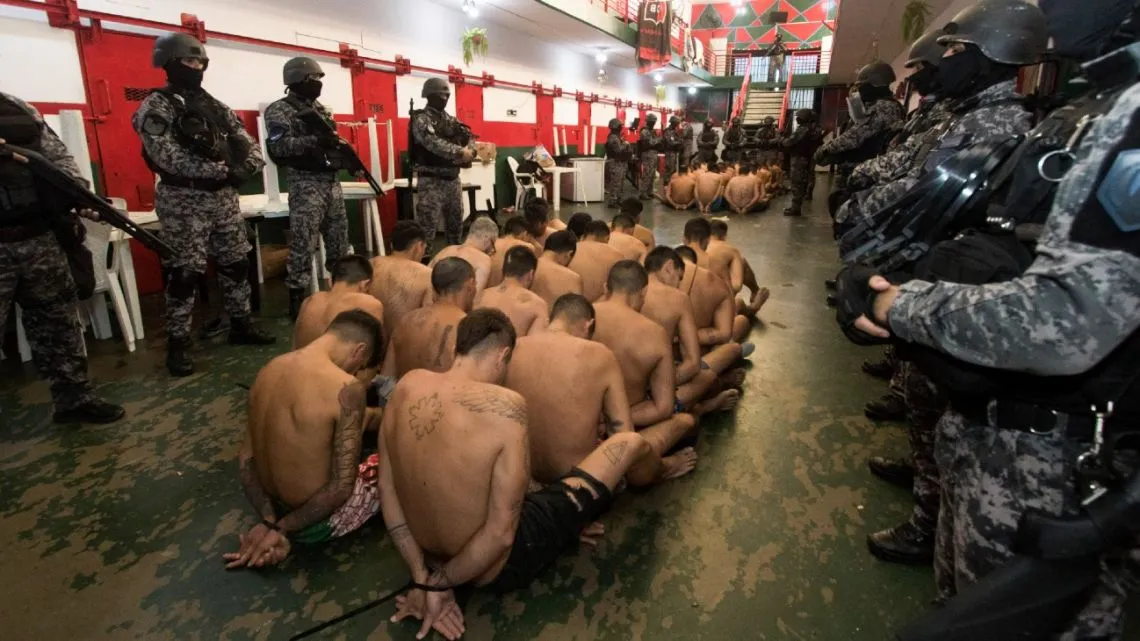
El Salvador has moved to prosecute 563 leaders of the Barrio 18 gang in a single mass case, the latest step in President Bukele’s sweeping crackdown on organized crime.
El Salvador has taken another dramatic step in its war on gangs. Prosecutors have asked a court to try 563 leaders of the Barrio 18 gang together in one sweeping case.
The request, filed by the attorney general’s office, covers around 14,400 alleged crimes. They span more than a decade of violence across the small Central American country.
What El Salvador is alleging
The charges are sweeping in scope. They include homicide, extortion, drug and arms trafficking, human trafficking and belonging to a terrorist organization.
Prosecutors go further still. They accuse the gang of rebellion, arguing it tried to impose a parallel state in defiance of the country’s lawful government.
The accused are drawn from the gang’s two warring wings, known as the Sureños and the Revolucionarios. Folding both factions into one case underlines the scale of the effort.
Officials say the process will be quick. They expect to present formal charges in August and hold a single hearing to settle the leaders’ fate before year’s end.
Prosecutors say much of their evidence comes from intercepted communications. Among the plots they cite is an alleged scheme to attack the attorney general’s office with a grenade.
Part of a bigger pattern
This is not a one-off. It mirrors a mass trial opened in April against hundreds of leaders of the rival MS-13 gang, accused of tens of thousands of crimes.
Together the two cases target the leadership of El Salvador’s most feared criminal groups. Both gangs were born among Salvadoran migrants in Los Angeles before spreading back home.
For decades the two were bitter rivals carving up territory. Trying their leaders in parallel signals the state now treats both as a single defeated enemy.
The legal tool behind the trials is recent. A 2023 law allows prosecutors to try hundreds of suspects from the same gang and area in one go.
Supporters say the approach is the only practical way to clear a vast backlog. Tens of thousands of suspects were swept up in the crackdown, far more than ordinary courts could process one by one.
Bukele’s security model
All of this flows from President Nayib Bukele’s signature policy. After a brutal weekend of killings in March 2022, he declared a state of emergency that remains in force today.
The results have been stark. More than 80,000 people have been detained, and homicides have collapsed from among the world’s highest to a fraction of past levels.
That has made Bukele hugely popular at home. His model has also drawn admiring looks from leaders across the region facing their own crime crises.
Neighbours have started to copy the playbook. Governments from Honduras to Ecuador have flirted with their own emergency powers and tougher anti-gang laws.
Why it matters beyond El Salvador
For a foreign reader, this is more than a courtroom story. It is the sharp edge of a security model that much of Latin America is now debating.
The case also lands amid a broader regional shift. The United States has branded both gangs terrorist organizations, a label that reshapes cross-border investigations and asset freezes.
There is a clear counterweight, though. Rights groups warn that mass trials of hundreds at once cannot deliver genuine individual due process.
For investors, the calculus is double-edged. A safer country is plainly better for business, yet a justice system that bends to political will carries its own long-term risks.
That tension defines the whole experiment. It pits dramatic gains in safety against hard questions about justice and concentrated power.
More: Latin America news in English, every day from The Rio Times.
What did El Salvador’s prosecutors do?
They asked a court to try 563 leaders of the Barrio 18 gang in a single mass case, covering around 14,400 alleged crimes. The accused come from the gang’s two factions, the Sureños and Revolucionarios.
How does this fit Bukele’s crackdown?
It follows an April mass trial of hundreds of MS-13 leaders and uses a 2023 law allowing group trials. The campaign runs under a state of emergency in force since March 2022.
Why is it controversial?
The crackdown has sharply cut homicides and is popular at home, but rights groups argue mass trials of hundreds cannot ensure individual due process. The debate weighs safety gains against justice concerns.
Connected Coverage
Life Sentences Now the Price of Gang Life in El Salvador
Guatemala Turns Terror Tools on Gangs, Following El Salvador
This article was produced by The Rio Times’ automated newsroom system. How we use AI · Report an error · Editorial responsibility: Matthias Camenzind, Editor-in-Chief