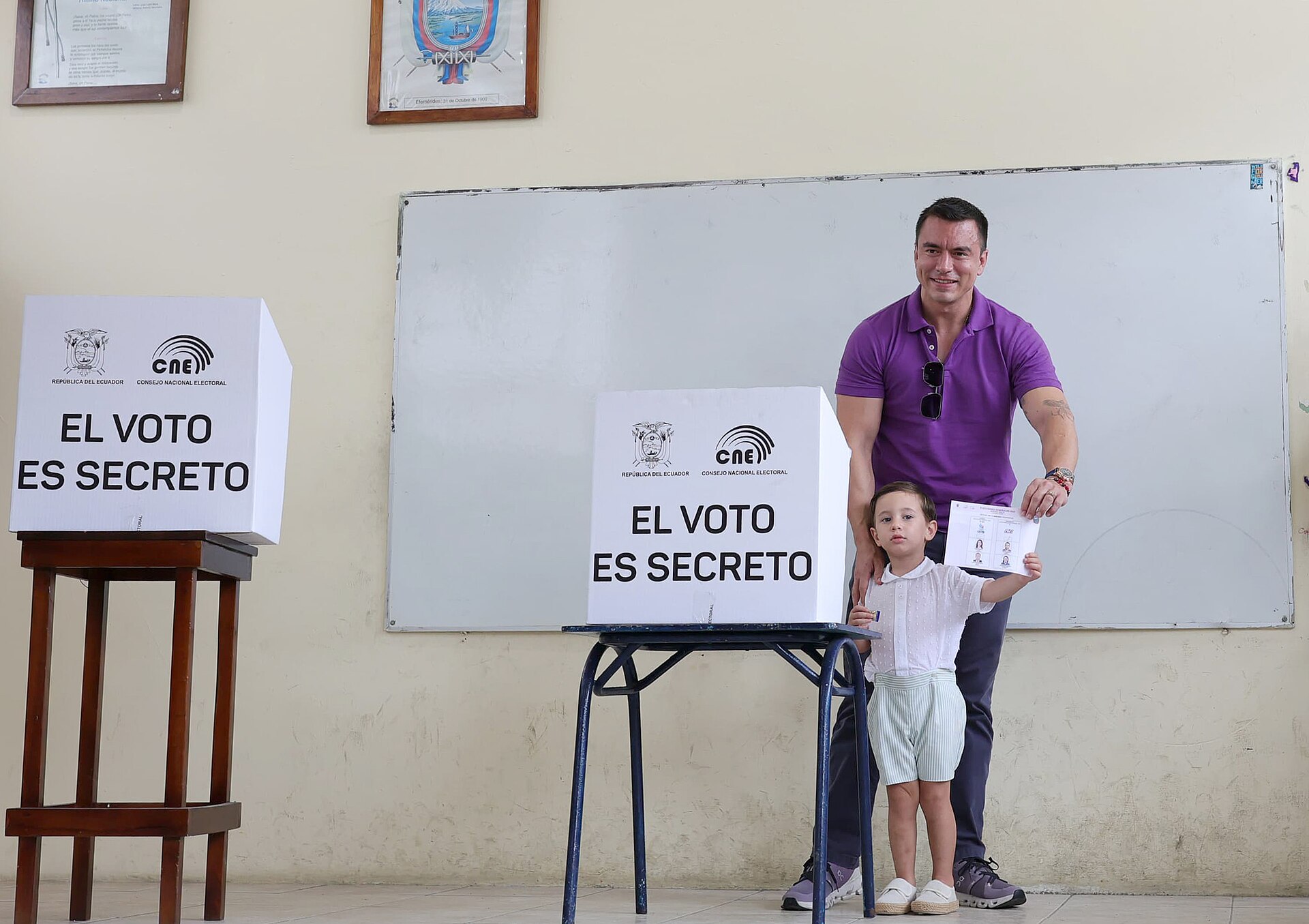
Key Facts
— — President Noboa confirmed a second official visit to China in August, deepening ties through the Belt and Road-linked free trade agreement signed in 2024
— — The IMF board is expected to approve approximately $400 million in disbursements to Ecuador by month-end at the Spring Meetings
— — Noboa stressed Ecuador “cannot close itself off” to one partner — maintaining US security ties while Russia trade supports 400,000 jobs
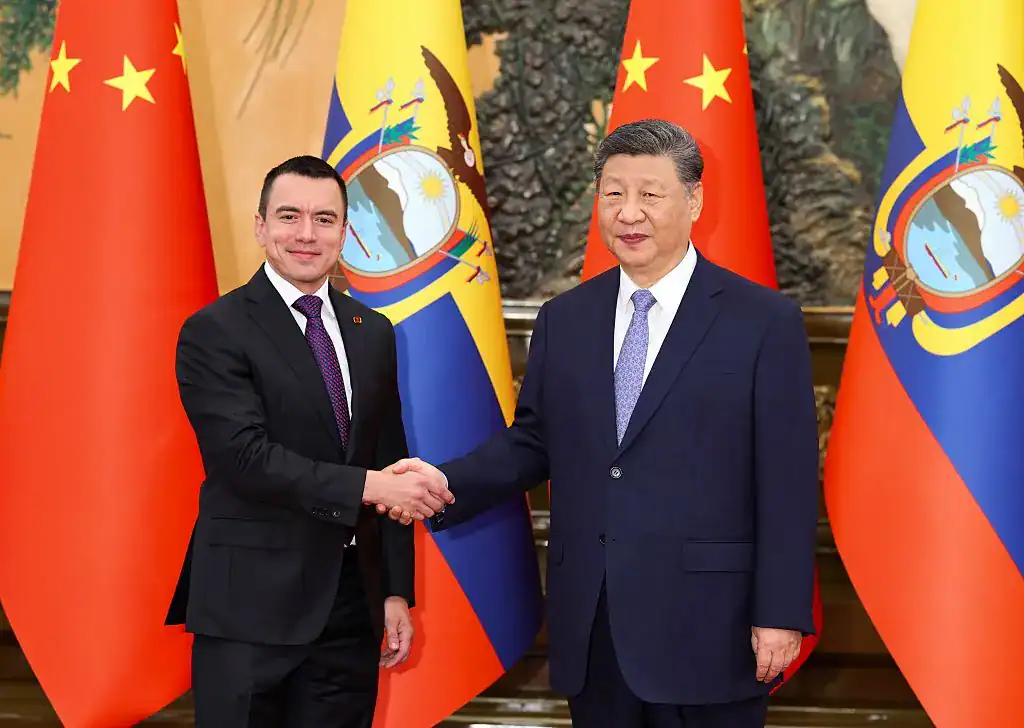
Ecuador Noboa China relations deepened on Monday when President Daniel Noboa confirmed a second official visit to Beijing for August, signaling that his government’s tight alignment with Washington on security will not come at the expense of commercial ties with the world’s second-largest economy. The announcement came during a radio interview in El Oro province.
The Rio Times, the Latin American financial news outlet, reports that Noboa‘s first China visit in June 2025 produced a cooperation plan linked to Beijing’s Belt and Road Initiative, building on the free trade agreement that entered force in May 2024. Chinese imports to Ecuador have surged since then, nearly matching the volume from the United States.
Ecuador Noboa China: The Balancing Act
Noboa framed his foreign policy as pragmatic multi-alignment. Ecuador maintains security cooperation with the United States — including the presence of US military personnel that Noboa has described as advisory rather than invasive — while keeping commercial channels open with China and Russia.
The Russia dimension is economically significant. Noboa stated that bilateral trade with Moscow sustains approximately 400,000 jobs in El Oro and Los Ríos provinces, primarily in banana and shrimp exports. “We cannot close ourselves off to commerce with nations that over the past 20 years have become important partners,” he said.
IMF Disbursement Expected by Month-End
Separately, the IMF board is expected to approve approximately $400 million in disbursements to Ecuador by late April, according to analysts tracking the Spring Meetings that open in Washington today. The approval would validate Quito’s compliance with its program and provide fiscal breathing room.
The Hormuz crisis creates a mixed effect for Ecuador’s dollarized economy. Higher oil prices boost fiscal revenues — Ecuador remains a net petroleum exporter — but also pressure the fuel subsidy system, where a price-band mechanism limits how quickly international costs pass through to consumers. The IMF disbursement helps cushion that tension.
Regional Context: Trade War and Diplomacy
The China visit announcement arrives as Ecuador’s trade war with Colombia consumes diplomatic bandwidth. Noboa’s 100% security tax on Colombian goods takes effect May 1, and while Petro reversed Colombia’s retaliatory tariffs on Monday, the bilateral relationship remains at its lowest point in decades.
Deepening ties with China — and maintaining Russia trade — offers Noboa commercial diversification at a moment when the Andean Community framework is fracturing and traditional regional trade partners are being shut out by tariff walls. Whether Washington views Ecuador’s China engagement as compatible with the security partnership will be tested as the relationship matures through August.
Deep Dive
Deep Dive
Ecuador Colombia Crisis 2026: Complete Guide
The full timeline: from the 30% security tariff in January to 100% trade war, border bombings, CAN collapse, and what the May 31 election means for both countries.
More: Ecuador news in English, every day from The Rio Times.
This article was produced by The Rio Times’ automated newsroom system. How we use AI · Report an error · Editorial responsibility: Matthias Camenzind, Editor-in-Chief